 Cart (0 items)




Discover alcohol-free ways to unwind after work, from nonalcoholic drinks to evening routines. Learn how to cope with cravings and build a relaxing ritual.
What Are the Best Alcohol-Free Ways to Unwind?

Last Updated: November 18, 2026
Quick Summary
The best alcohol-free ways to unwind retrain the ritual, not just the drink: move your body, use your hands, then breathe. A 20-minute walk, cooking a real meal, and a two-minute breathing exercise replace the after-work glass with a repeatable sequence your brain links to winding down.
- Cravings peak and pass within a short window, so your job is to outlast them, not fight them.
- Inhale for four counts, hold for four, exhale for six, and repeat for two minutes.
- Build a fixed evening sequence and start with just the walk and the drink swap.
- Keep a wind-down kit stocked so you reach for a choice already made.
- Seek medical help before quitting if you have been drinking heavily and regularly.
Ready to rethink your evening ritual?Lab-tested, low-dose hemp drinks and gummies built for alcohol-free relaxation and better sleep.
Shop Wind-Down Essentials
Table of Contents
- Why Your Brain Craves a Drink After Work
- Alcohol-Free Ways to Relax After Work
- Nonalcoholic Drinks for Relaxation
- How to Cope With Alcohol Cravings
- Build an Alcohol-Free Evening Routine
- Social Connection Without the Bar
- When to Seek Medical Help for Alcohol Withdrawal
- Stock Your Alcohol-Free Wind-Down Kit
- Frequently Asked Questions
Why Your Brain Craves a Drink After Work
That 6 p.m. urge for a drink is not a character flaw. It is a learned ritual, and rituals can be rebuilt.
Many active adults want to cut back without giving up the feeling of release. Most of them are not problem drinkers. They are people whose after-work decompression got welded to a glass, and now the two feel inseparable.
Here is what most guides get wrong: they hand you a list of substitutes and skip the part where you retrain the habit. Swapping a drink for sparkling water fails if the rest of the ritual stays identical.
Below, we break down the alcohol-free ways to unwind that actually hold up, organized by what kind of reset your body needs. Some are physical, some are creative, some are social.
Alcohol-Free Ways to Relax After Work
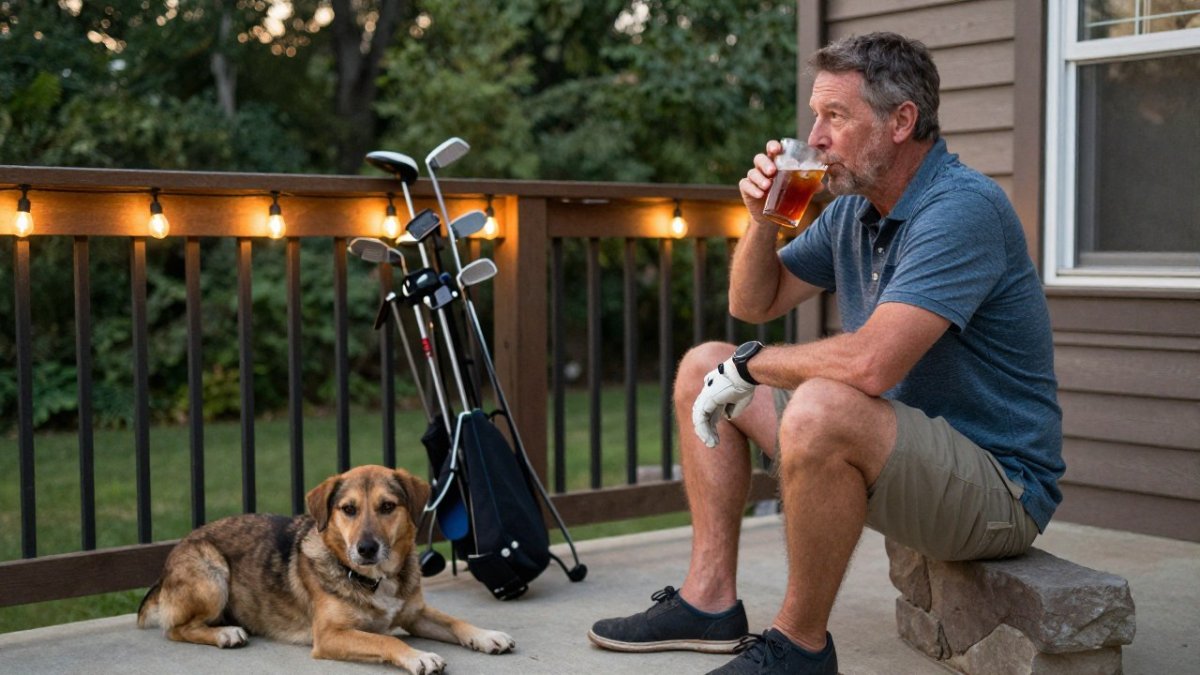
Relaxing without alcohol comes down to giving your nervous system a real transition, not a chemical one. The most reliable approach is a short, repeatable sequence: move, then make something, then breathe. Each step pulls you further out of work mode.
A common mistake is treating relaxation as a single event. One drink, one show, one scroll. It works for a short while and then the restlessness returns.
Move Your Body to Burn Off the Day
Physical activity is the fastest route out of a work mindset because it changes your physiology, not just your mood. A 20-minute walk after dinner lowers the mental static that builds during a desk day. Running, cycling, or a short strength session does the same thing harder.
You do not need a workout. You need movement that feels like a release rather than another task. A walk with no podcast, a few sets of bodyweight squats, or fifteen minutes on a bike all count. For weekend warriors and golfers, this doubles as recovery. Tight hips and a stiff lower back from a long day at a desk respond well to gentle movement before bed.
Use Your Hands: Cooking, Crafting, and Gardening
Hands-on hobbies quiet the part of your brain that replays work conversations. Cooking a real meal from scratch is the most accessible version: chopping, timing, tasting. Crafting and painting do the same thing for people who do not want to be in the kitchen.
Gardening has a specific advantage. It puts you outdoors, gives you a small physical task, and produces a visible result. Even ten minutes of watering and pruning resets the evening.
Breathe, Meditate, and Get Outside
Breathing exercises are the cheapest relaxation tool you own and the most underused. A simple pattern works: inhale for four counts, hold for four, exhale for six. Repeat for two minutes. The long exhale is what triggers the calm response.
Meditation and mindfulness build on the same principle, and they get easier with repetition. Nature is the shortcut version. Sitting outside, even on a porch, changes the sensory input enough to break the loop of after-work rumination.
Nonalcoholic Drinks for Relaxation
Nonalcoholic drinks for relaxation work best when you match the drink to the moment. A drink that signals "evening" matters more than the liquid itself, because the ritual is what your brain is actually craving. Get the ritual right and the alcohol becomes optional.
Herbal Tea and Calming Beverages
Herbal tea is a classic wind-down drink. Chamomile, valerian root, and passionflower are commonly reached for in the evening. Kombucha and other functional beverages serve a different purpose: they give you something cold, carbonated, and social when tea feels too quiet.
How to Evaluate Hemp-Derived and Functional Drinks
Here is a practical test for choosing a hemp-derived or functional drink, and it is the part most buyers skip:
- Check the dose per serving and whether it is clearly printed on the label
- Look for third-party lab testing you can actually view
- Confirm the product is federally legal under the 2018 Farm Bill and check your state's rules
- Start with a low dose and wait before taking more
- Match the format to the occasion: a can for social settings, a measured shot for precise control
That checklist is how we would shop the category ourselves. Dosing clarity and lab testing are the two things that separate a product you can trust from one you cannot.
For a simple evening wind-down, our THC Seltzers run 4mg per 12oz can. If you want more control over the amount, the THC Shots come with measurement markings on the label.
How to Cope With Alcohol Cravings
Cravings are time-limited. As the wave passes, noticing whether stress after work is stirring the urge can help you choose a steadier response, as Simon Luthi explores.
The practical playbook is short and physical.
Watch out: the highest-risk moment is usually not the craving itself but the automatic reach.
Social pressure is its own trigger. When someone offers a drink, you do not owe an explanation.
Stressful evenings often call for a different response than ordinary cravings. Our guide to the benefits of daily hemp extract for stress relief covers how people build that into a routine.
If you find that cravings are frequent, intense, or tied to drinking more than you intended, that is worth a conversation with a healthcare professional.
Build an Alcohol-Free Evening Routine
An alcohol-free evening routine is a fixed sequence you repeat at the same time each night, designed to move you from work mode to rest mode without alcohol. The repetition is the active ingredient. Your brain starts to associate the sequence itself with winding down.
A sample evening, adjusted to your schedule:
| Time | Step | Purpose |
|---|---|---|
| 5:30 p.m. | Change clothes, leave the phone in another room | Break the work cue |
| 5:45 p.m. | 20-minute walk or short workout | Discharge physical tension |
| 6:15 p.m. | Cook dinner, no screens | Hands-on focus |
| 7:30 p.m. | Herbal tea or a nonalcoholic drink | Evening ritual signal |
| 8:30 p.m. | Breathing exercise or reading | Nervous system downshift |
| 9:30 p.m. | Consistent bedtime | Protect sleep |
Routines often fail from over-design rather than under-design. Three steps you actually do tend to beat seven you abandon by Thursday. Start with the walk and the drink swap, then add the rest.
If sleep is the weak point in your routine, our roundup of the best hemp products for better sleep covers options built for nighttime rather than evening.
Social Connection Without the Bar
Friendships are the most underrated alcohol-free way to unwind, and the hardest to restructure. Most adult socializing defaults to a bar or a drink in hand.
Start with the format. If you are comparing formats for a gathering, our breakdown of THC shots versus seltzers for social occasions lays out the trade-offs.
Have a script ready for the offer. "I'm good with this" while holding your own drink works better than a long explanation.
Watch out: the first few alcohol-free social events feel strange, and that is normal.
The goal is not to prove you can socialize without drinking. It is to keep the connection, which was the point all along.
When to Seek Medical Help for Alcohol Withdrawal
Alcohol withdrawal can be dangerous, and it is not something to manage alone. If you have been drinking heavily and regularly, stopping suddenly can trigger symptoms ranging from shakiness and sweating to seizures. Seek medical help before you quit, not after symptoms start.
The National Institute on Alcohol Abuse and Alcoholism publishes guidance on alcohol use disorder and treatment options, and the Substance Abuse and Mental Health Services Administration provides information on support services. If you are unsure whether your drinking pattern puts you at risk, ask a doctor. That conversation is free of judgment and worth having.
This article covers lifestyle changes for people who want to drink less. It is not a substitute for medical care.
Stock Your Alcohol-Free Wind-Down Kit
A wind-down kit removes decisions from your evening. When the craving hits, you reach for something you already chose in a calmer moment. Ours would include:
- A caffeine-free herbal tea you genuinely like
- A cold, carbonated nonalcoholic drink for the nights you want something crisp
- A low-dose hemp option with clear dosing on the label
- A book, journal, or craft project within arm's reach
- A set bedtime and a phone charging spot outside the bedroom
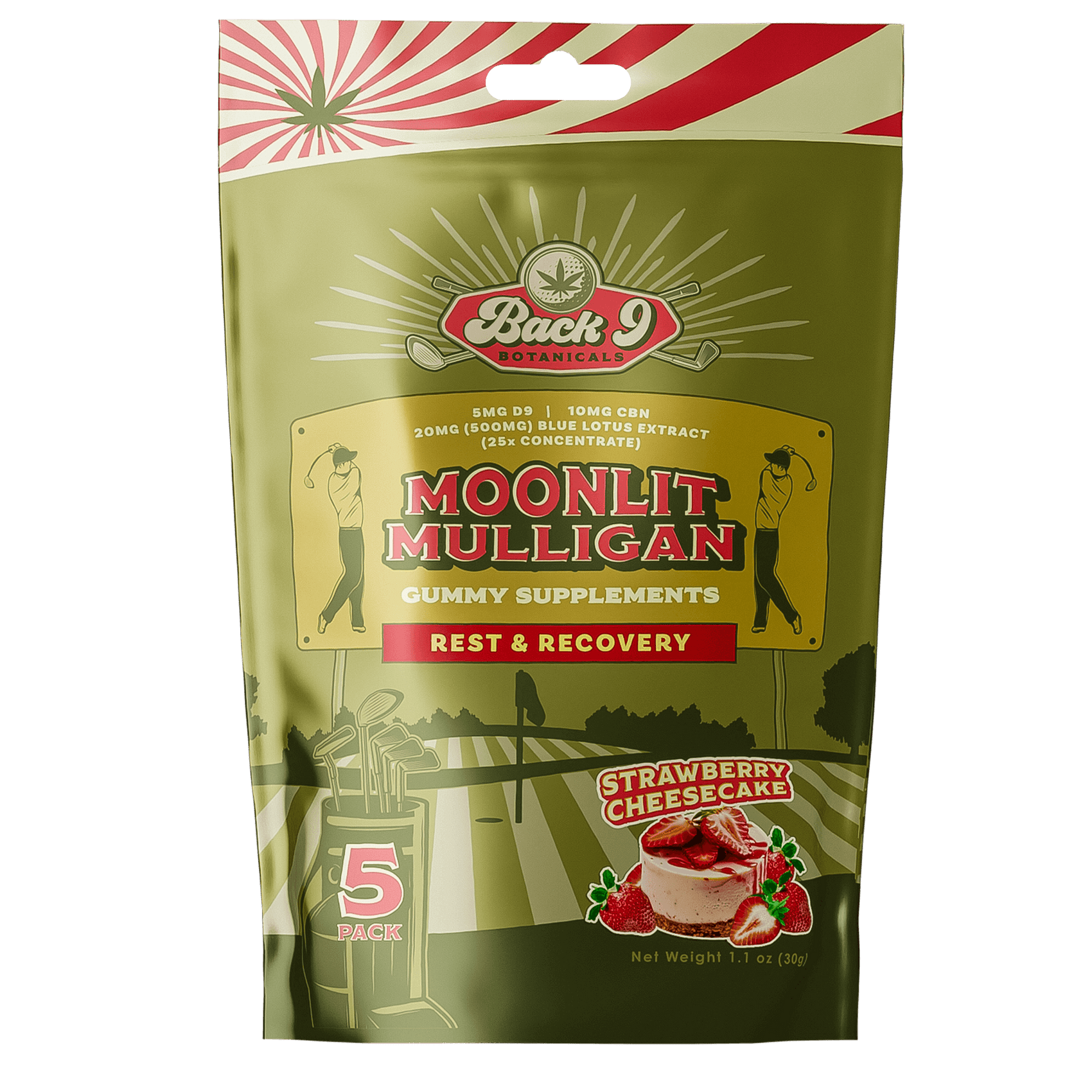
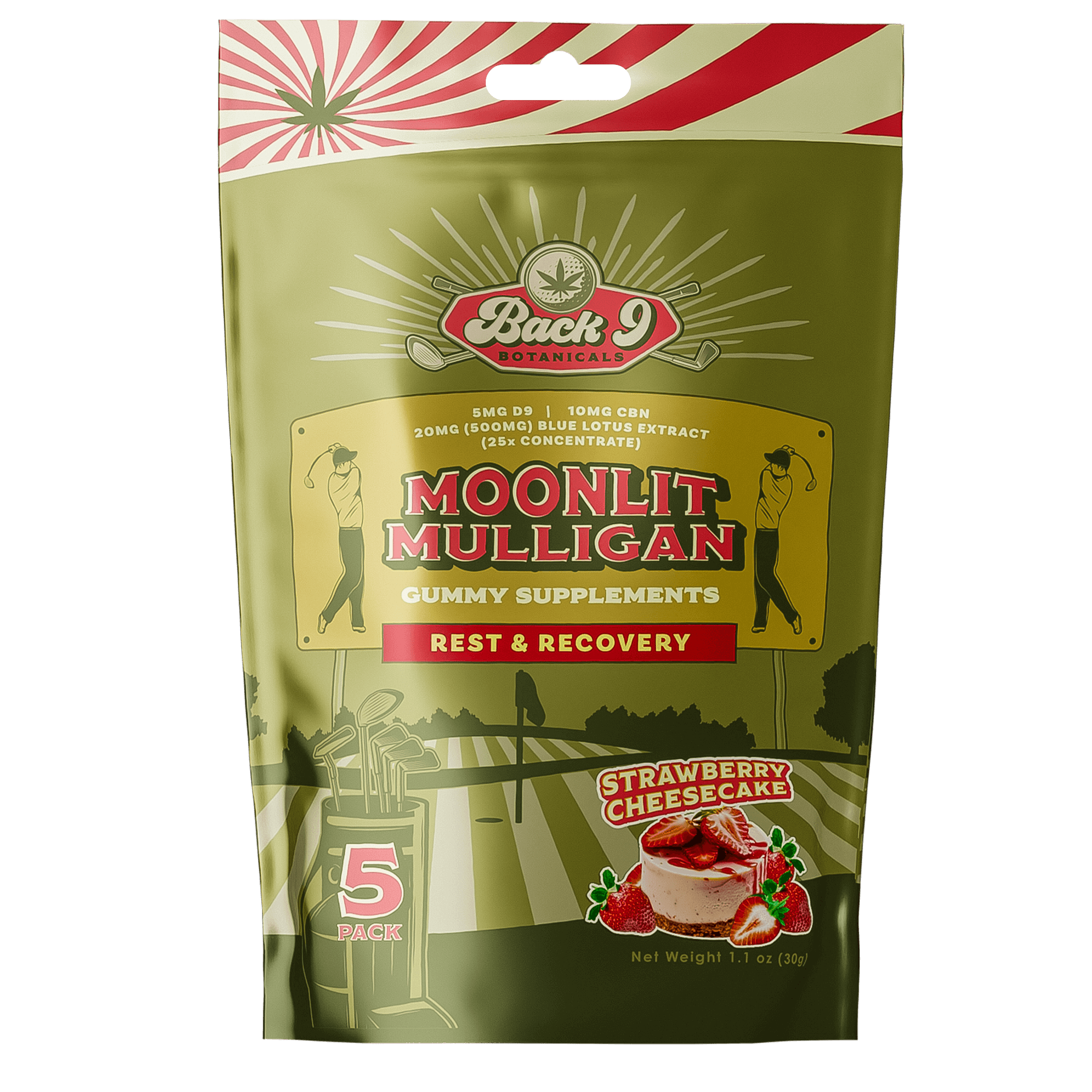
Our Relax Relieve line is where we would start for relaxation-focused products, and the Moonlit Mulligan rest and recovery gummies are built for the sleep end of the routine, with 5mg Delta 9 THC, 10mg CBN, and Blue Lotus per gummy.
The hardest part of cutting back is not the first night. It is the fourth Thursday, when the novelty is gone and the old habit is still whispering. A stocked kit and a routine you can repeat make that night ordinary instead of a battle.
Back 9 Botanicals builds functional, lab-tested formulas for people who want to unwind without alcohol, from low-dose THC seltzers to nighttime rest gummies. Every product is made with hemp-derived cannabinoids and clean botanical ingredients, so you can shape an evening routine that fits your life. Get started with Back 9 Botanicals and build an alcohol-free wind-down you actually look forward to.
Frequently Asked Questions
What can I drink instead of alcohol to relax?
Herbal teas like chamomile, valerian root, and passionflower are commonly chosen in the evening. Nonalcoholic beers and mocktails give you the ritual without the alcohol. Hemp-derived options such as low-dose THC seltzers or measured THC shots offer a buzz alternative, though you should check your local laws and start with a small dose. Many people also use kombucha or functional beverages with adaptogens. The best choice is the one that fits your routine and helps you actually relax.
What kills the urge to drink alcohol?
Cravings usually peak and then pass. Try delaying: drink a glass of water, go for a short walk, or call a friend. Distraction works because it interrupts the habit loop. Identify your triggers, such as a certain time of day or a stressful meeting, and plan a specific replacement activity in advance. Keeping nonalcoholic drinks on hand also gives your hands and mouth something to do while the urge fades.
How can I relax after work without alcohol?
Create a short transition ritual. Change clothes, take a 10-minute walk, or make a nonalcoholic drink and sit somewhere quiet. Physical activity and breathing exercises can help you unwind. Pairing a drink ritual with a relaxing activity, like herbal tea plus a hobby, replaces the old habit. Consistency matters more than duration, so even 15 minutes done daily can help.
What are some alcohol-free evening routines?
A simple routine might include a nonalcoholic drink at 6 p.m., a walk or light stretching, dinner, then a screen-free wind-down with reading or journaling. Herbal tea and a warm shower can signal the end of the day. Keep the same order most nights so your brain learns the sequence. If you use hemp-derived products, choose a measured dose and note how you feel so you can adjust. The goal is a repeatable pattern that helps you sleep well.
How can I handle stress without turning to alcohol?
Stress relief comes from several small actions, not one fix. Physical activity, breathing exercises, and time in nature can help you relax. Social connection, whether a phone call or a walk with a friend, helps too. Hobbies like cooking, crafting, or gardening give your mind a break from work. Write down what stressed you and one action you can take. If stress feels unmanageable, talk to a healthcare provider. Building a toolkit of alcohol-free ways to unwind makes the choice easier when stress hits.


