
 Cart (0 items)





The best hemp products for sleep in 2026 blend CBN, CBD, and low-dose THC. Compare formats, doses, and safety so you can pick a sleep aid that fits.
What Are the Best Hemp Products for Better Sleep in 2026?

Last Updated: October 30, 2026
Quick Summary
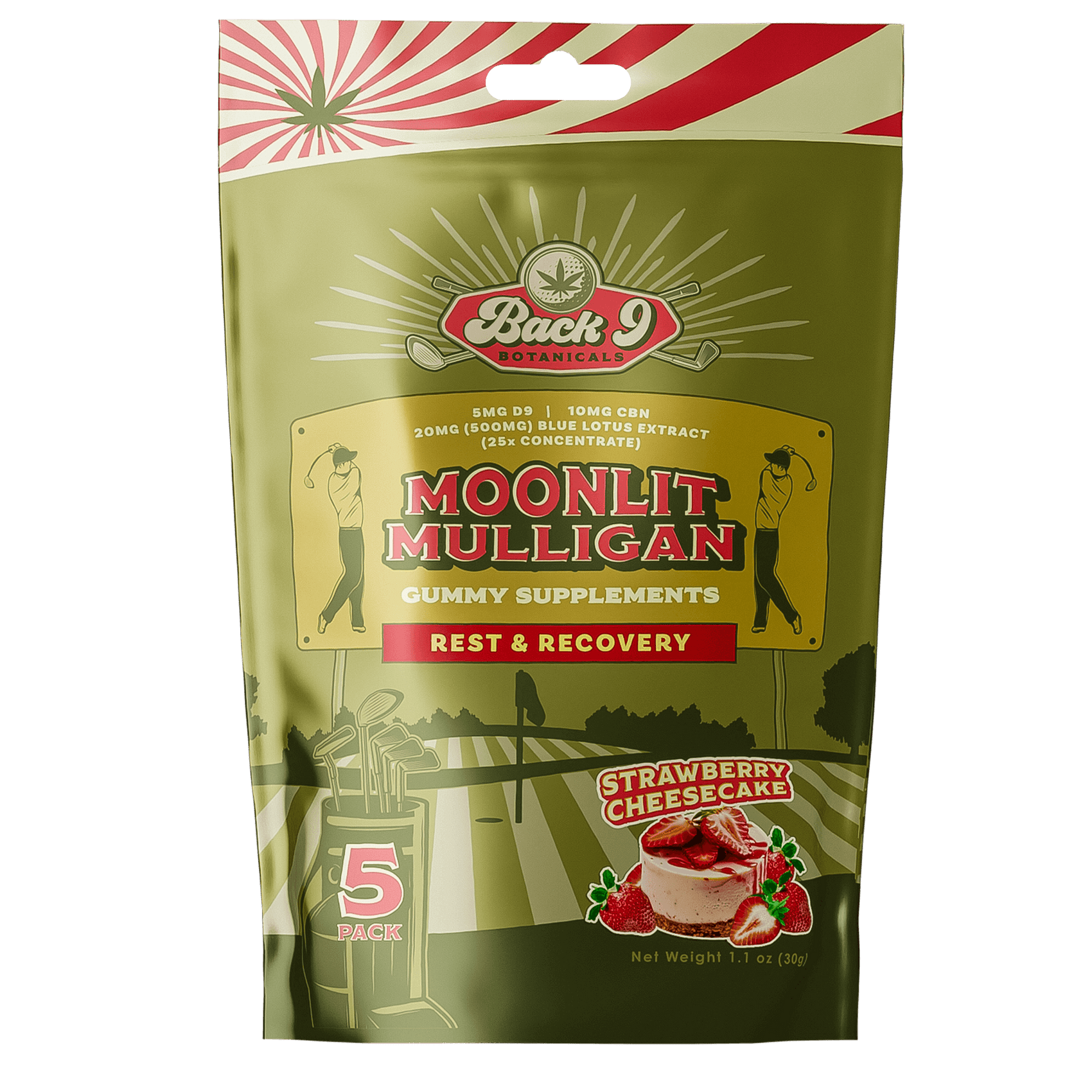
The best hemp products for sleep pair a verified cannabinoid blend with a matching certificate of analysis, and our top pick is Moonlit Mulligan Rest & Recovery Gummies at $10.99 for a 5-count pack, with 5 mg hemp-derived Delta 9 THC, 10 mg CBN isolate, and 20 mg blue lotus extract per gummy. Start with a single cannabinoid at a low serving, then move to a blend once you know your tolerance.
- CBD is the better-studied relaxation cannabinoid, while CBN's sleep evidence is thinner and preliminary.
- Under the 2018 Farm Bill, hemp is cannabis with no more than 0.3% Delta 9 THC on a dry-weight basis.
- Oil or tincture has the fastest onset of the edible formats and allows dosing adjustable by the drop.
- The Back 9 Daily Wellness Stack costs $39.99 and bundles Birdie Boost!, Players Blend, and Moonlit Mulligan.
- CBD affects cytochrome P450 liver enzymes, so ask a pharmacist before combining it with prescriptions.
Table of Contents
- What to Look For in Hemp Products for Sleep
- CBD vs. CBN for Sleep: Which Cannabinoid Does What
- Best CBD Oil for Sleep vs. Gummies, Tablets, and Chocolates
- Top Hemp Sleep Products: Ratings and Prices
- CBD Sleep Product Side Effects and Who Should Avoid Them
- CBD and Drug Testing: What Athletes Need to Know
- Build Your Nighttime Routine with Back 9 Botanicals
- Frequently Asked Questions
What to Look For in Hemp Products for Sleep
Choosing the best hemp products for better sleep quality starts with two questions: what is in the product, and can you verify it. Hemp products for sleep are only as good as their label accuracy and cannabinoid blend. Transparent sourcing and rigorous third-party testing provide the necessary foundation for any holistic approach to improve sleep quality.
Cannabinoid blend and serving size
The blend matters more than the front-of-bottle buzzword. CBD is non-intoxicating and generally studied for relaxation. CBN, which forms as THC breaks down, is often used in sleep formulas. Hemp-derived Delta 9 THC appears in small amounts in some blends, and it changes the risk profile. Serving size matters too: 5 mg and 50 mg are different products in practice.
Independent testing and label transparency
Ask for a certificate of analysis before you buy. A COA is a lab report showing cannabinoid content and screening for contaminants such as heavy metals, pesticides, and mold. Match the COA batch number to your package, and check that listed milligrams per serving agree with the label. For help translating milligrams into a starting serving, our CBD dosing guide for beginners walks through it step by step.
CBD vs. CBN for Sleep: Which Cannabinoid Does What
CBD and CBN are different tools, and the honest answer is that neither is a sedative in the pharmaceutical sense. What separates them is how much is known, how they are sourced, and what the label actually promises.
What CBD does, and what the evidence supports
CBD is the more studied of the two. Research has looked at CBD for anxiety, pain, and seizure disorders. For sleep, evidence is mostly small studies and self-report, with mixed results. A common pattern is that people who feel calmer at night fall asleep more easily; CBD may support that wind-down, but it is not a hypnotic and does not force sleep.
What CBN does, and why the evidence is thinner
CBN forms as THC oxidizes and breaks down. It is milder than THC and far less researched than CBD. Its popularity in sleep blends rests on early, small studies and consumer anecdote pointing toward drowsiness, not settled clinical evidence. That makes it preliminary, not useless. Treat any "CBN sleep support" claim as a hypothesis you are testing on yourself, not a guarantee.
Hemp-derived vs. cannabis-derived: the label distinction that matters
This is where most roundups blur the line. "Hemp" and "cannabis" are the same plant species; the U.S. legal distinction is the THC threshold. Under the 2018 Farm Bill, hemp is cannabis containing no more than 0.3% Delta 9 THC on a dry-weight basis. Dispensary cannabis operates under different state rules and can carry much higher THC.
Blends vs. single cannabinoids
Many people find a blend more useful than either cannabinoid alone, since CBD and CBN appear to act on different parts of the wind-down process, CBD on the calm-and-settle side, CBN on the drowsy side. But blends make it harder to know what is doing what. If you are new, start with a single-cannabinoid product at a low serving to isolate the effect, then move to a blend once you know your tolerance.
Key Takeaway
CBD is the better-studied relaxation cannabinoid; CBN is the more popular sleep-story cannabinoid with thinner evidence. Neither treats insomnia. Check the source (hemp vs. cannabis), the milligrams per cannabinoid, and the COA before you trust the front label.
Best CBD Oil for Sleep vs. Gummies, Tablets, and Chocolates
Format changes onset time and duration more than it changes the cannabinoids themselves. The best CBD oil for sleep suits people who want flexible dosing and the fastest onset of the common formats, since oil absorbed under the tongue skips much of digestion. Gummies are slower but easier to dose consistently and taste better, which matters for nightly use.
| Format | Typical onset | Dosing control | Best for |
|---|---|---|---|
| Oil or tincture | Fastest of the edible formats | High, adjustable by the drop | People dialing in a precise serving |
| Gummies | Slower, digestive | Fixed per piece | Consistent nightly routines |
| Tablets | Slower, digestive | Exact milligrams | Anyone who wants no guesswork |
| Chocolates | Slower, digestive | Lower, harder to split | Occasional wind-down treat |
Top Hemp Sleep Products: Ratings and Prices
These are our own formulas, so judge them on the listed specs.
Moonlit Mulligan Rest & Recovery Gummies
Price: $10.99 for a 5-count pack.
Each gummy carries 5 mg of hemp-derived Delta 9 THC, 10 mg of CBN isolate, and 20 mg of blue lotus extract. The limitation is honest: it contains THC, so it is not right for anyone subject to drug testing. See the Moonlit Mulligan gummies.

Best for: adults who want a dedicated nighttime formula with CBN and a small THC dose. Skip if: you are drug tested or new to THC.
The Back 9 Day and Night Pack
Price: $19.99.
A two-part routine in one box: Birdie Boost! for daytime focus and Moonlit Mulligan for the evening. The tradeoff: you are paying for a daytime formula you may not need if sleep is your only concern. Shop the Day and Night Pack.

Best for: daily users who want one system for day and night. Skip if: you only want a sleep product.
The Back 9 Daily Wellness Stack
Price: $39.99.
Moonlit Mulligan - Rest & Recovery Gummies (5 ct) →
Three formulas in one bundle: Birdie Boost!, Players Blend for calm focus and mental balance, and Moonlit Mulligan. This is the fullest version of our routine and the easiest way to run a consistent schedule without choosing each product separately. It costs more upfront than the sleep gummies alone, so it suits someone already committed to a daily routine.
Best for: new customers who want the complete Back 9 lineup. Skip if: you are still testing whether hemp products fit your routine.
The Back 9 Discovery Bundle
Price: $49.99.
The Back 9 Discovery Bundle combines gummies, shots, and seltzers built around micro-doses of hemp-derived cannabinoids plus natural supplements. Treat it as a trial kit, not a sleep-specific purchase.
Best for: first-time buyers who want to compare formats. Skip if: you have already settled on a gummy routine.
CBD Sleep Product Side Effects and Who Should Avoid Them
CBD sleep product side effects are usually mild, but "mild" is not the same as "no risk," and the risk profile changes once THC is in the formula. Here is what to watch for and who should talk to a clinician first.
Common side effects
- Drowsiness and next-morning grogginess, more likely with higher servings and THC-containing formulas.
- Dry mouth, common with CBD and generally temporary.
- Upset stomach or loose stools, more common with oils and gummies taken on an empty stomach.
THC-containing products can add a "high" feeling, increased heart rate, and, at higher servings, anxiety or paranoia rather than relaxation. That is the opposite of what you want at bedtime, which is why starting low matters more with THC than with CBD alone.
Drug interactions, the part most labels skip
Hemp cannabinoids can interact with how the body processes certain prescription drugs. CBD in particular affects liver enzymes in the cytochrome P450 family, which metabolize many common medications (Cannabinoid Interactions with Cytochrome P450 Drug Metabolism). Practically, CBD can raise or lower blood levels of some drugs, including certain blood thinners (such as warfarin), seizure medications, and some antidepressants and anti-anxiety drugs.
Who should avoid these products or talk to a clinician first
- Anyone pregnant or breastfeeding, cannabinoids can pass to the baby, and the evidence is not there to call it safe.
- Anyone under 21, hemp-derived products are adult products, and the developing brain is more sensitive to cannabinoids.
- Anyone taking prescription medication, especially blood thinners, seizure medications, and drugs with narrow safety margins.
Watch Out
"Natural" does not mean "no interactions." If you take daily medication, ask a pharmacist before adding a hemp product, and bring the label with the milligrams, not just the bottle.
Realistic expectations and when to seek care
Hemp products are not a treatment for insomnia. If a consistent routine and a low serving for a few weeks still leave your sleep poor, talk to a clinician rather than escalating the serving. Persistent insomnia, loud snoring with pauses in breathing, and daytime sleepiness that interferes with work or driving all warrant evaluation, a hemp product will not fix a sleep disorder, and treating one as if it might can delay real care.
For athletes with testing obligations, the next section covers the drug-testing question in detail.
CBD and Drug Testing: What Athletes Need to Know
CBD and drug testing is the question we hear most from athletes, and the answer depends on the product, not the cannabinoid name. The U.S. Anti-Doping Agency's guidance on cannabinoids is clear that THC is prohibited in competition, and the FDA's consumer update on CBD notes that CBD products are not FDA-approved for sleep or any other condition.
Build Your Nighttime Routine with Back 9 Botanicals
A product is one lever; the routine around it is the rest. Fix the basics first: a consistent bedtime, a dark and cool room, no caffeine after early afternoon, and a screen cut-off thirty minutes before bed. For a structured plan, our seven-step guide to better sleep for athletes covers the full sequence. For a simple starting point, the Back 9 Discovery Bundle lets you test formats before committing.

Frequently Asked Questions
Is CBD or CBN better for sleep?
They work differently. CBN is being studied for its sedative properties and is often used as a sleep aid, while CBD is more commonly tied to relaxation and stress reduction. Many nighttime formulas combine both, plus a small amount of THC. If you want a single product built around that combination, look for a label that lists CBN and CBD together with clear milligram amounts per serving.
How long before bed should you take a hemp sleep product?
Most people take a hemp sleep product 30 to 90 minutes before bed so the effects have time to build. Onset depends on the format: gummies and chocolates are digested and can take longer, while oils and tinctures held under the tongue may act faster. Start with one serving on a night when you can sleep in, note how you feel the next morning, and adjust the timing before you adjust the dose.
Will hemp-derived CBD show up on a drug test?
It can. Standard drug tests screen for THC metabolites, not CBD, and full-spectrum hemp products may contain small amounts of Delta 9 THC. Repeated use can still lead to a positive result. If you are subject to testing for sport, work, or a governing body, check the rules that apply to you before using any hemp product.
Can hemp products for sleep cause side effects?
Common reports include next-morning grogginess, dry mouth, and drowsiness that lingers longer than expected, especially at higher servings. THC-containing products can also cause a temporary increase in heart rate or a feeling of unease in people who are sensitive to it. Start with a low serving, avoid combining hemp with alcohol or sedatives, and talk to a pharmacist or doctor first if you take prescription medication or have a health condition.
What should I look for in a hemp sleep product?
Check four things: the cannabinoid blend and milligrams per serving, whether the label lists every ingredient, whether the brand publishes independent lab tests, and whether the product is melatonin-free if you want to avoid it. Also confirm the format fits your routine, since gummies, oils, tablets, and chocolates all have different onset times.
Better sleep is a system, not a single purchase, and the right hemp product only works when the blend, the serving, and the timing line up with your body. Back 9 Botanicals builds clean, functional formulas for golfers and athletes, with CBN and hemp-derived Delta 9 THC in Moonlit Mulligan, transparent ingredient lists, and bundles that make a nightly routine easy to keep. Get started with Back 9 Botanicals and build a nighttime routine you can actually stick to.


