 Cart (0 items)




Find the best CBD for muscle soreness in 2026. Compare topicals, tinctures, and dosage tips for faster athletic recovery. Discover your ideal option.
Best CBD for Muscle Soreness: 2026 Guide

Table of Contents
- How CBD Works for Muscle Soreness and Recovery
- How We Evaluated the Best CBD Products for Muscle Soreness
- Top CBD Products for Muscle Soreness: Quick Comparison
- CBD Topicals for Muscle Recovery: Product Breakdown
- CBD Dosage for Muscle Soreness: What the Research Suggests
- How to Use CBD for Athletic Recovery: Protocols That Work
- Safety, Legal Status, and Sourcing Transparency
- Which CBD Product Should You Choose?
Last Updated: August 26, 2026
Most athletes know delayed onset muscle soreness all too well: that deep, achy stiffness setting in 24-48 hours after a hard workout. At Back 9 Botanicals, we've evaluated how CBD for muscle soreness actually performs, which products deliver meaningful relief, and which are mostly marketing. Product quality varies enormously, the difference between what works and what doesn't often comes down to spectrum type, potency, and delivery method.
Quick Picks:
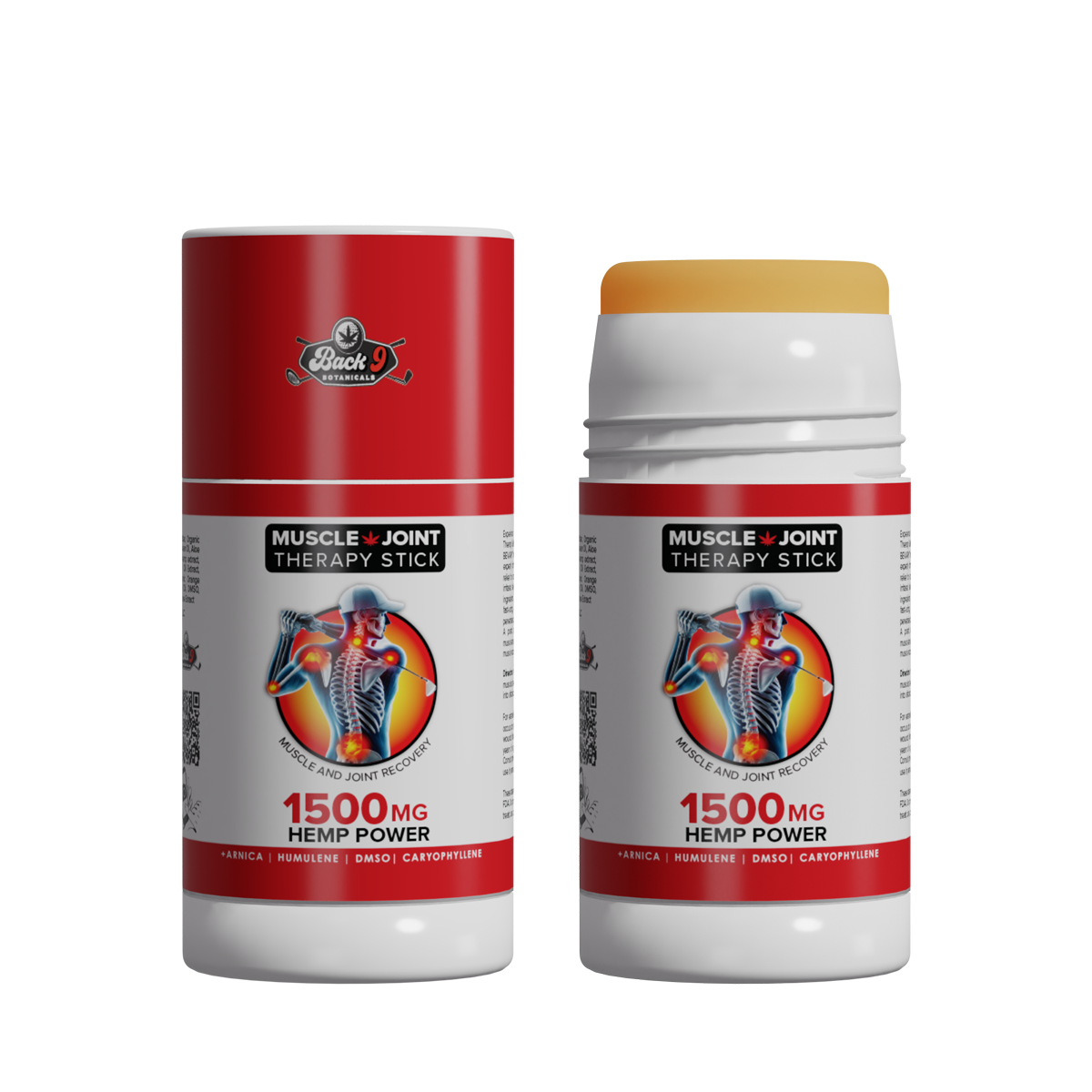
- Best Overall: Back 9 Botanicals CBD Topical Therapy Salve Stick, purpose-built for active recovery, portable, and formulated with natural botanicals
- Best High-Potency Value: Lazarus Naturals Relief + Recovery CBD Muscle Gel, 2000mg full-spectrum at an accessible price point
- Best THC-Free Option: CBDistillery CBD Targeted Relief Stick, 1000mg isolate with menthol for athletes who need to stay THC-clear
- Best Cooling Formula: Joy Organics CBD Sports Cream, broad-spectrum with menthol and camphor, organic ingredients
How CBD Works for Muscle Soreness and Recovery
CBD works through the body's endocannabinoid system, a regulatory network influencing inflammation, pain signaling, and tissue recovery.
The Endocannabinoid System and Delayed Onset Muscle Soreness
The endocannabinoid system is a cell-signaling network composed of cannabinoid receptors, endogenous ligands, and metabolic enzymes. When muscle tissue sustains microtears during exercise, the inflammatory cascade triggers pain receptors and disrupts cellular homeostasis. Cannabidiol interacts with CB1 and CB2 receptors, as well as TRPV1 receptors involved in pain and heat sensation, potentially moderating the inflammatory response that drives delayed onset muscle soreness.
Topical application targets this process locally. When you apply a CBD balm directly to a sore muscle, cannabinoids interact with receptors in the skin and underlying tissue without entering systemic circulation meaningfully. This is why topicals are preferred for localized muscle tension and joint inflammation, while tinctures and gummies address broader recovery needs.
According to the National Institutes of Health's research on cannabinoid pharmacology, phytocannabinoids like CBD demonstrate anti-inflammatory properties through multiple receptor pathways, supporting the therapeutic potential of hemp-derived cannabinoids.
Full-Spectrum vs. Broad-Spectrum vs. Isolate: Which Works Best
- Full-spectrum contains all cannabinoids present in hemp, including trace THC. The combined action of cannabinoids, terpenes, and phytocannabinoids is called the "entourage effect", the theory that compounds work better together than in isolation. For recovery, full-spectrum products are generally considered most therapeutically complete.
- Broad-spectrum removes THC while retaining other cannabinoids and terpenes, offering a middle ground: more complete than isolate, THC-free for tested athletes.
- Isolate is pure cannabidiol with no other cannabinoids. It's predictable, THC-free, and suited to users wanting precise dosage without any THC exposure risk.
For maximum recovery support, full-spectrum or broad-spectrum products are the stronger choice. Isolate is right when THC exposure is a hard constraint.
How We Evaluated the Best CBD Products for Muscle Soreness
Selection focused on third-party lab testing, ingredient transparency, and cost-per-milligram value.
Third-Party Lab Testing and Certificates of Analysis
A certificate of analysis is the single most important document in the CBD industry. It's an independent lab report verifying cannabinoid content, confirming absence of pesticides and heavy metals, and validating that THC levels comply with federal requirements under the 2018 Farm Bill, which legalized hemp-derived cannabinoids containing less than 0.3% THC by dry weight.
As documented in FDA's guidance on hemp-derived CBD products, third-party testing is the primary quality assurance mechanism available to consumers. Every product on this list has publicly accessible COAs.
Watch Out
Avoid any CBD topical that doesn't publish a current certificate of analysis from an ISO-accredited laboratory. Without a COA, you cannot verify potency, purity, or whether the product contains stated milligrams per serving.
Cost-Per-Milligram Analysis
The sticker price tells you almost nothing. Cost per milligram of CBD lets you compare products equally regardless of package size or format.
| Product | CBD Content | Price | Cost per mg |
|---|---|---|---|
| Back 9 Botanicals CBD Topical Therapy Salve Stick | See website | Visit site for current pricing | Visit site for current mg |
| Lazarus Naturals Relief + Recovery CBD Muscle Gel | 2000mg | $32.00 | ~$0.016/mg |
| CBDistillery CBD Targeted Relief Stick | 1000mg | $50.00 | ~$0.050/mg |
| Joy Organics CBD Sports Cream | 400mg | $39.95 | ~$0.100/mg |
| Green Roads Muscle & Joint Heat Relief Roll-On | 750mg | $28.99 | ~$0.039/mg |
Lazarus Naturals stands out on raw value.
Top CBD Products for Muscle Soreness: Quick Comparison
| Product | Spectrum | Format | Best For | THC-Free |
|---|---|---|---|---|
| Back 9 Botanicals CBD Salve Stick | Hemp-derived cannabinoids | Stick | Golfers and athletes, on-the-go | Check COA |
| Lazarus Naturals Muscle Gel | Full-spectrum | Gel | High-potency, budget-conscious | No |
| CBDistillery Relief Stick | Isolate | Stick | THC-free athletes | Yes |
| Joy Organics Sports Cream | Broad-spectrum | Cream | Cooling relief, organic formula | Yes |
| Green Roads Heat Relief Roll-On | Broad-spectrum | Roll-on | Warming, stiff muscles | Yes |
CBD Topicals for Muscle Recovery: Product Breakdown
CBD topicals work best when matched to your specific need: cooling for acute inflammation, warming for chronic stiffness, and portable formats for active use.
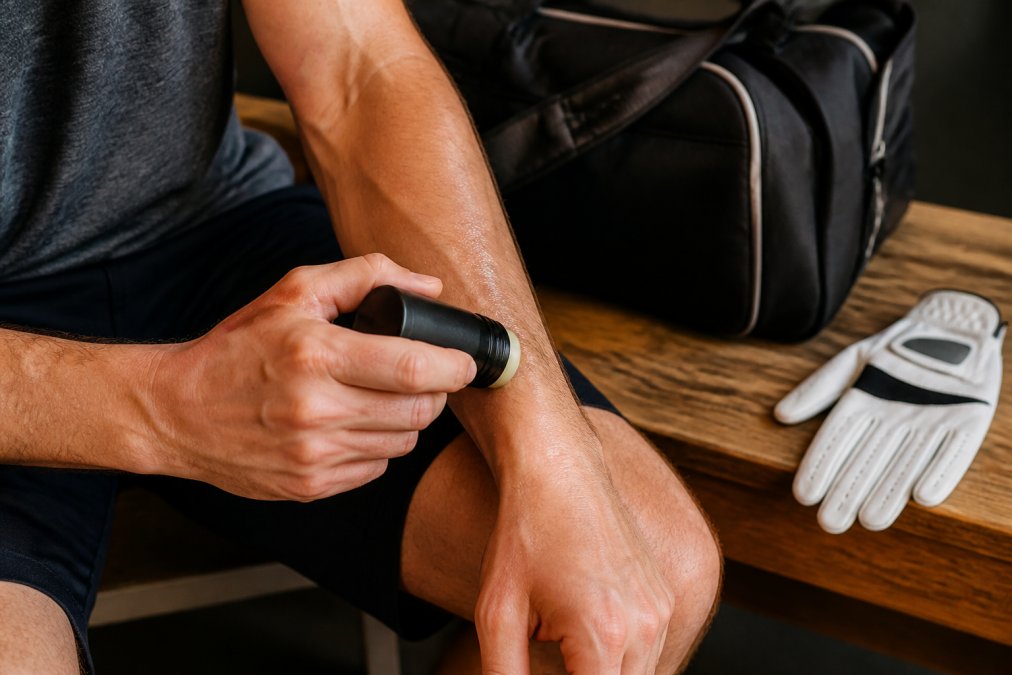
Back 9 Botanicals CBD Topical Therapy Salve Stick
Back 9 Botanicals is our top pick for golfers and active adults wanting a purpose-built recovery topical. The stick format is genuinely practical, you can target a sore elbow or tight shoulder between holes without breaking rhythm or getting your hands messy.
Best for: Golfers and athletes wanting targeted relief with a portable, no-mess format.
Pros:
- Convenient stick applicator, genuinely portable
- Natural botanical formulation
- Designed specifically for athletic recovery
- Clean ingredient profile
Cons:
- Milligrams per serving not prominently listed; check the COA directly
- Topical application won't address systemic recovery needs
Pro Tip
Back 9 Botanicals publishes [lab test results](/pages/lab-results) on their website. Before your first purchase, pull the COA and verify CBD content matches the label.
Lazarus Naturals Relief + Recovery CBD Muscle Gel
For athletes prioritizing potency and value, Lazarus Naturals delivers. The 2000mg full-spectrum gel with menthol is third-party lab tested at roughly $0.016 per milligram, among the most cost-efficient full-spectrum topicals available. The gel absorbs quickly, useful post-workout when fast transdermal absorption matters.
Best for: Budget-conscious athletes wanting high-potency, full-spectrum relief.
Pros:
- Exceptional cost-per-mg value
- Full-spectrum formula with menthol cooling
- Fast-absorbing gel texture
- Third-party lab tested
Cons:
- Gel is less moisturizing than cream formats
- Contains trace THC; not suitable for athletes subject to cannabinoid testing
CBDistillery CBD Targeted Relief Stick (THC-Free)
CBDistillery's stick addresses THC concerns directly: CBD isolate with non-detectable THC levels. The 1000mg stick includes menthol for cooling and uses a glide-on applicator. For athletes concerned about testing compliance, this is the safest topical choice.
Best for: Athletes needing a confirmed THC-free product for testing compliance.
Pros:
- THC-free, verified by third-party COA
- 1000mg CBD isolate in portable stick format
- Cooling menthol for immediate comfort
- Made from U.S.-grown, non-GMO hemp
Cons:
- Isolate lacks the entourage effect of full or broad-spectrum products
- Higher cost-per-mg than full-spectrum alternatives
Joy Organics CBD Sports Cream
Joy Organics combines broad-spectrum, THC-free CBD with menthol and camphor in an organic formulation. The pronounced cooling sensation works well for post-exercise inflammation and joint discomfort.
Best for: Athletes preferring organic formulations and strong cooling relief.
Pros:
- Broad-spectrum, THC-free
- Organic ingredient sourcing
- Strong cooling effect from menthol and camphor
- Third-party lab tested
Cons:
- Lower CBD concentration than some alternatives at this price point
- Cooling-only formula; no warming option
Green Roads Muscle & Joint Heat Relief Roll-On
Warming formulas serve a different purpose than cooling ones. Green Roads uses pepper compounds to generate warming sensation alongside broad-spectrum CBD, rosemary oil, bentonite clay, and avocado oil. The warming effect is particularly useful for chronic stiffness and pre-activity preparation.
Best for: Chronic pre-activity stiffness and athletes who respond better to heat than cooling.
Pros:
- Warming sensation for stiff muscles and joints
- Precise roll-on applicator
- Broad-spectrum with non-detectable THC
- Third-party lab tested
Cons:
- Not suitable for acute inflammation where cooling is preferred
- Some users may find warming sensation too intense
CBD Dosage for Muscle Soreness: What the Research Suggests
CBD dosage for muscle soreness is not one-size-fits-all. Topical products don't enter systemic circulation like ingestibles, so milligrams-per-serving refers to product amount, not absorbed dose.
Starting Low and Titrating Up
The standard approach is dosage titration: start with the lowest effective amount and increase gradually. For topicals, apply a small amount to the affected area and assess response over 30-60 minutes before reapplying. Most practitioners suggest giving any new CBD product one to two weeks of consistent use before drawing conclusions about effectiveness.
Drug Interactions to Know Before You Start
Cannabidiol is metabolized by the cytochrome P450 enzyme system, the same pathway used by many common medications including blood thinners, certain statins, and some anti-inflammatory drugs. This creates potential for pharmacological interaction.
According to Penn State's drug interaction research on cannabidiol, CBD has documented interactions with a meaningful number of prescription medications. Consult a healthcare provider before adding CBD if you take prescription medications regularly.
Watch Out
If you take warfarin, certain blood pressure medications, or anti-epileptic drugs, do not start a CBD regimen without speaking to your physician. CBD inhibits the CYP2C9 enzyme, which can increase drug concentration in your bloodstream to potentially adverse levels.
How to Use CBD for Athletic Recovery: Protocols That Work
The most common mistake is inconsistent, reactive use. Effective use follows a protocol.
Pre-Round and Pre-Workout Application
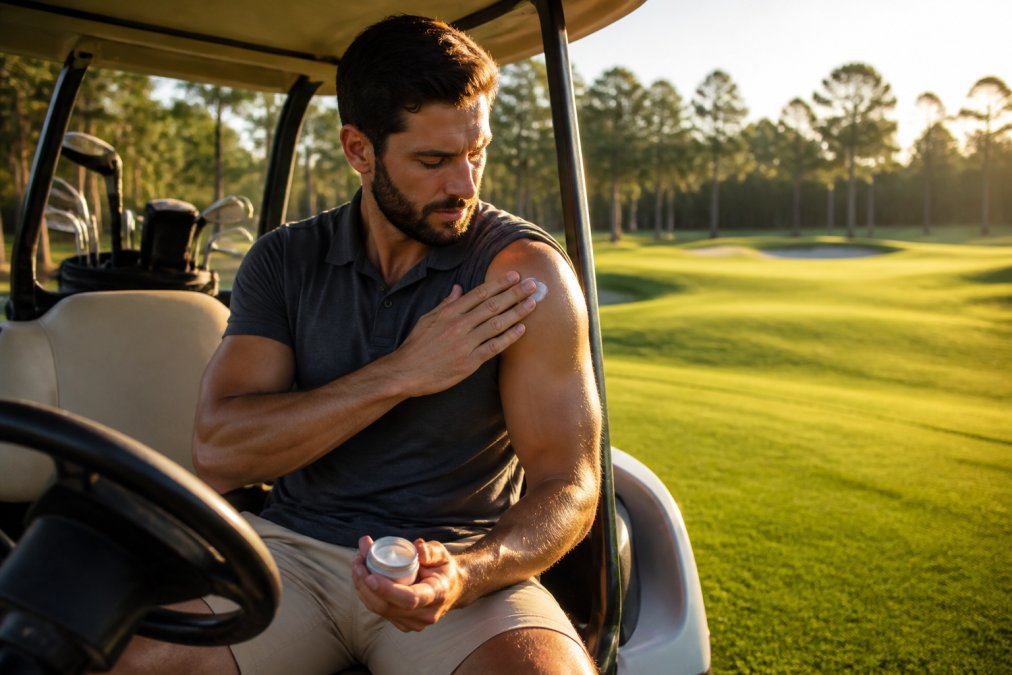
Pre-activity application serves a different function than post-exercise recovery. Applying a warming topical 15-20 minutes before activity can increase local circulation and reduce baseline muscle tension. Use warming formulas for pre-activity, cooling or neutral formulas for post-activity inflammation.
Post-Exercise Recovery Timing
The inflammatory response peaks around 24-48 hours after exercise. Applying a CBD topical within 30 minutes of finishing activity, when circulation is elevated, may improve transdermal absorption. Many athletes combine topical application with an evening sublingual tincture or gummies for systemic recovery support and sleep quality.
Key Takeaway
The most effective CBD recovery protocol combines a topical applied within 30 minutes post-exercise for localized relief, paired with a consistent evening ingestible dose for systemic recovery and sleep support. Consistency over weeks matters more than any single application.
Safety, Legal Status, and Sourcing Transparency
Hemp-derived CBD products containing less than 0.3% THC by dry weight are federally legal under the 2018 Farm Bill. Individual state laws vary, so verify your state's current regulations before purchasing.
CBD is generally well-tolerated with a favorable adverse effects profile. The most commonly reported side effects with oral CBD include fatigue, changes in appetite, and gastrointestinal discomfort. Topical CBD carries lower systemic risk; skin irritation at the application site is the primary concern, particularly with menthol or pepper compounds.
Sourcing transparency is a genuine differentiator. Hemp absorbs heavy metals and pesticides from contaminated soil. Reputable brands source from U.S.-grown, non-GMO hemp and publish COAs including heavy metal and pesticide panels. CBD is non-psychoactive and does not produce intoxicating effects.
Which CBD Product Should You Choose?
The right choice depends on THC tolerance, primary recovery need, and budget per milligram.
- For golfers and athletes wanting a purpose-built formula: Back 9 Botanicals CBD Topical Therapy Salve Stick. The formulation is designed for active lifestyles, the stick format is genuinely practical on the course, and the brand publishes lab results for verification.
- For maximum potency at lowest cost per mg: Lazarus Naturals Relief + Recovery Muscle Gel at 2000mg full-spectrum.
- For athletes subject to THC testing: CBDistillery's isolate stick or Joy Organics broad-spectrum cream, both with confirmed non-detectable THC levels.
- For chronic pre-activity stiffness: Green Roads Muscle & Joint Heat Relief Roll-On, used 15-20 minutes before activity.
Match the product to the specific recovery problem you're solving, verify the COA, and commit to consistent use before evaluating results.
| Decision Factor | Best Choice |
|---|---|
| Purpose-built for golfers and athletes | Back 9 Botanicals CBD Salve Stick |
| Highest potency for the price | Lazarus Naturals Muscle Gel (2000mg) |
| Confirmed THC-free | CBDistillery Relief Stick or Joy Organics Cream |
| Warming for chronic stiffness | Green Roads Heat Relief Roll-On |
| Organic, clean-label formula | Joy Organics CBD Sports Cream |
Recovery doesn't happen in a single session, and neither does finding the right CBD product. The challenge most athletes face is sorting through a crowded market where quality varies dramatically and marketing rarely matches what's in the bottle. Back 9 Botanicals was built specifically to address that gap: clean, functional formulas with natural botanicals and hemp-derived cannabinoids, designed for the performance and recovery demands of golfers and active adults. Visit the Back 9 Botanicals website to review current lab tests and find the right topical for your recovery protocol.
=== FAQ ANSWERS (audit these too, same rules) ===
Frequently Asked Questions
Will CBD actually help with muscle soreness?
CBD interacts with cannabinoid receptors in the endocannabinoid system, which plays a role in regulating inflammation and pain signaling. Research on cannabidiol suggests it carries anti-inflammatory properties that may reduce delayed onset muscle soreness after intense exercise. Results vary by individual, product type, and dosage. Topical application targets localized discomfort directly, while ingestibles like tinctures and gummies address systemic muscle fatigue. Always check for third-party lab testing before buying any CBD for muscle soreness.
Is topical CBD better than oral CBD for muscle recovery?
Topicals and ingestibles serve different purposes. CBD topicals for muscle recovery work locally: the cannabinoids absorb through the skin near the application site, making them well-suited for targeted joint inflammation or a specific sore muscle group. Oral CBD, taken sublingually or as gummies, enters the bloodstream and may support broader systemic recovery. Many athletes combine both, applying a topical balm immediately post-exercise and using a tincture in the evening to support sleep and overall recovery time.
How long does it take for CBD to work on sore muscles?
Topical CBD products typically produce a noticeable effect within 15 to 45 minutes of application because transdermal absorption bypasses the digestive system. Sublingual tinctures generally take 15 to 30 minutes to kick in, while gummies can take 45 to 90 minutes due to digestion. The duration of relief varies by potency, milligrams per serving, and individual body chemistry. Consistent daily use over one to two weeks tends to produce more stable results than single-dose applications.
What is the right CBD dosage for muscle soreness?
There is no universal CBD dosage for muscle soreness because bioavailability, body weight, and the severity of discomfort all factor in. A common starting point for ingestibles is 15 to 25 milligrams per serving, taken once or twice daily. Dosage titration, meaning gradually increasing by 5 milligrams every few days until you notice results, is the most practical approach. For topicals, apply a generous amount to the affected area and reapply as needed. Always consult a healthcare provider if you take other medications.
Is hemp-derived CBD legal for athletes to use?
Hemp-derived CBD containing less than 0.3% tetrahydrocannabinol (THC) is federally legal under the 2018 Farm Bill. The World Anti-Doping Agency removed cannabidiol from its prohibited list in 2018, though THC remains banned in competition. Amateur golfers are generally not subject to WADA rules, but it is worth confirming with your specific governing body. Always choose products with a certificate of analysis confirming THC levels, and opt for broad-spectrum or isolate formulas if you want to minimize any THC exposure.
This article was written using GrandRanker

