
 Cart (0 items)





CBD oil vs capsules for post-golf inflammation: compare onset time, dose control, and convenience to pick the right format for your recovery.
CBD Oil vs Capsules for Post-Golf Inflammation

Table of Contents
- CBD Oil vs Capsules: What Changes After a Round
- How Each Format Enters Your System
- How Long Does CBD Take to Work After Golf?
- CBD Oil vs Capsules for Post-Golf Inflammation: Direct Comparison
- CBD for Muscle Soreness: What the Evidence Actually Shows
- CBD Dosage for Recovery: Timing, Precision, and Format
- CBD and Medication Interactions: What to Check First
- Topicals vs Oral CBD for Golf Recovery
- Frequently Asked Questions
Last Updated: October 16, 2026
CBD Oil vs Capsules: What Changes After a Round
The choice between CBD oil vs capsules for post-golf inflammation comes down to one trade-off: speed versus predictability. CBD oil placed under the tongue absorbs faster and lets you fine-tune each dose, while capsules deliver a fixed, tasteless amount that's easier to take consistently. At Back 9 Botanicals, we hear this question constantly from golfers who want to manage sore shoulders, stiff backs, and aching knees after 18 holes without adding another pill bottle to the rotation.
Here's the part most guides skip: the format you choose matters less than matching it to your actual recovery window. If you're sore the moment you step off the 18th green, a fast-absorbing oil makes more sense than a capsule that may take an hour to register. If you're planning ahead and want a no-fuss routine before a tournament weekend, capsules win on convenience every time.
Below, we break down how each format works, what realistic timing looks like, and which one fits the way you actually recover.
How Each Format Enters Your System
CBD oil and CBD capsules take different paths through the body, and that changes how quickly you feel anything. CBD oil is typically held under the tongue for 60 to 90 seconds, where it absorbs through the mucous membranes directly into the bloodstream. Some of it is swallowed and processed through the liver, but the sublingual route gives you a head start.
CBD capsules must pass through the digestive system. Stomach acid, food content, and liver metabolism all affect how much cannabidiol actually reaches circulation. That's why capsules tend to have a slower onset and a lower bioavailability than oil held under the tongue.
Neither format is "better." They're just built for different moments. Oil suits reactive recovery; capsules suit planned, consistent routines.
How Long Does CBD Take to Work After Golf?
CBD oil typically takes effect in 15 to 45 minutes when held under the tongue. Capsules usually take 45 to 90 minutes because they must pass through digestion first. That gap is the single biggest practical difference between the two formats for post-round recovery.
If you finish a round at 2 p.m. and want relief before an evening event, oil gets you there faster. If you take a capsule at breakfast on tournament day, the timing lines up with the aches that show up mid-afternoon.
What most guides miss is that the onset window isn't fixed. A heavy meal before your capsule can push onset later. Holding oil under the tongue longer than the label suggests won't speed things up much past a point. The variables are food, individual metabolism, and how consistently you've been taking CBD.
CBD Oil vs Capsules for Post-Golf Inflammation: Direct Comparison
For post-golf inflammation, CBD oil wins on speed and dose control, while capsules win on convenience and taste-free consistency. Here's how the two formats stack up across the factors that actually matter after a round.
| Factor | CBD Oil | CBD Capsules |
|---|---|---|
| Onset time | 15-45 minutes | 45-90 minutes |
| Dose precision | Easy to adjust drop by drop | Fixed per capsule |
| Convenience | Needs measuring and holding | Swallow and go |
| Taste | Hemp flavor, varies | None |
| Best for | Reactive post-round relief | Planned daily routine |
Neither format is a pain reliever in the pharmaceutical sense. What they offer is a way to support your body's own recovery process. The format you pick should match how you want to use it.
Post-Round Soreness: Which Format Fits
If your soreness shows up fast and sharp after a round, oil fits better because you can respond within the first 30 minutes. If your soreness builds slowly over the evening and into the next morning, a capsule taken right after you leave the course can have you covered by the time it peaks.
Golfers who play multiple days in a row often use both: a capsule in the morning for baseline support and oil in the evening for a targeted top-up.
CBD for Muscle Soreness: What the Evidence Actually Shows
Most articles on this topic blur three different things together: what CBD does in a lab dish, what it does in animals, and what it does in humans who just walked 18 holes. Keeping those separate is the difference between a useful expectation and a marketing claim.
What's established in humans. CBD is an approved prescription treatment for certain severe childhood seizure disorders. That's the strongest human evidence base, and it's unrelated to soreness. For pain and inflammation in healthy adults, the human literature is small, short, and mixed. A handful of controlled trials have looked at CBD or CBD-dominant products for conditions like arthritis pain, neuropathic pain, and post-exercise soreness, with modest and inconsistent results. Most studies enrolled a few dozen people, ran for days to weeks, and used different products, doses, and delivery formats, which makes them hard to compare.
What's proposed but not proven. CBD is thought to interact with the endocannabinoid system, a signaling network involved in pain perception, immune response, and recovery. It may also influence certain receptors and enzymes indirectly. These are plausible mechanisms, and they're why researchers keep studying CBD for inflammation. But a plausible mechanism is a hypothesis, not an outcome. No human trial has shown that CBD reliably reduces delayed-onset muscle soreness after a round of golf, and no trial has compared oil against capsules for that specific use.
What that means for your expectations. If you're hoping CBD works like a nonsteroidal anti-inflammatory drug, the evidence doesn't support that comparison. NSAIDs have decades of controlled trial data behind them; CBD does not. What some users report is a calmer feeling, easier sleep, and less lingering tightness, which can matter for recovery even if the mechanism isn't inflammation reduction. Better sleep alone can change how soreness feels the next morning.
A practical way to judge any claim you read. Ask three questions:
- Is this a human study, or a cell or animal study? Cell and animal findings often don't carry over.
- Was there a control group, and was it blinded? Open-label studies where everyone knows they're taking CBD tend to overstate benefit.
- What product and dose were used? A trial using a purified isolate at a specific milligram amount tells you little about an unlabeled tincture.
Key Takeaway
Treat CBD as a supportive, alcohol-free addition to recovery, not a substitute for proven pain management. If soreness is sharp, one-sided, lasts more than a few days, or comes with swelling or loss of motion, that's a reason to see a clinician, not to increase your dose.
This is also where the format question gets more interesting than most guides admit. Because the human evidence is thin across the board, the practical case for oil versus capsules rests less on which one 'works better' and more on which one you can use consistently and evaluate honestly. A format you can measure and repeat gives you better information about your own response than a format you take randomly.
That same logic applies beyond golf. Weekend warriors, recreational lifters, runners, and anyone managing everyday stiffness from training or physical work are all working from the same limited evidence base. The realistic play is the same: pick a format, hold the dose steady for a week or two, track sleep and soreness, and judge from your own data rather than from a label claim.
CBD Dosage for Recovery: Timing, Precision, and Format
There is no universal CBD dose for post-round soreness, and any article that hands you one is guessing. What you can control is how you start, how you time it, and how you track what happens. That's the part most guides skip.
Start with the label, not a number from the internet. Federal law requires CBD product labels to state the cannabinoid content per serving, and reputable brands list CBD milligrams per drop, per milliliter, or per capsule. Use that as your anchor. A common cautious pattern is to begin at the low end of the label's suggested range, hold it steady for several days, and only then consider adjusting. Jumping doses day to day makes it impossible to tell what's working.
Timing is format-specific. This is where oil and capsules genuinely diverge:
- Oil, held under the tongue. Onset typically falls in the 15-to-45-minute range. If you want support during the drive home from the course or before an evening event, take it as soon as you finish. Holding it under the tongue for 60 to 90 seconds before swallowing gives the mucous membranes time to absorb; swallowing immediately sends more of the dose through digestion instead.
- Capsules. Onset typically runs 45 to 90 minutes, and a heavy meal beforehand can push it later. If you know your soreness peaks the next morning, a capsule taken with dinner the night before is a reasonable plan. If you want it working by the back nine, take it before you tee off, not after.
Precision favors oil; consistency favors capsules. Oil lets you adjust in small increments, which matters when you're still figuring out your range. Capsules lock you into a fixed amount per serving, which is a feature once you know your number and a limitation before you do. A 25 mg capsule and 25 mg of oil are not equivalent in practice, because sublingual absorption and digestive absorption deliver different fractions of the dose into circulation.
Track three things for two weeks.
- Dose and format, written down, not estimated.
- Time taken and time you noticed anything.
- Soreness and sleep quality on a simple 1-to-5 scale, morning and evening.
A two-week log tells you more about your response than any dosing chart. It also gives you something concrete to bring to a clinician if you decide to have that conversation.
Watch Out
CBD can interact with prescription medications, particularly those processed by the same liver enzymes, including some blood thinners and seizure medications (Cannabidiol Interactions with Medications, Illicit Substances, and Alcohol). If you take any prescription drug, talk to your doctor or pharmacist before starting CBD in any format. This applies to topicals less than to swallowed products, but it's worth raising either way. Common reported side effects include drowsiness, dry mouth, and digestive changes. Stop and seek medical advice if something feels wrong.
A note on daily use versus occasional use. Some people take CBD only after a round; others take it daily as part of an alcohol-free wind-down or sleep routine. Daily use builds a steadier baseline, but it also means any interaction or side effect has more chances to show up. If you're using CBD for general wellness, sleep, or stress rather than for a specific post-activity window, the same tracking logic applies: hold the dose steady, watch how you feel, and adjust slowly.
What not to do. Don't stack oil and capsules on the same day without tracking which one you took when. Don't chase a bigger dose because the first one didn't feel like anything. And don't treat a label's maximum suggested serving as a target. The goal is the smallest amount that gives you a repeatable result, not the largest amount you can tolerate.
CBD and Medication Interactions: What to Check First
CBD can interact with certain medications, especially those processed by the same liver enzymes. If you take blood thinners, seizure medications, or drugs with a narrow therapeutic window, talk to your doctor before adding CBD in any format. This isn't a formality. It's the single most important step before you start.
Other points worth checking:
- THC content. Full-spectrum products may contain trace THC. If you're subject to drug testing, choose a broad-spectrum or isolate product, or verify the certificate of analysis.
- Side effects. Some people report drowsiness, dry mouth, or digestive changes. Start low.
- Product quality. Third-party lab testing is the baseline. If a brand won't show you a certificate of analysis, walk away.
For anyone managing a health condition or taking prescription medication, a conversation with a healthcare provider is worth more than any blog post.
Topicals vs Oral CBD for Golf Recovery
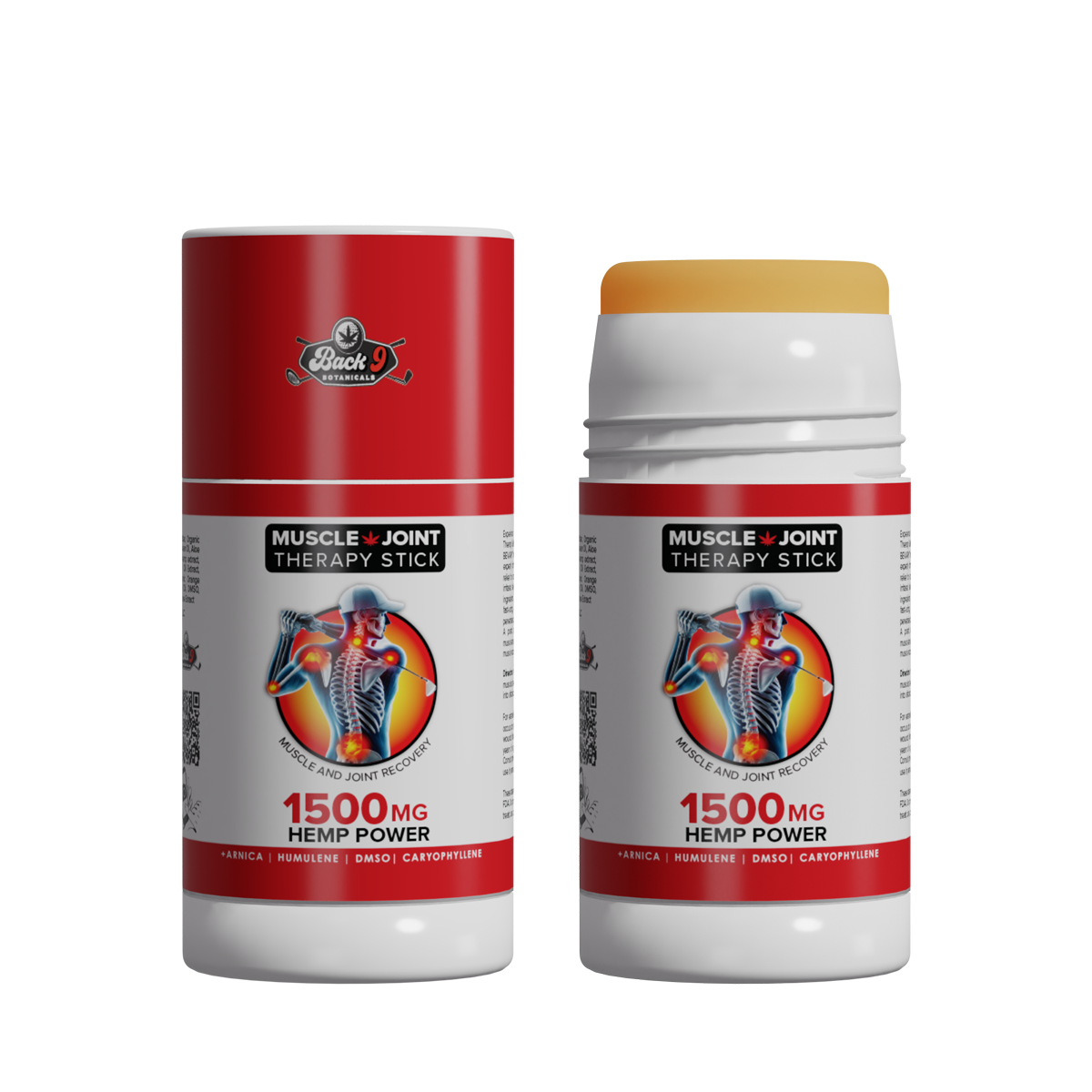
Topicals and oral CBD serve different purposes, and many golfers use both. A topical like our CBD Topical Therapy Stick delivers cannabinoids and botanicals directly to a targeted area, like a sore shoulder or a stiff lower back. Oral CBD, whether oil or capsules, works systemically, which means it can support recovery across the whole body rather than one spot.

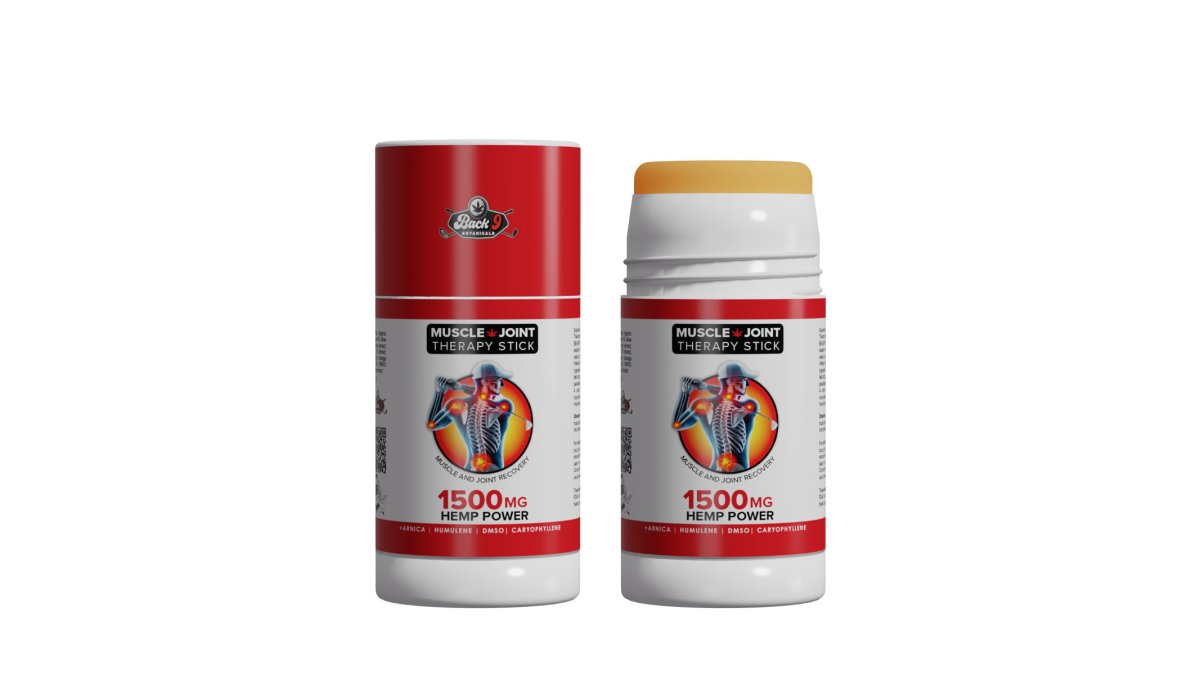
The practical split looks like this: use a topical when you know exactly where the soreness lives, and use oral CBD when you want broader, longer-lasting support. Neither replaces the other. A topical won't help you sleep better; an oral capsule won't give you the immediate localized sensation of a salve worked into a tight muscle.
For golfers dealing with post-round inflammation, the combination tends to work better than either format alone.
Frequently Asked Questions
Is CBD oil or CBD capsules better for post-golf soreness?
It depends on when you need relief. CBD oil held under the tongue typically takes effect in 15 to 45 minutes, which suits soreness that shows up shortly after a round. Capsules pass through digestion and usually take 45 to 90 minutes, so they work better for soreness that peaks hours later. Some golfers use oil right after play and a capsule before bed.
How quickly do CBD oil and capsules take effect?
Sublingual CBD oil absorbs through the tissue under the tongue and often takes effect in 15 to 45 minutes. Capsules must pass through the digestive system, so onset usually falls between 45 and 90 minutes and varies with what you have eaten. If you need fast relief for post-golf inflammation, oil is the quicker option; capsules are better for steady, delayed effects.
Can CBD help with muscle soreness after golf?
Some athletes report less soreness after using CBD, but the evidence is still limited and results vary. CBD interacts with the endocannabinoid system, which plays a role in inflammation and pain signaling. Think of it as a possible support for recovery, not a guaranteed fix. Pair it with hydration, stretching, and rest for the best results.
What should golfers look for when choosing a CBD product?
Look for a certificate of analysis from a third-party lab, clear labeling of CBD content per serving, and a note on THC level if that matters to you. Check the product format: oil for fast onset, capsules for convenience and precise dosing, topicals for targeted muscle and joint relief. Avoid products that do not disclose their cannabinoid content or lab results.
Post-golf inflammation is stubborn, and no single format solves it perfectly. That's why we built Back 9 Botanicals around a range that lets you match the product to the moment: a targeted topical for the spots that scream after 18 holes, and clean, functional formulas designed to support recovery and daily balance. If you want a recovery routine that fits how you actually play, explore our lineup and see which format earns a spot in your bag.

