
 Cart (0 items)





Compare CBD and caffeine for golf focus, nerves, and performance. Learn how each affects your game, onset time, safety, and which suits your needs.
CBD vs Caffeine for Golf Performance: A Fair Comparison

Table of Contents
- CBD vs Caffeine for Golf: Quick Comparison
- How Caffeine for Golf Performance Works
- CBD Effects and Onset Time: What to Expect
- Using CBD and Caffeine Together for Golfers
- CBD Safety and Drug Testing for Athletes
- Which Option Fits Your Golf Goals
- Frequently Asked Questions
Last Updated: October 13, 2026
CBD vs Caffeine for Golf: Quick Comparison
Standing on the first tee with your mind racing, you need clarity, not jitters. When comparing CBD vs caffeine golf performance, the choice comes down to what your game requires. CBD calms the nervous system and supports focus without an energy spike; caffeine delivers alertness but can amplify anxiety.
Understanding how they differ helps you pick the right tool for your round, recovery, or daily routine.
| Aspect | CBD | Caffeine | Best For |
|---|---|---|---|
| Onset Time | 30 minutes to 2 hours | 15-45 minutes | Quick energy needs (caffeine); sustained calm (CBD) |
| Peak Effect | 1-2 hours | 30-60 minutes | Longer-lasting stability (CBD); immediate boost (caffeine) |
| Mental Effect | Calm, focused clarity | Alert, energized | Anxiety management (CBD); fatigue fighting (caffeine) |
| Physical Effect | Relaxation, recovery support | Enhanced endurance | Post-round recovery (CBD); mid-round stamina (caffeine) |
| Best Timing | Pre-round or evening | 30 mins before play | Depends on your goal |
Key Takeaway
CBD works best when you need composure and mental clarity without stimulation. Caffeine excels when you need immediate energy and alertness. Many golfers use both, at different times of the day.
How Caffeine for Golf Performance Works
Caffeine is a natural stimulant that increases alertness by blocking adenosine, the compound your brain produces when you're tired.
Most people feel caffeine's impact within 15 to 45 minutes, peaking around 30 to 60 minutes, useful for an immediate boost before a round or during a mid-round slump.
Caffeine also supports physical endurance, potentially enhancing muscle performance and reducing fatigue perception, useful when walking 18 holes or maintaining swing consistency. The Players Blend gummies from Back 9 Botanicals combine 55mg of natural caffeine from coffee beans with amino acids like L-citrulline and beta-alanine.

The trade-off is real: caffeine can increase heart rate and amplify anxiety, the opposite of what you want when nerves are already high. Some golfers find it sharpens focus but intensifies pressure. If you're prone to overthinking or first-tee jitters, caffeine might work against you.
Watch Out
Caffeine sensitivity varies widely. A dose that energizes one golfer might make another feel jittery and unfocused. Start with a lower amount and assess how your body responds before a competitive round.
CBD Effects and Onset Time: What to Expect
CBD is a non-psychoactive cannabinoid that interacts with your body's endocannabinoid system, a network of receptors (CB1 and CB2) regulating stress response, pain perception, mood, and sleep. Unlike THC, it doesn't produce a "high" at typical serving sizes, which is why it shows up in athlete and weekend-warrior routines where mental clarity matters.
Onset and duration by method
Onset depends heavily on how you take it. These are commonly reported ranges, not guarantees:
| Method | Typical onset | Typical duration | Notes |
|---|---|---|---|
| Oil held under the tongue | 15-45 minutes | 4-6 hours | Bypasses digestion; fastest of the oral options |
| Capsule or edible | 30-120 minutes | 6-8 hours | Slower and more variable; food intake matters |
| Topical | 15-30 minutes (local) | 2-4 hours | Acts at the application site; minimal systemic absorption |
| Vaporized | Within minutes | 2-3 hours | Fastest onset, shortest duration |
For a round of golf, that timing gap is the practical problem: an oil taken 45-60 minutes before you leave is more reliable than an edible taken in the parking lot.
What the evidence actually supports
This is where most CBD-and-golf content overreaches. Human clinical evidence for CBD is strongest in narrow areas: certain forms of epilepsy and some anxiety research using pharmaceutical-grade CBD.
In practice: CBD is reasonable to try for pre-round nerves, general stress, or post-activity soreness, but treat claims of measurable performance gains with skepticism.
Dose, timing, and individual response
There is no universal dose. Body weight, metabolism, liver enzyme activity, food in your stomach, and prior cannabinoid use all shift the response. A cautious pattern: start low, hold steady for several days, and note effects before adjusting. A fatty meal can increase absorption; an empty stomach tends to blunt it.
A few practical notes for golfers:
- Pre-round: If you are trying CBD for composure, test it on a practice round first, not a tournament round. You want to know how it affects your feel and tempo before it counts.
- Post-round: For muscle tension and recovery, timing is less critical. Many people take it in the evening, which also pairs with sleep support.
- Daily baseline: Some users prefer a consistent daily serving over occasional large ones, on the theory that steady levels work better than spikes.
The entourage effect, briefly
Full-spectrum products contain multiple cannabinoids and terpenes, and the idea that they work together better than isolated CBD is called the entourage effect. It's a plausible mechanism and a popular selling point, but human studies directly comparing full-spectrum to isolate for performance or recovery are limited. If an isolate did nothing for you, full-spectrum is a reasonable next step, but keep expectations realistic.
Pro Tip
If you are new to CBD, pick one product, one serving size, and one time of day, and keep everything else constant for a week. Changing three variables at once tells you nothing about which one mattered.
Watch Out
CBD can interact with certain medications, including some blood thinners and anti-seizure drugs, because it is processed by the same liver enzymes. If you take prescription medication, talk to your doctor or pharmacist before adding CBD.
The limitation versus caffeine is straightforward: CBD works more gradually and its effects are subtler. If you need energy for a round starting in 20 minutes, caffeine is faster. CBD fits better into pre-event preparation, daily stress management, or post-round recovery.
Using CBD and Caffeine Together for Golfers
The insight most guides miss: you don't have to choose. Many golfers and active athletes use both, timed for different parts of the day.
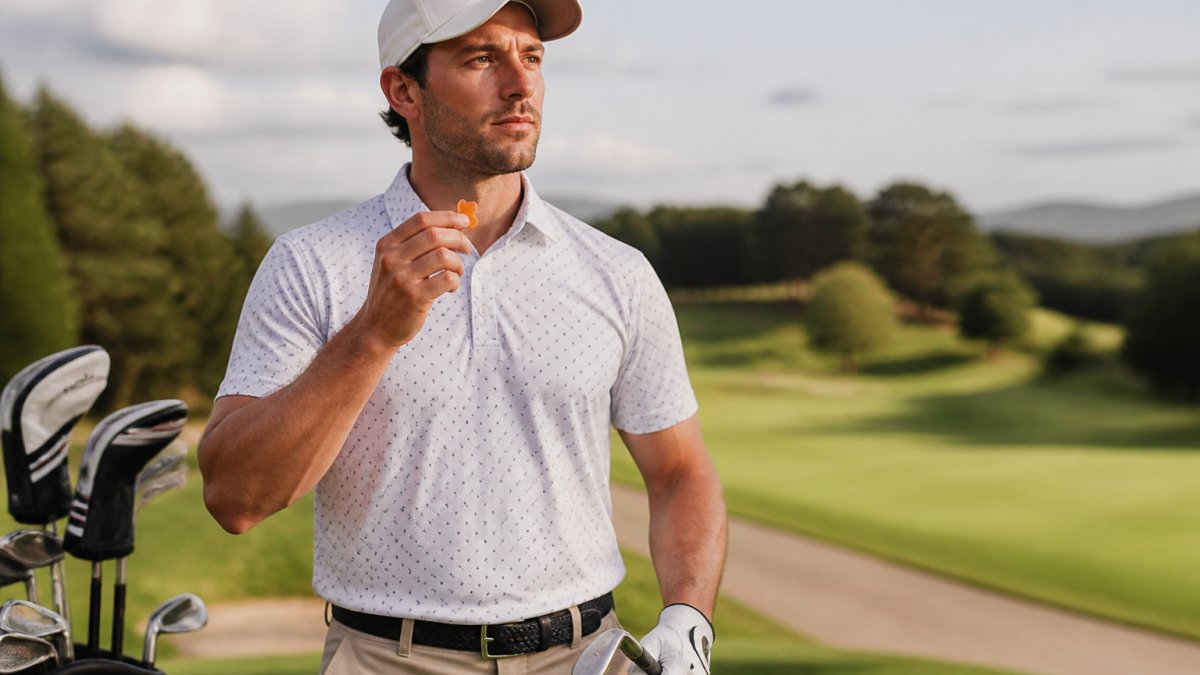
A common approach: CBD in the morning or evening for calm and recovery, then caffeine closer to competition or when you need immediate mental energy.
Timing matters when combining both.
Individual response varies significantly. Body weight, metabolism, food intake, and sensitivity all influence how you experience CBD and caffeine. Start with lower doses and adjust based on how your body responds.
CBD Safety and Drug Testing for Athletes
If you compete or your job requires testing, this section matters most, and it's where most CBD content gets vague. Here is the honest version.
Will CBD show up on a drug test?
Standard workplace and sport drug panels typically screen for THC metabolites (specifically carboxy-THC), not CBD itself. Pure CBD isolate should not trigger a positive. The risk comes from full-spectrum and broad-spectrum products containing trace THC.
Birdie Boost! - Attitude & Altitude Gummies (5ct) →
Hemp-derived products sold legally in the U.S. may contain no more than 0.3% Delta 9 THC by dry weight under the 2018 Farm Bill. That's a legal threshold, not a testing safety threshold. Factors that raise your risk of a positive:
- Higher THC content per serving. A product with 10mg of hemp-derived Delta 9 per gummy is a very different testing proposition than one with 2mg.
- Frequency and accumulation. Daily use of full-spectrum products over weeks can build up THC metabolites even at low per-serving amounts.
- Test sensitivity. Some panels have very low detection thresholds.
- Individual metabolism. Body fat percentage, hydration, and liver function all affect clearance.
If testing is a real concern for you, isolate-based or THC-free broad-spectrum products are the lower-risk choice. There is no way to guarantee a negative result short of not using THC-containing products at all.
Sport and event rules
Rules vary by organization and competition level. Some governing bodies prohibit any THC-containing substance regardless of source; others defer to the World Anti-Doping Agency's carboxy-THC threshold, set to distinguish intentional use from incidental exposure. Check your governing body's current policy before using any hemp-derived product, and don't assume "federally legal" means "allowed in competition."
Interactions and contraindications
CBD is processed by the same family of liver enzymes (cytochrome P450) as many common medications, so it can change how your body breaks down certain drugs, potentially raising their levels in your bloodstream. Categories worth flagging to your doctor or pharmacist:
- Blood thinners such as warfarin
- Anti-seizure medications
- Certain antidepressants and anti-anxiety medications
- Some heart rhythm medications
CBD can also cause drowsiness in some people, and combining it with alcohol or sedatives compounds that effect. If you are driving to or from the course, know how it affects you before you get behind the wheel.
Impairment and the golf context
Even without a "high," hemp-derived THC can affect reaction time, coordination, and judgment at higher servings. Golf involves driving there, swinging a club near others, and deciding under pressure. Treat any THC-containing product like alcohol: know your limits, don't combine it with drinking, and don't assume you're fine because you don't feel intoxicated.
Product quality and contamination
The supplement market is lightly regulated. Independent testing has found some CBD products contain less or more cannabinoid than the label claims, and a smaller number show traces of pesticides, heavy metals, or residual solvents. Two things to look for:
- A certificate of analysis (COA) from an accredited third-party lab, ideally accessible by batch number on the brand's website.
- Clear labeling of total THC content per serving, not just "hemp extract."
If a brand will not show you a COA, that is your answer.
Watch Out
Hemp-derived THC is federally legal, but some state regulations and sport organizations impose their own restrictions. Verify both your local laws and your competitive rules before using any hemp product.
Key Takeaway
The three safety questions worth answering before you use any CBD or hemp product: Does it contain THC, and how much per serving? Does it interact with anything I take? Can I see a third-party lab report for this batch?
Which Option Fits Your Golf Goals
Your choice depends on what you're trying to achieve in your game and daily routine.
Choose caffeine if: You need immediate mental clarity and energy for an upcoming round.
Choose CBD if: You struggle with pre-round nerves or overthinking. You want to support recovery and sleep after a demanding round.
Use both if: You want to address different needs at different times of day.
For overall wellness beyond golf, the Birdie Boost or the full Daily Wellness Stack offers full-spectrum cannabinoids and supportive nutrients like magnesium and B12.

The honest reality: your body is unique.
The gap between a good round and a great one often comes down to mental clarity and physical readiness.
Frequently Asked Questions
Does CBD mix with caffeine?
CBD and caffeine can be used together, and some formulas combine both. Caffeine increases alertness and energy, while CBD may promote calm and focus without the jitters caffeine sometimes causes. Players Blend combines 55mg caffeine with 2mg hemp-derived Delta 9 THC and performance botanicals, designed to deliver clean energy and composure during play. Individual responses vary, so start with a low dose if combining them for the first time.
Can caffeine improve focus during a round of golf?
Yes. Caffeine stimulates the central nervous system and may increase concentration, mental clarity, and alertness. Many golfers use caffeine before or during a round to stay sharp, especially on longer 18-hole days. Caffeine takes effect within 15-45 minutes and peaks around 30-60 minutes. A typical dose of 55mg (as in Players Blend) is enough to boost focus without causing tremors or anxiety in most people.
What does CBD feel like when it kicks in?
CBD effects typically begin 30 minutes to 2 hours after consumption, depending on the form and individual metabolism. Most users report a subtle sense of calm, reduced tension, and mental clarity rather than a noticeable 'high.' On the course, many golfers describe feeling more composed during pressure moments like the first tee. CBD doesn't impair alertness or reaction time, making it compatible with play. Full-spectrum blends like Birdie Boost may feel more pronounced due to the entourage effect of multiple cannabinoids working together.
Is CBD legal and will it show up on drug tests for athletes?
CBD derived from hemp is federally legal under the 2018 Farm Bill and contains no more than 0.3% Delta-9 THC by mass. However, amateur golfers should verify local regulations before use. Standard drug tests do not detect CBD. Tests that screen for THC may flag products containing hemp-derived Delta 9 THC (like Birdie Boost at 10mg per gummy), though the trace amounts are unlikely to trigger a positive result. Athletes competing under strict rules should confirm their organization's policy before using any hemp product.
Should you try CBD or caffeine for the first time on a golf day?
No. Both CBD and caffeine affect individuals differently, and a golf round is not the place to test an unknown substance. Try either option at home first to understand how your body responds. Start with a low dose and observe effects over several days. Once you're confident in your reaction, introduce it into your pre-round routine. This approach prevents surprises like unexpected drowsiness, jitters, or digestive upset during play.

