
 Cart (0 items)





Exercise induced inflammation responds differently to CBD and THC. Compare what the research shows, safety limits and drug-test risks before you choose.
5 CBD vs THC Facts for Exercise Inflammation

Last Updated: October 27, 2026
Quick Summary
CBD and THC affect exercise induced inflammation differently. CBD does not cause a high but has limited direct human research for post-workout soreness. THC binds strongly to brain receptors, can impair coordination, and is a poor fit before activity that requires focus.
- Human research on CBD mostly covers clinical populations, not athletes recovering from hard training.
- Very little head-to-head evidence compares CBD and THC for exercise induced inflammation specifically.
- THC can impair coordination, reaction time, balance and judgment, so avoid it before focused activity.
- Start low and wait an hour or two before taking more of any THC product, because edibles act slowly.
- Check testing-organization rules before using THC-containing products if you compete in tested events.
Table of Contents
- What Exercise-Induced Inflammation Is and Why It Matters
- How CBD and THC Interact With the Endocannabinoid System
- CBD for Post-Workout Inflammation: What the Evidence Shows
- THC for Muscle Soreness: Benefits, Limits and Psychoactive Trade-Offs
- CBD-to-THC Ratio for Pain Relief and Recovery
- Does CBD Affect Athletic Performance, and What About Drug Tests?
- Choosing Your Recovery Product: Next Steps With Back 9 Botanicals
- Frequently Asked Questions
Exercise induced inflammation is the swelling, soreness and stiffness that follow a hard workout or a long round of golf. Many people reach for CBD or THC to ease it, but the two compounds do different things. This guide compares what CBD and THC are generally understood to do for post-exercise soreness, where the evidence is thin, and what to weigh before you choose.
What Exercise-Induced Inflammation Is and Why It Matters
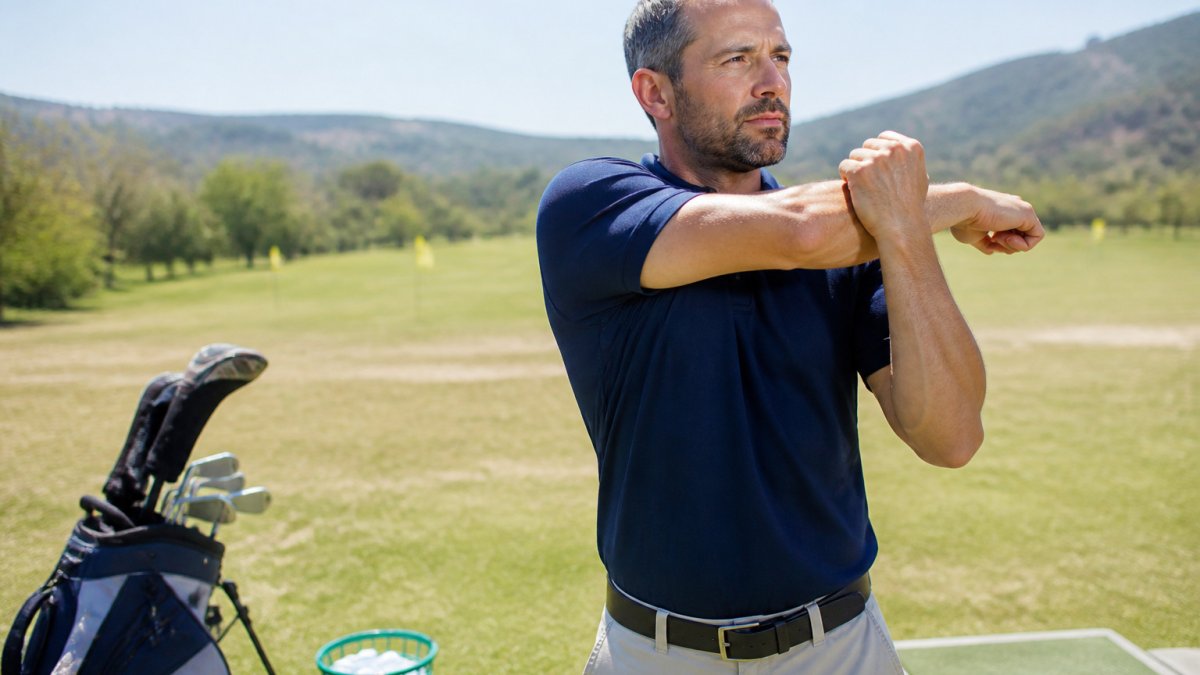
Exercise induced inflammation is the body's normal response to muscle stress. Intense or unfamiliar movement creates tiny tears in muscle fibers, and the immune system responds with swelling and soreness that often peaks one to three days later. This is ordinary recovery, not injury.
The distinction matters. Mild, short-lived soreness usually resolves on its own with rest, sleep and gentle movement. Sharp pain, swelling that worsens, or pain that lingers beyond a week warrants a visit to a doctor or physical therapist rather than a self-treatment plan.
Many recreational golfers feel this most in the shoulders, forearms and lower back after a full round or a range session they did not prepare for.
How CBD and THC Interact With the Endocannabinoid System
Your body produces its own cannabinoid-like signals, collectively called the endocannabinoid system. It includes CB1 receptors, found mostly in the brain and nervous system, and CB2 receptors, found more often in immune tissue.
THC binds directly and fairly strongly to CB1 receptors, which is why it produces a psychoactive effect. CBD binds weakly to these receptors and appears to influence them indirectly. Research suggests CBD may affect other targets, including TRPV1 channels involved in pain signaling, but the exact mechanisms are still being studied.
This difference explains most of the practical trade-offs between the two compounds, covered in the sections below.
CBD for Post-Workout Inflammation: What the Evidence Shows
CBD is a cannabinoid that does not produce a high. The evidence behind it for exercise-induced inflammation, however, is thinner and more indirect than most product pages suggest, and the honest way to read it is to separate what has been studied in people from what has only been studied in cells or animals.
What the human evidence actually covers
Most human CBD research has been conducted in clinical populations, people with arthritis, chronic pain, epilepsy, or anxiety, rather than in athletes recovering from a hard training session. A common pattern in the literature is small sample sizes, short follow-up periods, and outcomes that are self-reported (soreness ratings, perceived recovery) rather than objective. For a side-by-side look at what CBD and THC each do for muscle inflammation, compare the two compounds directly. That does not make the findings worthless, but it means a study showing reduced pain in adults with knee osteoarthritis is not the same as proof that CBD speeds recovery after a long run or a full round.
When you encounter a claim, ask four questions:
- Who was studied? Trained athletes, recreational exercisers, or a clinical population with a diagnosed condition?
- What was measured? Soreness on a scale, swelling, range of motion, jump height, or a blood biomarker such as C-reactive protein or a cytokine like IL-6?
- How big and how long? A 20-person, two-week trial supports a much weaker conclusion than a 200-person, three-month one.
- Was there a placebo arm and independent lab testing? Without a placebo group, expectation and the natural resolution of soreness can look like a treatment effect.
Direct CBD-versus-THC evidence for exercise inflammation
This is the gap most coverage skips: there is very little head-to-head human research comparing CBD and THC specifically for inflammation caused by exercise. What exists is a patchwork of studies on each compound separately, in different populations, using different doses and routes. Any article that presents a clean CBD-versus-THC verdict for post-workout soreness is extrapolating. The defensible position is that neither has strong direct trial evidence for exercise-induced inflammation specifically.
Biomarkers versus how you actually feel
Recovery outcomes are not interchangeable. A study can show a change in an inflammatory biomarker without any measurable difference in soreness, strength, or range of motion, and the reverse is also true. Soreness is subjective and influenced by sleep, hydration, training load, and expectation. If a product claims to "reduce inflammation," ask whether that claim rests on a blood marker, a subjective rating, or a performance test. Most consumer-facing claims rest on the weakest of these. Physical interventions often suffer from similar ambiguity, as the physiological mechanisms behind compression for recovery remain difficult to isolate from the placebo effect inherent in any tactile sensation.
Key Takeaway
Direct human evidence for exercise-induced inflammation is limited and mostly indirect. Treat marketing claims as hypotheses, not conclusions.
Dose, route, and product variability
Even where studies exist, they are hard to compare. A 2023-era review of the field would show doses ranging widely across trials, which is one reason no standard recovery dose exists.
What this means for a weekend warrior
If you want to try CBD, the evidence supports a cautious approach rather than a confident recommendation. And keep the fundamentals, sleep, protein, hydration, gradual training progression, as the foundation.
The table below summarises what the evidence does and does not cover for CBD and exercise-related soreness.
| Question to ask | What to look for | Why it matters |
|---|---|---|
| Who was studied? | Athletes, recreational exercisers, or a clinical population | Clinical findings do not automatically apply to post-workout recovery |
| What was measured? | Soreness ratings, swelling, range of motion, or biomarkers like CRP or IL-6 | Biomarker changes do not always match how you feel |
| How big and how long? | Sample size and trial duration | Small, short trials support weaker conclusions |
| Was there a placebo arm? | Placebo group and independent lab testing | Without a placebo, expectation can look like a treatment effect |
| Direct CBD vs THC evidence | Head-to-head human trials for exercise inflammation | Very little exists, so verdicts are extrapolated |
THC for Muscle Soreness: Benefits, Limits and Psychoactive Trade-Offs
The trade-offs of THC deserve more than a passing mention.
Why THC feels different: the CB1 mechanism
THC binds directly and fairly strongly to CB1 receptors, which are concentrated in the brain and nervous system. That direct binding is what produces the psychoactive effect, the high, altered perception, and changes in mood and appetite. CBD binds these receptors only weakly and appears to modulate them indirectly, which is why it does not intoxicate in the same way. This single mechanistic difference drives most of the practical advice that follows.
Pain relief versus impairment
The problem for athletes is that THC can affect coordination, reaction time, balance, and judgment. Those are precisely the capacities you rely on during a round, a lift, or a run. Using THC before or during activity that requires focus is a genuine safety issue, not a minor side effect.
Watch Out
Do not use THC products before driving, operating equipment, or any activity that requires sharp coordination and reaction time. Impairment can persist longer than the subjective high.
Dose response is less predictable
THC does not scale linearly with dose, and individual sensitivity varies widely. A dose that feels mild to one person can be uncomfortable for another. The standard harm-reduction advice is to start low, wait at least an hour or two before taking more, and use measured formats, low-dose gummies or tinctures with a printed milligram amount, rather than estimating. Edibles in particular have a delayed onset, which is a common cause of overconsumption.
Safety, interactions, and contamination
Talk with a doctor if you take medications or have concerns about using THC.
Anti-doping and tested athletes
Athletes subject to testing should check the specific rules of their organization before using THC-containing products.
The bottom line on THC
THC has psychoactive effects that make it a poor fit before or during activity. Avoid it when focus matters.
CBD-to-THC Ratio for Pain Relief and Recovery
Neither ratio has been shown to be clearly superior for exercise soreness in controlled trials. If you have settled on a ratio, you can browse higher-THC options to match a dose to it.
Does CBD Affect Athletic Performance, and What About Drug Tests?
Anyone who competes in tested events should take that seriously.
Athletes subject to testing should check the rules of their specific organization before using THC-containing products. Read how hemp-derived products may show up on a drug test before you decide to use them.
Choosing Your Recovery Product: Next Steps With Back 9 Botanicals
Start with the goal. If you are considering THC, avoid it before anything that requires sharp focus.
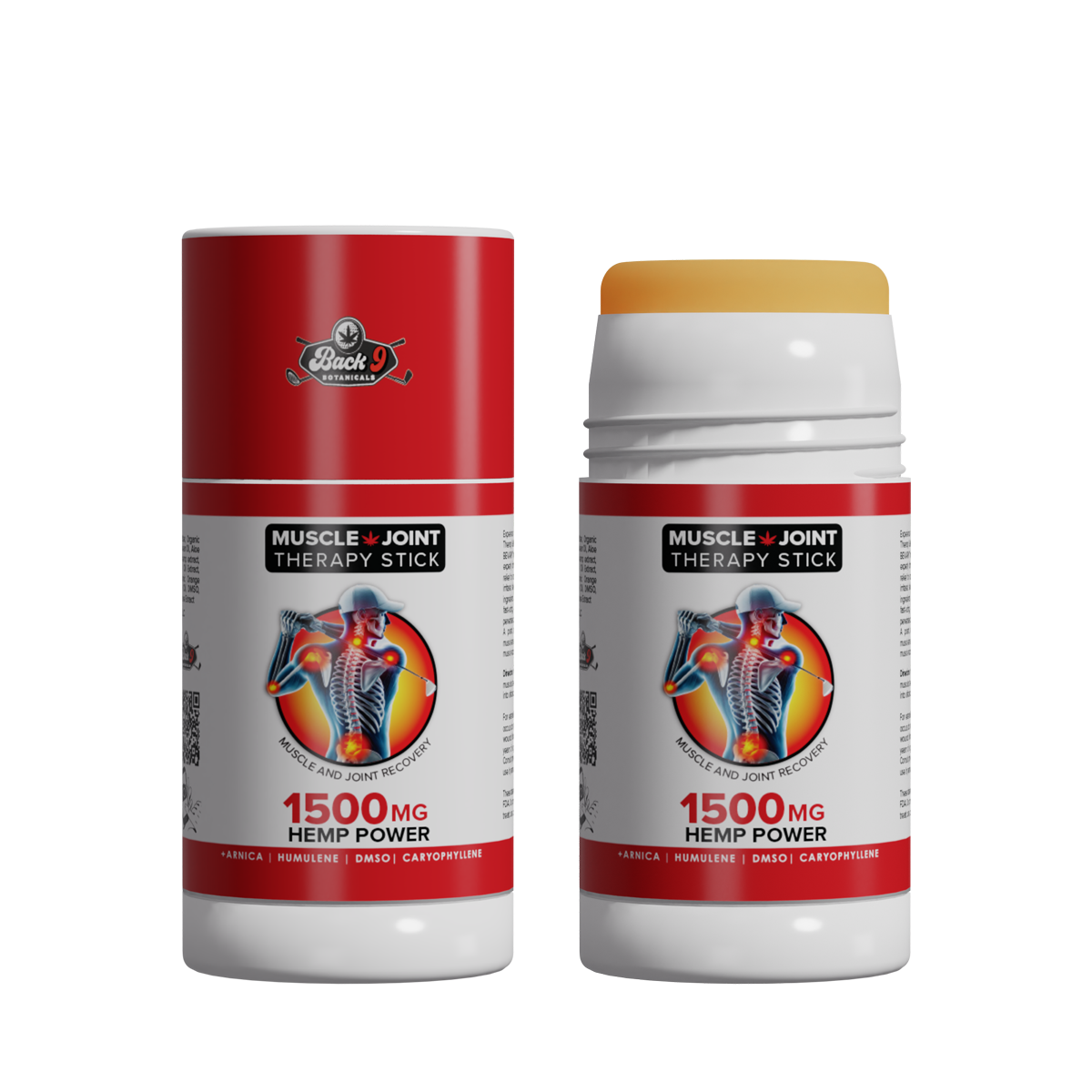
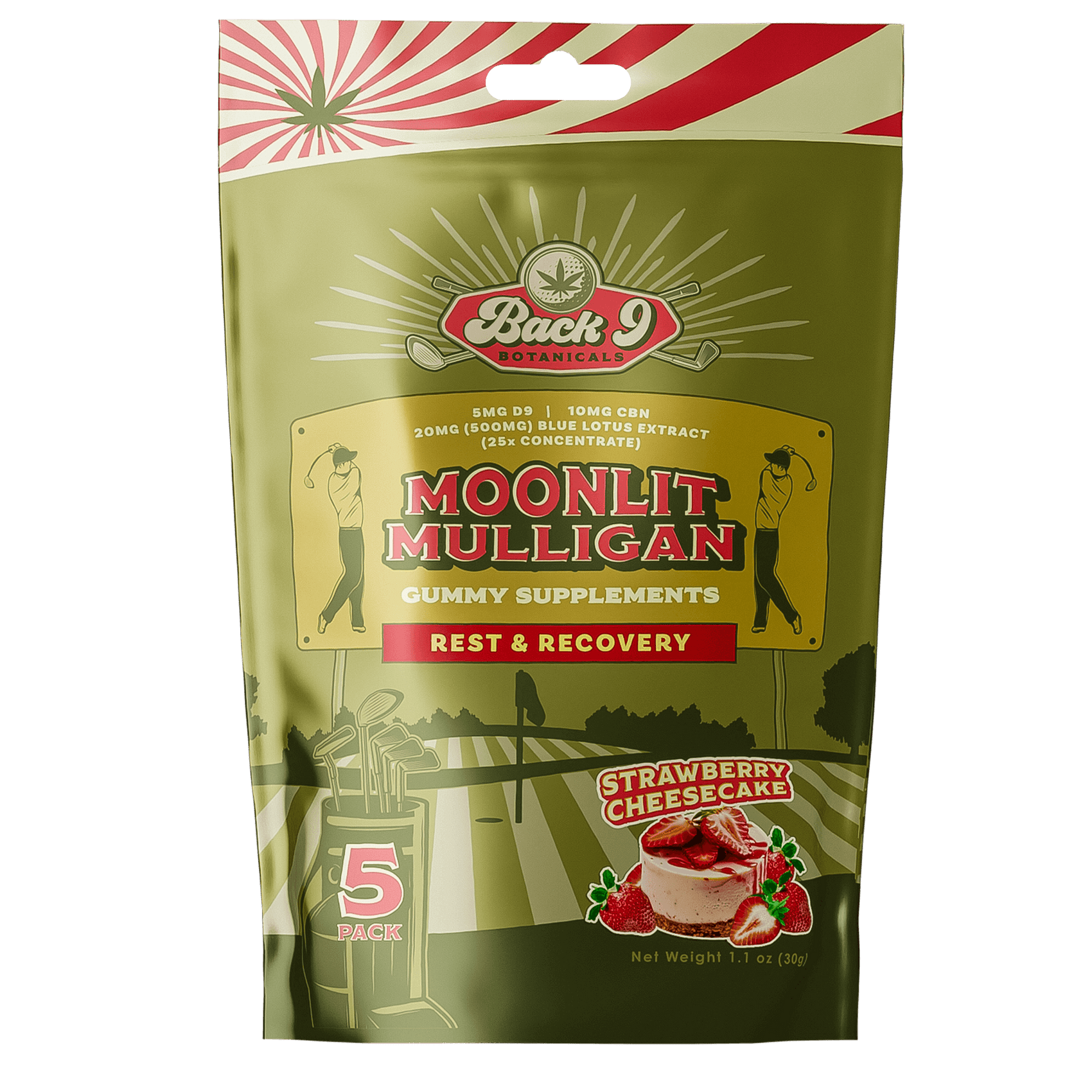
The CBD Topical Therapy Stick is priced at $18.00. It contains 1500 mg of broad spectrum hemp oil with 0% THC. The Moonlit Mulligan Rest & Recovery Gummies are $10.99 for a 5-count pack and contain 5 mg of Delta 9 THC per gummy.


Before you buy anything, read the label and talk with your doctor if you take medications or have a health condition.
Frequently Asked Questions
Does CBD oil fight inflammation?
Most evidence discussed here comes from laboratory and animal studies rather than large human trials on exercise-induced inflammation. Talk with a healthcare provider if you take medication or have a medical condition.
Can THC reduce inflammation after exercise?
THC produces psychoactive effects that can impair focus and reaction time, which matters on the course or before competition.
Is CBD or THC more effective for nerve pain?
Neither compound should replace medical evaluation for persistent or worsening nerve symptoms, and a clinician can help you weigh options if you take other medications.
Will CBD or THC show up on a drug test?
Review the rules of any employer, league or competition you are subject to before use.


