
 Cart (0 items)





Full-spectrum CBD athletes: Explore full-spectrum CBD benefits for athletes: muscle recovery, sleep, focus, and what research shows.
Full-Spectrum CBD for Athletes: Benefits and Evidence

Table of Contents
- What Full-Spectrum CBD Does for Athletic Recovery
- How Full-Spectrum CBD Differs from Broad-Spectrum and Isolate
- CBD for Muscle Soreness and Post-Workout Recovery
- Sleep, Stress Relief, and Mental Performance in Athletes
- CBD Dosage for Athletes: Finding Your Effective Range
- CBD and Drug Testing for Athletes: What You Need to Know
- What the Research Actually Shows (and Doesn't)
- Frequently Asked Questions
Last Updated: October 6, 2026
What Full-Spectrum CBD Does for Athletic Recovery
Full-spectrum CBD athletes rely on has gained traction as a natural recovery tool. Unlike isolates or broad-spectrum formulas, it contains the complete range of cannabinoids, terpenes, and plant compounds from the hemp plant, a profile researchers call the "entourage effect," the theory that these compounds work synergistically for stronger outcomes than CBD alone.

For athletes and active individuals, the appeal centers on three areas: muscle recovery, sleep quality, and stress management. Many report using full-spectrum CBD for post-workout soreness, better sleep after intense training, and the mental pressure of competition. At Back 9 Botanicals, we've formulated our products for active lifestyles, combining hemp-derived cannabinoids with natural botanicals to support performance and recovery.
The distinction matters because full-spectrum formulas retain compounds like CBG, CBDV, and minor cannabinoids that broad-spectrum and isolate products remove, offering a more complete plant profile, though research on athlete-specific outcomes remains limited.
Pro Tip
Full-spectrum products will contain trace amounts of THC (under 0.3% by federal law). If you're subject to drug testing, this is critical to understand. We'll cover testing implications in detail later in this guide.
How Full-Spectrum CBD Differs from Broad-Spectrum and Isolate
The three main CBD product types serve different needs, and understanding the distinctions helps you choose the right formula.
Full-spectrum CBD retains all cannabinoids, terpenes, and plant compounds from the hemp plant, including trace THC (under 0.3%). This complete profile theoretically maximizes the entourage effect. Broad-spectrum CBD removes most THC but keeps other cannabinoids and terpenes intact. CBD isolate is pure cannabidiol, nothing else, stripped of all other plant compounds.
For recovery, full-spectrum formulas offer the widest range of potentially beneficial compounds: CBG supports inflammation response, CBDV may aid muscle recovery, and minor cannabinoids work alongside CBD in ways isolate cannot replicate. Broad-spectrum splits the difference, multiple cannabinoids without the THC concern. Isolate is the most predictable option if you want CBD alone.
The choice depends on your priorities. If maximum recovery support matters most and you're not subject to testing, full-spectrum is stronger. If you need to avoid THC detection, broad-spectrum is a solid middle ground. Isolate works if you're sensitive to other cannabinoids.
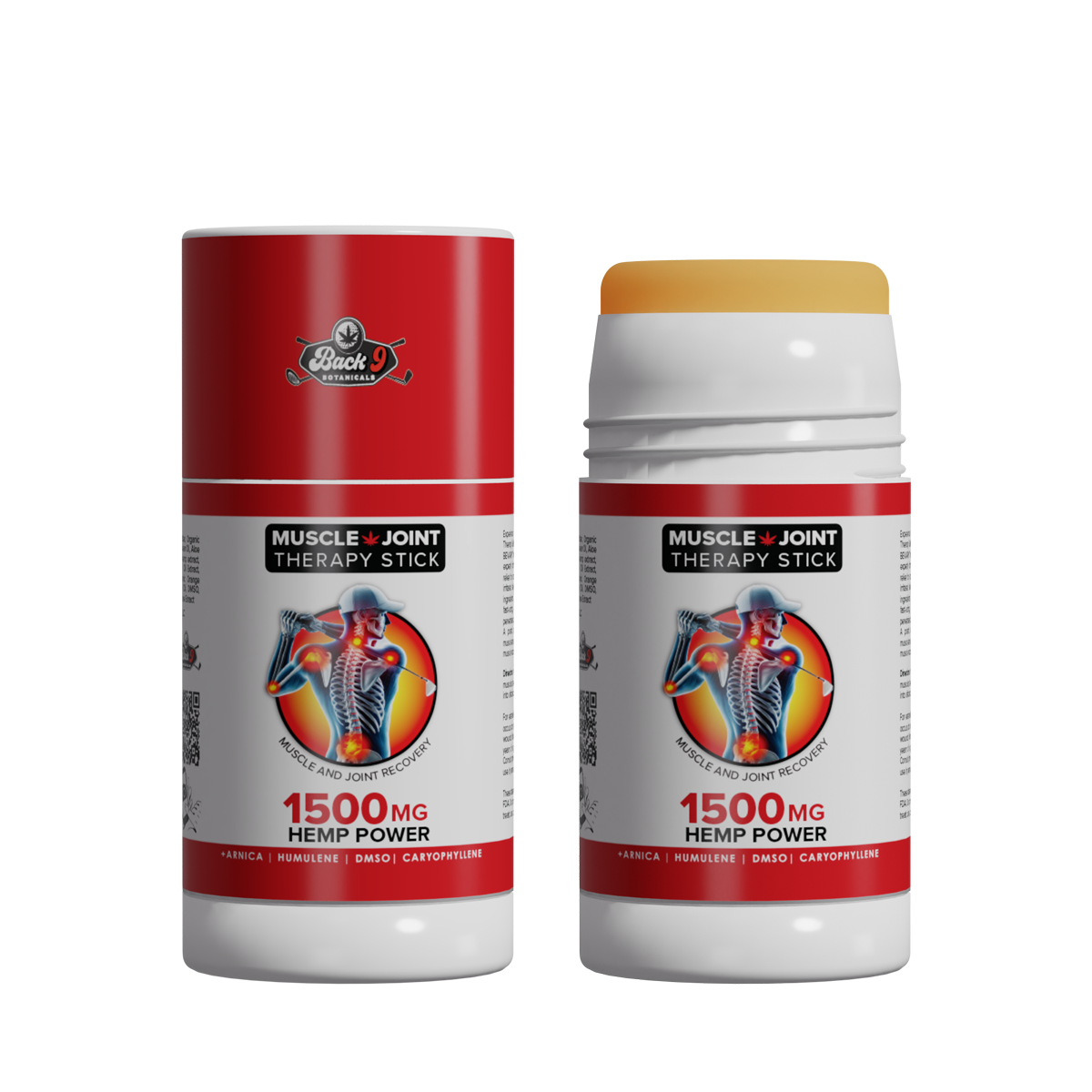
Back 9 Botanicals uses full-spectrum BEVARIN hemp oil in our topical therapy stick, delivering over 1100 mg of CBD alongside CBG, CBDV, and other cannabinoids. This approach gives active users the complete plant profile in a targeted format designed for post-workout application.

CBD for Muscle Soreness and Post-Workout Recovery
Post-workout soreness, clinically called delayed onset muscle soreness (DOMS), typically peaks 24 to 72 hours after unfamiliar or intense exercise.
CBD's proposed role runs through the endocannabinoid system, a network of receptors (CB1 and CB2) and signaling molecules your body uses to regulate inflammation, pain perception, and stress.
Topical vs. oral: two different jobs.
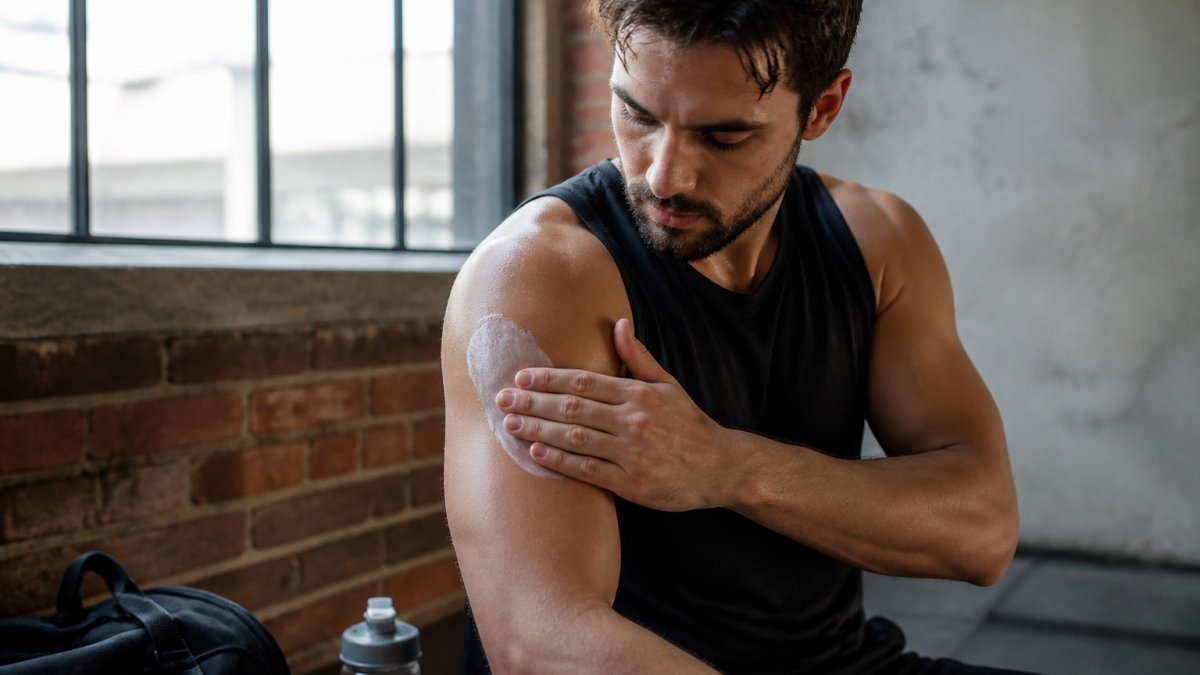
Topical CBD products are applied directly to the skin over a sore muscle group, targeting the shoulder after a long swim or the quads after a hilly run.

A common pattern among active adults is to use both: a topical for the specific area that took the beating, and an oral product in the evening to support sleep and overall recovery. Neither replaces the fundamentals.
What actually drives recovery (and where CBD fits).
The evidence-backed recovery levers are unglamorous: protein, hydration, sleep, progressive loading, and active recovery like easy walking or cycling. CBD does not substitute for any of these.
How it compares to common over-the-counter options.
NSAIDs like ibuprofen are well-studied for pain and inflammation, but regular use around training carries trade-offs to discuss with a physician, including gastrointestinal and cardiovascular concerns and questions about blunting adaptive training responses.
Practical timing.
For topicals, applying soon after training, while you're still in your cooldown window, fits a routine better than waiting until soreness peaks. For oral products, evening dosing aligns with the sleep-support angle. Consistency over weeks matters more than any single application.
Key Takeaway
Topical CBD is best treated as part of an active recovery routine, applied soon after training, not as a reactive pain treatment once soreness has already set in. Pair it with sleep, protein, and hydration, which do the heavy lifting.
Sleep, Stress Relief, and Mental Performance in Athletes
Sleep quality directly impacts athletic performance, recovery speed, and injury risk. This is where many athletes find full-spectrum CBD most valuable, not for physical recovery, but for the mental and physiological rest that training demands.
Athletes face unique sleep challenges: nervous system activation from competition, muscle tension from training, and mental pressure before events. Full-spectrum CBD may address several at once, CBD is studied for relaxation support, while CBN (cannabinol) is investigated for sleep. Combined with plant compounds like blue lotus extract, full-spectrum formulas create a more comprehensive sleep support profile.
The stress-relief angle matters equally. Pre-competition anxiety, performance pressure, and training's mental demands affect focus and decision-making. Many athletes report that full-spectrum CBD quiets mental chatter without grogginess or impairment, you want calm focus, not sedation.
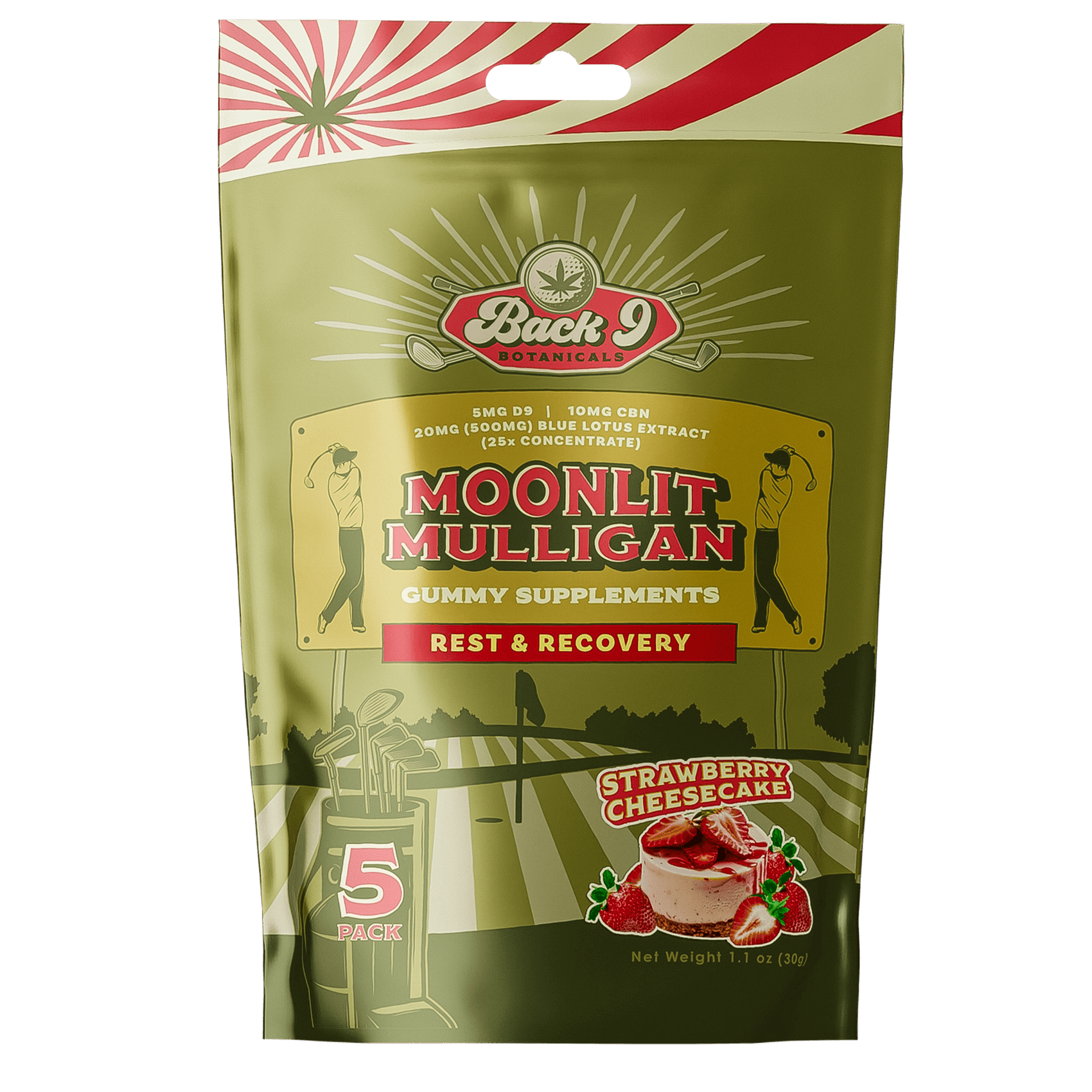
Back 9 Botanicals' Moonlit Mulligan gummies combine hemp-derived delta-9 THC, CBN, and blue lotus extract specifically for rest and recovery. The formula supports deeper sleep without the grogginess many athletes experience with artificial sleep aids. Our Birdie Boost gummies take a different approach, combining full-spectrum hemp oil with magnesium and vitamin B12 for daily stress support and mental clarity during competition.
The psychological component shouldn't be underestimated. Athletes who sleep well recover better, perform more consistently, and handle pressure more effectively. If full-spectrum CBD improves your sleep quality, the downstream effects on athletic performance and recovery can be substantial.
CBD Dosage for Athletes: Finding Your Effective Range
CBD dosing is highly individual, body weight, metabolism, product type, and your specific goal all influence the effective dose.
General guidance suggests starting low and increasing gradually. Many athletes begin with 10-20 mg of CBD daily and adjust upward based on response. For topicals like our Therapy Stick, application frequency matters more than dosage, using it immediately after training or when soreness peaks beats occasional use.
For gummies and oral products, consistency beats sporadic use. Athletes using full-spectrum CBD for sleep typically take it 30-60 minutes before bed, allowing time for the compounds to take effect. For daily stress and focus support, morning or mid-afternoon dosing works better.
CBD research in athletes remains limited, so no sport-specific dosing guidelines exist, experimentation is necessary. Keep notes on what dose, timing, and format produces noticeable effects for you. Many full-spectrum CBD athletes find that 25-50 mg daily, plus topical application after training, creates a comprehensive recovery protocol.
Watch Out
More CBD isn't always better. Some athletes experience diminishing returns above certain doses, or find that excessive CBD interferes with sleep. Start conservatively and adjust based on your actual response, not marketing claims.
CBD and Drug Testing for Athletes: What You Need to Know
This is the critical question for competitive athletes: will full-spectrum CBD show up on a drug test?
Full-spectrum CBD contains trace THC (under 0.3% by federal law), and THC is what standard drug tests detect. For most workplace screening, trace THC won't register. For elite athletic competition, the answer is more complicated.
The World Anti-Doping Agency (WADA) prohibits THC in competition, even at trace levels. If you're subject to WADA testing, full-spectrum CBD carries real risk, a product contaminated with higher THC levels, or cumulative use, could theoretically trigger a positive test.
Product testing and quality control become essential. Reputable manufacturers provide third-party lab testing confirming THC content and verifying products contain what they claim. Before using any full-spectrum CBD, request lab reports. Back 9 Botanicals provides lab testing verification for all products, check our website for current results.
For amateur athletes and recreational users not subject to elite testing standards, full-spectrum CBD is generally safe from a testing perspective. But if you compete at any level where anti-doping rules apply, verify your specific federation's rules and your product's lab-tested THC content before use.
Broad-spectrum CBD removes most THC and eliminates this concern entirely. If testing is a possibility in your athletic future, broad-spectrum is the safer choice.
What the Research Actually Shows (and Doesn't)
Most competitor articles lump all CBD evidence together. That is a mistake.
Tier 1: What human trials support.
CBD is an FDA-approved active ingredient in at least one prescription medication for severe childhood seizure disorders, establishing that the molecule is biologically active and can be studied rigorously (the FDA).
Tier 2: Early research and mechanistic hypotheses.
Preclinical work (cell cultures and animal models) suggests CBD interacts with CB1 and CB2 receptors, may influence inflammatory signaling, and could affect pain perception pathways.
Tier 3: Anecdotal athlete reports.
A large share of what you read online is athlete experience: someone slept better, felt less sore, or felt calmer before competition.
What this means for you.
If a claim says 'CBD is proven to speed recovery,' it overstates Tier 2 and Tier 3 evidence. If it says 'CBD may support sleep and relaxation, and some athletes report reduced soreness,' that's honest.
The gap no one else covers: anti-doping, contamination, and testing.
This is where most articles stop short, and it's the most consequential issue for competitive athletes.
Full-spectrum products contain trace THC (federally capped at under 0.3% on a dry weight basis for hemp).
Contamination is the bigger practical concern. Independent testing of CBD products has repeatedly found that labeled cannabinoid content doesn't always match actual content, and that some products contain THC above the labeled amount or undeclared compounds.
What to do about it.
- Request a certificate of analysis (COA) from a third-party, ISO-accredited lab for the specific batch you are buying, not a generic 'lab tested' badge.
- Check that the COA reports THC content quantitatively, not just 'pass.'
- Verify the testing lab is independent of the manufacturer.
- Check your sport's governing body and your specific federation rules, because they can be stricter than WADA.
- If you are subject to testing and want zero THC exposure, broad-spectrum or isolate products remove that variable.
Watch Out
'Lab tested' on a label is not the same as a batch-specific COA from an independent lab. If a manufacturer will not provide one on request, treat that as a red flag.
Medical supervision and interactions.
CBD can interact with medications metabolized by the same liver enzymes (notably CYP450 pathways), including some common prescriptions.
Bottom line.
The honest summary: CBD is biologically plausible, generally well tolerated in short-term studies, and supported by early research and widespread anecdotal reports, but not yet proven for athlete-specific outcomes like recovery time or performance.
Frequently Asked Questions
Does full-spectrum CBD contain THC, and will it show up on a drug test?
Full-spectrum CBD contains trace amounts of THC (typically less than 0.3%), which is federally legal under the 2018 Farm Bill. However, standard workplace drug tests do not detect CBD itself, only THC metabolites. Trace THC from full-spectrum products rarely accumulates enough to trigger a positive result, but athletes competing under strict anti-doping rules should verify their organization's specific policy. For zero-THC assurance, broad-spectrum CBD removes THC during processing while retaining other cannabinoids.
Can full-spectrum CBD actually help with muscle soreness after exercise?
Full-spectrum CBD may support muscle soreness recovery through its interaction with the endocannabinoid system, which regulates inflammation and pain signaling. Athletes report reduced soreness when using CBD topicals or oral products after training, though clinical evidence in athletes specifically remains limited. The entourage effect, where CBD works alongside CBG, CBDV, and other cannabinoids, may enhance relief compared to CBD isolate alone. Topical application targets localized soreness directly, while oral forms support systemic recovery.
What's the right CBD dosage for an athlete, and when should I take it?
Effective CBD dosage for athletes ranges from 10-50 mg daily, depending on body weight, the specific outcome desired (pain relief vs. sleep), and individual sensitivity. Start low (10-15 mg) and increase gradually over one to two weeks. For post-workout recovery, take CBD within 2-4 hours after training. For sleep support, dose 30-60 minutes before bed. Full-spectrum formulas may require lower doses than isolates due to the synergistic effect of multiple cannabinoids, so adjust based on your response.
Is full-spectrum CBD better than regular CBD oil or supplements for athletes?
Full-spectrum CBD includes the complete plant profile, CBD, CBG, CBDV, CBN, and trace THC, which work together in what researchers call the entourage effect. This combination may produce stronger anti-inflammatory and pain-relief effects than CBD isolate alone. For athletes targeting muscle recovery, sleep, and stress relief, full-spectrum formulas address multiple recovery needs simultaneously. However, if you compete under strict anti-doping rules or prefer zero THC, broad-spectrum CBD removes THC while keeping other beneficial cannabinoids.

