
 Cart (0 items)





Discover the best natural supplements for golf recovery in 2026. We break down what works for muscle soreness, sleep, and focus. Learn more.
Natural Supplements for Golf Recovery: The 2026 Guide

Table of Contents
- Why Golf Recovery Is Different: The Hidden Physical Toll
- Top Natural Supplements for Golf Recovery: What the Evidence Shows
- Best CBD for Muscle Soreness: What to Look For
- Your Post-Round Recovery Routine for Golfers: A Step-by-Step Protocol
- How to Build a Supplement Stack for Golf Recovery
- Common Mistakes to Avoid and What to Ignore
- Conclusion: Recover Smarter, Play Better
- Frequently Asked Questions
Last Updated: September 4, 2026
Why Golf Recovery Is Different: The Hidden Physical Toll
Most people assume golf is low-impact, but the rotational stress of a full swing strains the lower back, hips, and lead shoulder. A typical round involves over 100 full-power swings plus walking 4 to 6 miles over uneven terrain (PubMed).
Natural supplements for golf recovery target connective tissue stress, joint stiffness, and systemic fatigue. The goal is not to mask soreness but to support the body's natural repair mechanisms between rounds.
Sustained grip pressure, crouched putting postures, and four hours of mental focus also contribute to fatigue.
Top Natural Supplements for Golf Recovery: What the Evidence Shows
The best natural supplements for golf recovery fall into four categories: minerals for muscle function, fatty acids for inflammation, botanicals for oxidative stress, and hemp-derived cannabinoids for sleep and pain perception.
A common mistake is treating recovery supplements like pain relievers. These ingredients support the biological processes that reduce joint stiffness and muscle soreness over time, so consistency matters more than acute dosing.
1. Magnesium: The Overlooked Mineral for Swing Mechanics
Magnesium glycinate is the standout form for golfers because it supports both muscle relaxation and sleep quality. Magnesium plays a central role in over 300 enzymatic reactions, including muscle contraction and nerve transmission (ods.od.nih.gov).
Many golfers are deficient without realizing it, especially those who sweat heavily during summer rounds.
2. Omega-3 Fatty Acids: Your Body's Anti-Inflammatory Response
Omega-3 fatty acids, particularly EPA and DHA, provide the raw materials your body uses to resolve inflammation at the cellular level. Unlike pain medications that block inflammation pathways entirely, omega-3s help your body return to baseline after exercise.
Look for products that specify EPA and DHA content rather than just listing "fish oil."
3. Tart Cherry Extract: A Natural Way to Reduce Post-Round Soreness
Tart cherry extract reduces muscle soreness and supports recovery after strenuous exercise. The anthocyanins act as natural ergogenic aids, lowering oxidative stress and reducing muscle damage markers that spike after eccentric exercise.
The research is promising for endurance athletes, and golfers who walk their rounds can benefit similarly.
4. CBD and Hemp-Derived Cannabinoids for Recovery
CBD and other hemp-derived cannabinoids interact with the endocannabinoid system, which regulates pain perception, sleep, and stress. For golfers, this means reduced muscle soreness and improved sleep quality, when the body performs tissue repair.
The best CBD for muscle soreness combines topical application for localized relief with ingestible products for systemic support, addressing both the sore area and overall inflammation.
Best CBD for Muscle Soreness: What to Look For
How We Evaluated These CBD Products
We evaluated CBD products based on four criteria: third-party testing transparency, cannabinoid profile, ingredient quality, and formulation purpose. A product that passes these checks is far more likely to deliver consistent results than one that simply lists a high milligram count.
Back 9 Botanicals CBD Topical Therapy Stick
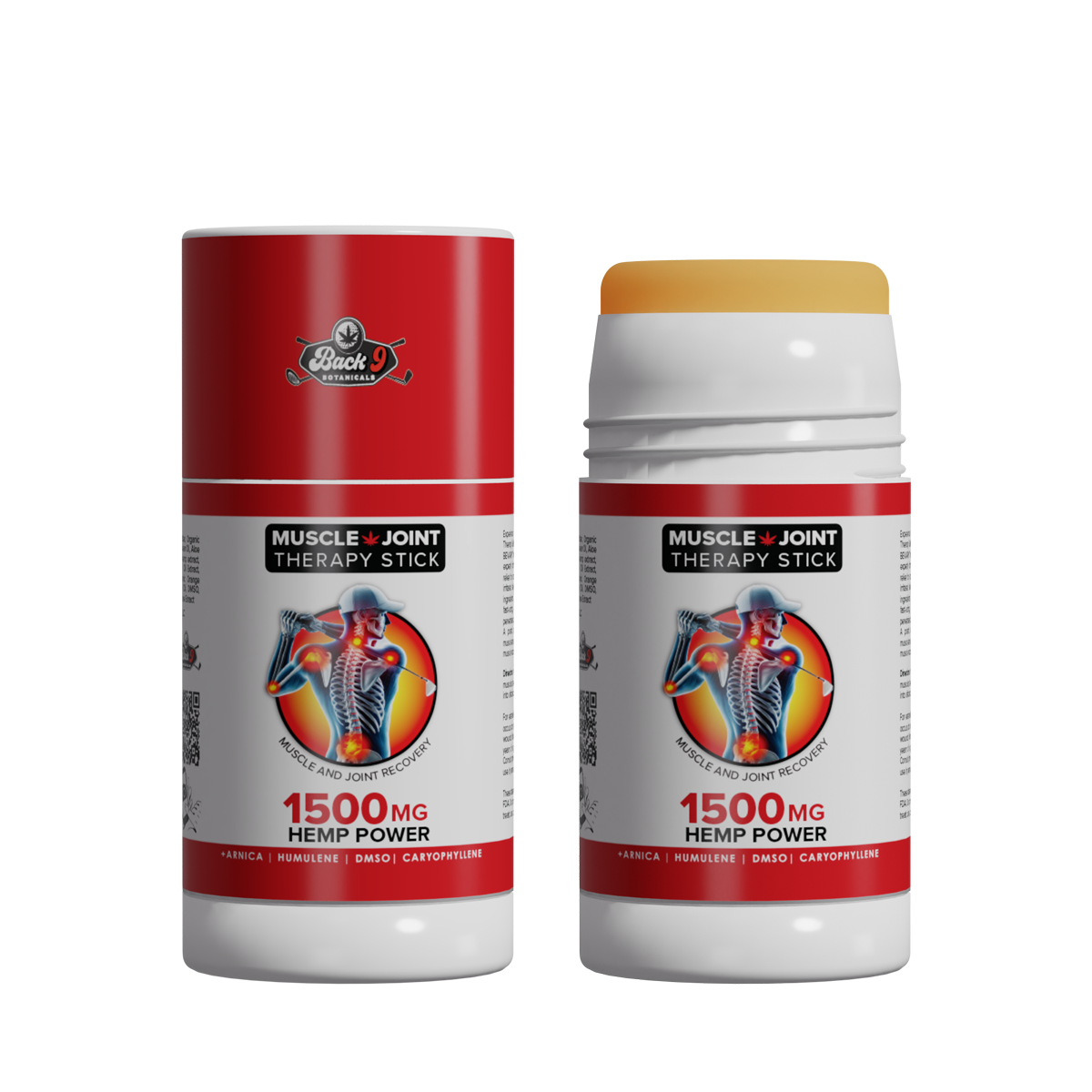
Our top pick for targeted muscle relief is the CBD Topical Therapy Stick, priced at $29.99. This 1oz stick delivers 1500 mg of BEVARIN Broad Spectrum Hemp Oil, containing over 1100 mg of CBD plus CBDV and CBG with 0% THC. The formula combines arnica for swelling, cayenne extract for circulation, and clove oil for its natural analgesic properties.

What sets this stick apart is the delivery format. The no-mess stick allows precise application to the lower back, shoulders, or wrists without the greasy residue common to many topical salves. The inclusion of DMSO enhances penetration of the active ingredients, so relief targets the tissue rather than sitting on the skin surface.
Back 9 Botanicals Moonlit Mulligan Gummies
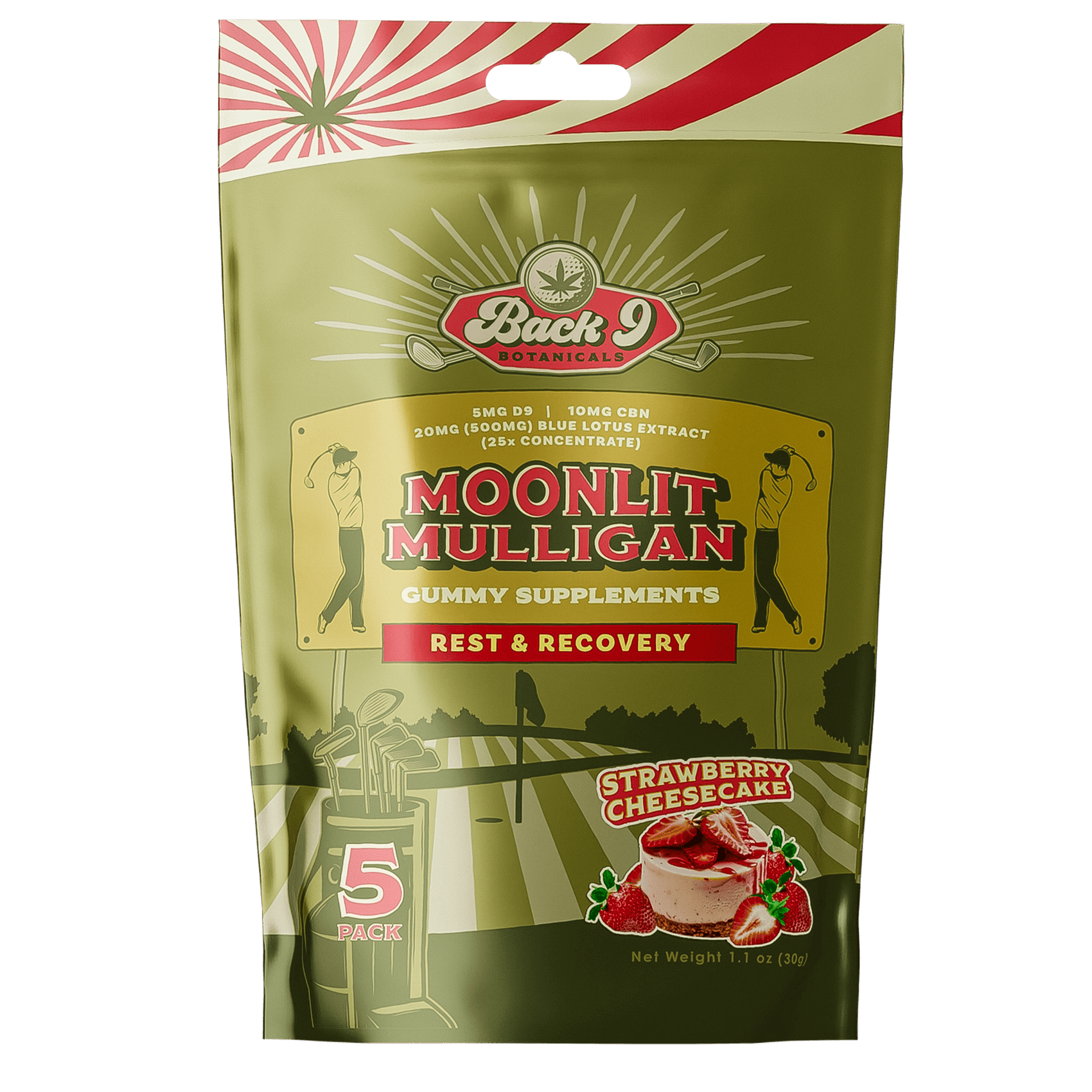
For systemic recovery support, the Moonlit Mulligan Rest and Recovery Gummies offer a targeted nighttime formula at $10.99 for a 5-count pack. Each gummy combines 5mg hemp-derived Delta 9 THC, 10mg CBN, and 20mg Blue Lotus Extract to promote deep, restorative sleep without the grogginess associated with artificial sleep aids.

The CBN is the key ingredient here. Research suggests CBN has sedative properties that support sleep onset and duration, which is when the body performs most of its tissue repair and muscle recovery (PubMed). This product is federally legal per the 2018 Farm Bill, containing no more than 0.3% Delta-9 THC by mass.
Pro Tip
For best results, apply the topical stick to sore areas immediately after your round, then take the Moonlit Mulligan gummies 30 to 45 minutes before bed. This combination addresses acute soreness and systemic recovery in the same evening.
Your Post-Round Recovery Routine for Golfers: A Step-by-Step Protocol
For a golfer who plays once or twice a week, the 'when' of supplementation matters as much as the 'what.' The routine below separates immediate steps from the 24-hour and 48-hour windows that determine how you feel on the next tee box. wellness tech for recovery.
The First 30 Minutes: The On-Course Transition
When you walk off the 18th green, cortisol is elevated, muscle temperature is high, and you've lost fluids over four-plus hours. The steps in this window signal your body to shift from 'performance mode' to 'repair mode.'
- Hydrate with a purpose. Water alone won't cut it. You need an electrolyte solution containing sodium, potassium, and magnesium to replace what you lost. A common pattern is to underestimate sweat loss on a cool day, so don't skip this step just because you weren't visibly drenched.
- Eat a protein-containing snack within 30 minutes. This is the classic 'anabolic window' for muscle repair. A shake, a Greek yogurt, or a turkey sandwich will do. The goal is to provide amino acids for the muscle protein synthesis that begins in the hours after exercise.
- Apply a targeted topical if you have a known problem area. If your lower back or lead shoulder is a chronic issue, don't wait for the soreness to peak tomorrow. Applying a CBD topical stick to the area immediately after your round, before you shower, allows the active ingredients to start working while the tissue is still warm and blood flow is elevated.
The 2-Hour Window: The Shower and the Shift
After eating and drinking, the next step is addressing systemic inflammation with oral supplements.
- Consider tart cherry extract or a similar anti-inflammatory botanical. If you've had a particularly demanding round, think hilly course, hot weather, or a competitive match, this is the time to take it. The goal is to blunt the secondary inflammatory response that peaks 24 to 48 hours later.
- Do not stretch aggressively. Static stretching of a fatigued muscle can actually increase soreness. Instead, focus on gentle mobility work. Think about hip rotations, shoulder circles, and spinal twists that mimic the golf swing but without any resistance. This helps maintain range of motion without adding stress.
The Evening Window: Sleep as the Ultimate Recovery Tool
Sleep is when the body releases growth hormone and performs most tissue repair. Poor sleep measurably impairs motor skills and decision-making, which are critical for the next round.
- Create a consistent wind-down routine. This is where a sleep-support supplement can be valuable. If you use a product with CBN or other hemp-derived cannabinoids, take it 30 to 45 minutes before you intend to fall asleep. The goal is to improve sleep onset and duration, not to feel sedated.
- Optimize your sleep environment. Keep the room cool (around 65°F), and avoid screens for at least 30 minutes before bed. The blue light from your phone suppresses melatonin, which is the hormone that regulates your sleep-wake cycle.
The 24-Hour Window: The Next Morning
How you feel the morning after a round indicates your recovery status. Significant stiffness signals that your routine needs adjustment.
- Rehydrate first thing. You lose additional fluids overnight through respiration and sweat. A glass of water with a pinch of sea salt can help restore electrolyte balance.
- Do a 'movement check.' Before you reach for coffee, do a few slow, controlled rotations. If your lower back feels restricted, that's a signal to focus on mobility work today, not to push through a workout.
- Take your daily maintenance supplements with breakfast. This includes your omega-3s and vitamin D, which are fat-soluble and absorb better with food. Consistency here is more important than acute dosing.
The 48-Hour Window: Active Recovery
For the golfer who plays once a week, the day after tomorrow is when to think about the next round. This is the time for active recovery, a light walk, yoga, or a putting green session.
- Consider a 'pre-loading' strategy. If you know you have a round coming up in 48 hours, this is the time to ensure you're well-hydrated and your anti-inflammatory baseline is solid. Taking your omega-3s consistently in the days leading up to a round is more effective than taking a large dose afterward.
| Recovery Window | Action | Purpose | Duration |
|---|---|---|---|
| 0-30 min post-round | Hydrate with electrolytes + protein snack | Restore fluid balance, initiate muscle repair | 15 minutes |
| 0-30 min post-round | Apply topical CBD to known problem areas | Address acute soreness before it peaks | 5 minutes |
| 2 hours post-round | Take tart cherry extract (if high-demand round) | Blunt secondary inflammatory response | 5 minutes |
| Evening (30-45 min before bed) | Take sleep-support supplement | Improve sleep quality and duration | 5 minutes |
| Next morning | Rehydrate + take daily supplements (omega-3, vitamin D) | Restore baseline, support long-term health | 10 minutes |
| 48 hours post-round | Active recovery (walk, yoga, light mobility) | Promote blood flow without adding stress | 30 minutes |
Pro Tip
This protocol is designed for the weekend warrior who plays 1-2 times per week. If you're playing in a multi-day tournament, you'll need to compress the timeline, focusing on the immediate post-round steps and prioritizing sleep above all else.
How to Build a Supplement Stack for Golf Recovery
Building a supplement stack is about creating a system that adapts to your training load, weaknesses, and goals.
The Three-Tier Framework
A smart stack is built in tiers, not all at once, so you can identify what works and avoid wasting money.
Tier 1: The Daily Foundation. This is your baseline, taken every day regardless of whether you're playing. It's the non-negotiable support for long-term health.
- Omega-3 Fatty Acids (EPA/DHA): For systemic inflammation control. Look for a product that specifies the EPA and DHA content, not just 'fish oil.' A common target is 1,000-2,000 mg of combined EPA/DHA daily.
- Vitamin D3: For bone density, muscle function, and immune health. Most golfers are deficient, especially if they play in the early morning or late afternoon. A typical maintenance dose is 1,000-2,000 IU, but many practitioners recommend testing your levels.
- Magnesium Glycinate: For muscle relaxation, nerve function, and sleep quality. This is best taken in the evening.
Tier 2: The Training Load Response. This tier is for the days you play or practice intensely. It's about supporting acute recovery.
- Tart Cherry Extract: For reducing post-exercise muscle soreness. Take it in the 2-hour window after a demanding round.
- Protein Supplement: To ensure adequate amino acid intake for muscle repair, especially if you struggle to get enough protein from food alone.
- Electrolytes: For hydration support on the course and immediately after.
Tier 3: The Targeted Support. This is for specific issues or goals.
- CBD Topicals: For localized joint or muscle pain in the lower back, lead shoulder, or wrists.
- Sleep Support (CBN/Delta-9): For improving sleep quality, which is critical for recovery. This is not for everyone, but for those who struggle with sleep, it can be a game-changer.
- Adaptogens (e.g., Ashwagandha): For managing stress and cortisol, which can interfere with recovery and sleep.
The 'One-Week' Rule
Do not start every supplement at once. Introduce one product at a time and track how you feel for at least a week. A simple journal tracking sleep quality, morning stiffness, and energy levels is the most effective tool you have.
A Note on Drug Testing and Compliance
If you compete in amateur or professional events, this is critical. Many supplements are not FDA-regulated and can contain banned substances. If subject to drug testing, look for products third-party tested by NSF International or Informed Sport, which test for WADA-banned substances. A positive test from a contaminated supplement can end a season or career.
Watch Out
If you are a competitive golfer subject to drug testing, do not take any supplement without verifying its third-party testing status. Look for the NSF Certified for Sport or Informed Sport logos on the label. This is your only defense against unintentional doping violations.
The Bottom Line on Stacking
The best stack is the one you can sustain. It's better to take a high-quality omega-3 and magnesium consistently than to cycle through a dozen products. Focus on the foundation, add targeted support when needed, and prioritize sleep and nutrition as the primary recovery tools.
Common Mistakes to Avoid and What to Ignore
The most common mistake is expecting supplements to replace proper nutrition, hydration, and sleep. No stack can compensate for a poor diet or chronic sleep deprivation.
Another mistake is ignoring the mental side of recovery. Golf is as much cognitive as physical, and competition stress elevates cortisol, interfering with sleep and recovery.
Ignore proprietary blends that do not disclose ingredient amounts. You need to know exactly how much of each active ingredient you are taking. Products with vague labeling are not worth your money.
Conclusion: Recover Smarter, Play Better
Recovery is not passive. It requires intentional action across nutrition, sleep, and targeted supplementation. By addressing the specific physical demands of golf, you can play more often, feel better between rounds, and protect your body long term.
Back 9 Botanicals offers a complete system for golfers and active adults, from the CBD Topical Therapy Stick for targeted muscle relief to the Moonlit Mulligan gummies for restorative sleep. Every formula combines natural botanicals with hemp-derived cannabinoids and is backed by third-party lab testing. Get started with Back 9 Botanicals and build a recovery routine that keeps you on the course.

Frequently Asked Questions
What are the best natural supplements for muscle soreness after golf?
For muscle soreness after a round, focus on natural anti-inflammatories. Tart cherry extract, omega-3 fatty acids, and magnesium are all backed by research for reducing muscle damage and supporting tissue repair. CBD is also a popular choice for its potential to ease muscle tension and joint stiffness. Look for a combination that fits your routine, like a magnesium supplement before bed or a CBD topical applied directly to sore areas.
Can CBD help with inflammation and recovery for athletes?
Research suggests CBD interacts with the body's endocannabinoid system, which helps regulate inflammation pathways and recovery. For golfers, this means it may help with joint mobility and muscle soreness after a long round. When choosing a product, third-party testing is critical to ensure purity and accurate dosing. A topical CBD stick can target specific areas like the lower back, while gummies offer full-body support for sleep and relaxation.
How do I build a post-round recovery routine for golfers?
Start within 30 minutes of finishing your round. Rehydrate with water and electrolytes, then eat a snack with protein to support muscle protein synthesis. Within two hours, apply a CBD topical to any sore areas and take a magnesium supplement to help relax muscles. In the evening, prioritize sleep with a consistent wind-down routine. A product like the Moonlit Mulligan gummy, with CBN and THC, can promote deeper sleep for better recovery.
What should golfers look for in a clean, third-party tested supplement?
First, verify the product has a certificate of analysis (COA) from an independent lab. This confirms the ingredients listed match what's inside and that THC levels are compliant. Look for clear labeling of all active ingredients, including the exact milligrams of CBD or other supplements. Avoid proprietary blends that hide ingredient amounts. For golfers concerned about drug testing, look for products that explicitly state they are THC-free or made with broad-spectrum hemp extract.
This article was written using GrandRanker

