 Cart (0 items)





Find the best CBD for athletic recovery in 2026. Compare topicals, gummies, and dosage tips for sore muscles, plus what to know about testing and safety.
Best CBD for Athletic Recovery: Top Picks for 2026

Table of Contents
- How CBD Supports Muscle Recovery
- Benefits of CBD for Post-Workout Recovery
- Best CBD for Athletic Recovery: Top Picks
- CBD for Muscle Soreness: What the Science Says
- CBD Dosage for Athletic Performance and Recovery
- Drug Testing, WADA Compliance, and Legal Status
- Frequently Asked Questions
Last Updated: September 12, 2026
How CBD Supports Muscle Recovery
The best CBD for athletic recovery works by interacting with the body's endocannabinoid system, a network of receptors that regulates inflammation, pain signaling, and sleep. Cannabidiol is one of more than 100 cannabinoids in hemp, and it binds indirectly to CB1 and CB2 receptors without producing intoxication. This guide breaks down what matters: product type, dosage, timing, and testing.
Athletes and weekend warriors are turning to hemp-derived products because traditional recovery tools come with trade-offs: NSAIDs can irritate the stomach with long-term use, and prescription pain management carries dependency risk. CBD offers a middle path that fits easily into a daily routine.
The Endocannabinoid System and Recovery
The endocannabinoid system is a regulatory network of receptors, enzymes, and signaling molecules that helps the body maintain balance after physical stress. CB1 receptors cluster in the brain and nervous system; CB2 receptors concentrate in immune tissue and peripheral nerves.
After intense exercise, the body releases inflammatory compounds as part of normal repair. Cannabinoids interact with CB2 receptors to modulate that response, which is why researchers call cannabidiol a recovery-mediating compound rather than a direct painkiller: it supports the body's own processes instead of overriding them.
Topical and ingested CBD reach the endocannabinoid system differently. A balm applied to a sore shoulder acts locally, while a tincture or gummy travels through digestion and liver metabolism, changing both onset time and bioavailability.
Benefits of CBD for Post-Workout Recovery
The main benefits of CBD for post-workout recovery include reduced inflammation, less delayed onset muscle soreness, better sleep quality, and lower pre-competition anxiety. These effects matter for anyone training consistently, not just competitive athletes.
Delayed onset muscle soreness, or DOMS, typically peaks 24 to 72 hours after a hard session. Many users report that consistent CBD use makes that window more manageable. The analgesic and anti-inflammatory properties are the most cited reasons athletes keep it in their routine.
Sleep quality may be the most underrated benefit. Recovery happens during deep sleep, when growth hormone release peaks. A product that supports rest without the grogginess of artificial sleep aids can improve the entire recovery cycle. That is the logic behind formulas that pair cannabinoids with calming botanicals.
Key Takeaway
CBD does not replace sleep, hydration, or protein intake. It supports the recovery system you already have. Athletes who treat it as a shortcut rather than a supplement rarely see results.
Best CBD for Athletic Recovery: Top Picks
The best CBD for athletic recovery depends on whether you need targeted relief, overnight rest support, or all-day balance. The picks below cover each use case, from a topical stick for muscle tension to gummies built around a full daily routine.
| Product | Format | Best For | Price |
|---|---|---|---|
| CBD Topical Therapy Stick | Topical salve stick | Targeted muscle and joint relief | $29.99 |
| Moonlit Mulligan | Rest and recovery gummies | Sleep and overnight repair | $10.99 |
| Performance Canna+ Gummies | Gummy bundle | All-day focus and recovery | $41.99 |
| Daily Wellness Stack | Gummy bundle | Morning-to-night routine | $41.97 |
| Total Back 9 Wellness System | Full system bundle | Complete recovery coverage | $124.99 |
CBD Topical Therapy Stick: Targeted Muscle Relief
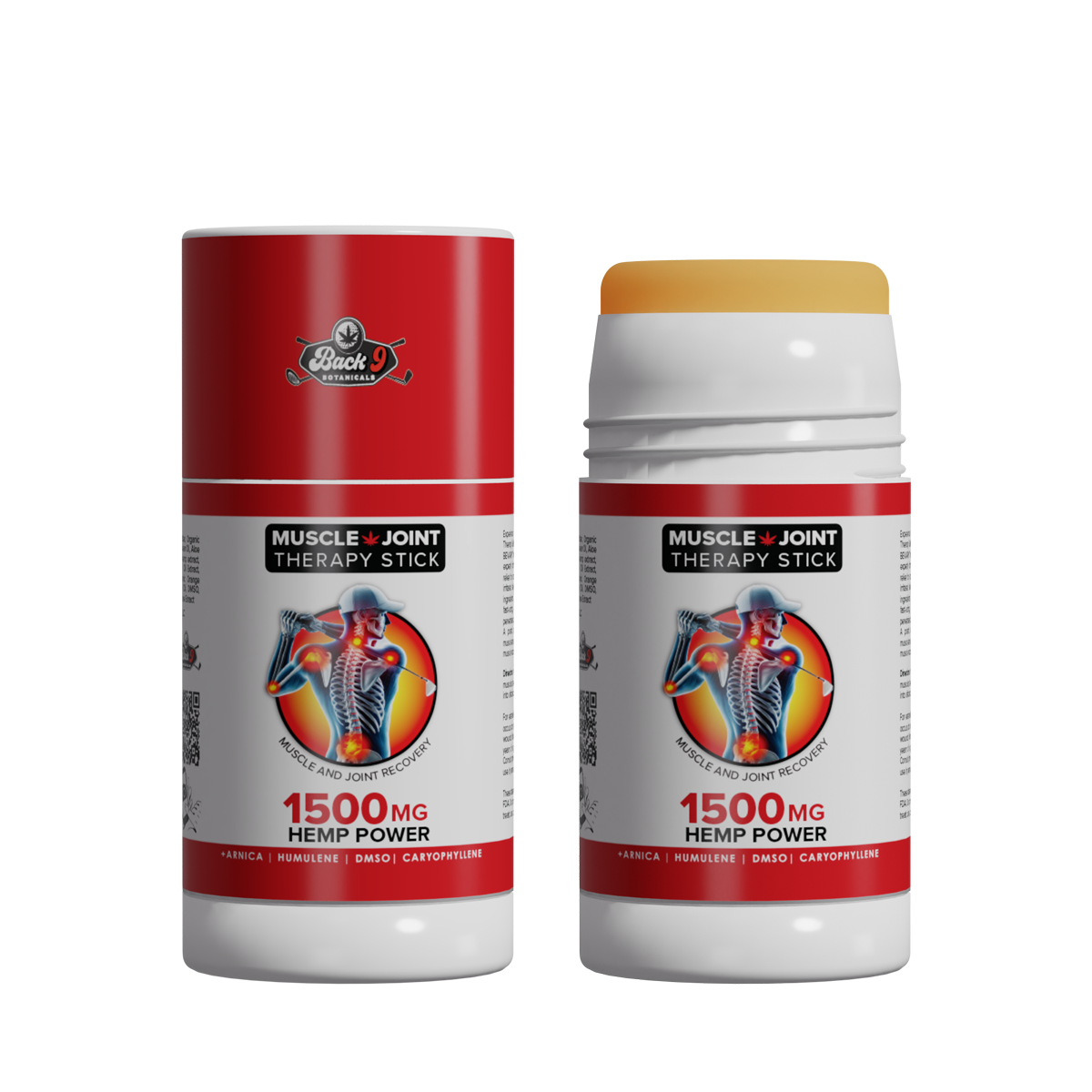
The CBD Topical Therapy Stick is the best pick for localized muscle and joint discomfort. Each 1 oz stick carries 1500 mg of BEVARIN Broad Spectrum Hemp Oil, including over 1100 mg of CBD plus CBDV and CBG, with 0% THC. That THC-free profile matters for anyone subject to drug testing.

The formula pairs cannabinoids with arnica, clove oil, cayenne extract, and shea butter. Arnica is a traditional remedy for swelling and bruising, while cayenne's capsaicin warms and increases circulation to stiff areas. DMSO and the terpenes humulene and caryophyllene improve absorption into deeper tissue.
The no-mess stick format is the practical win: apply it to a sore lower back or shoulder in a parking lot before a round without greasy hands. The drawback is that topicals address the site of application only, so they will not help with systemic recovery or sleep.
Best For
Golfers and athletes dealing with localized soreness in shoulders, lower back, or knees who want fast, targeted relief without ingesting anything.
Moonlit Mulligan: Rest and Recovery Gummies
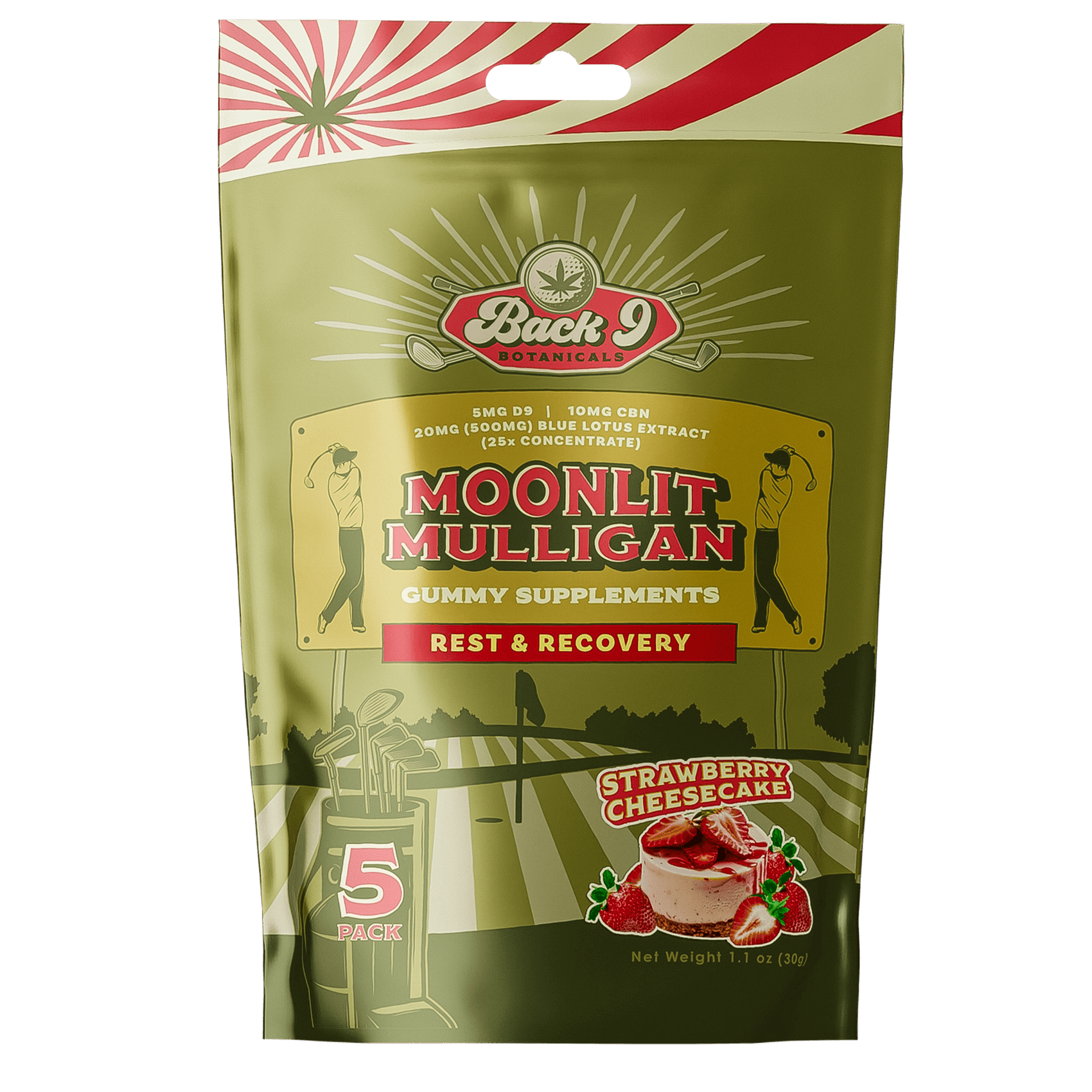
Moonlit Mulligan targets the sleep side of recovery, where most athletes fall short. Each gummy combines 5 mg of hemp-derived Delta 9 THC, 10 mg of CBN, and 20 mg of Blue Lotus extract. CBN is studied for its sedative properties, and Blue Lotus has a long history of use for relaxation. While optimizing nocturnal rest remains essential, integrating targeted peptides for recovery can further accelerate the physiological repair processes initiated during deep sleep.
The Delta 9 content promotes muscle relaxation and quietens the mental replay of a bad round. That physical and mental wind-down separates it from a standard sleep aid, and users report waking refreshed rather than groggy.
This is not a product for daytime use. Take it 30 to 60 minutes before bed. If you are new to THC, start with half a gummy to gauge your response.
Performance Canna+ Gummies: All-Day Support
The Performance Canna+ bundle is the best all-around option for athletes who want support across an entire day. It includes three formulas: Birdie Boost for morning energy with 10 mg Delta 9 THC plus magnesium and B12, Players Blend for mid-day calm focus with 2 mg Delta 9 THC, 55 mg natural caffeine, L-citrulline, and beta-alanine, and Moonlit Mulligan for evening rest.
The micro-dosing approach is what makes this work: instead of one large dose, you match cannabinoid intake to the demands of each part of your day. Players Blend in particular addresses the mental side of performance, quieting first-tee jitters without sedation.
Daily Wellness Stack and Total Wellness System
The Daily Wellness Stack bundles Birdie Boost, Players Blend, and Moonlit Mulligan into one routine for $41.97, suiting new users who want the full experience without committing to a larger system. The Total Back 9 Wellness System at $124.99 adds THC shots, a seltzer sampler, and a free Muscle and Joint Therapy Stick for complete coverage.
If you are unsure where to start, the Daily Wellness Stack is the sensible entry point. You learn how your body responds to each formula before scaling up.
CBD for Muscle Soreness: What the Science Says
Research on CBD for muscle soreness is still developing, but the direction is consistent. Cannabidiol shows anti-inflammatory and analgesic activity in preclinical models, with CB2 receptor interaction the mechanism most often cited. Human trials remain limited in size, so treat claims with caution.
What the science does support is the endocannabinoid system's role in exercise recovery, and cannabinoids' neuroprotective and anxiolytic properties are relevant for athletes managing competition stress. A topical delivers cannabinoids to local tissue, while ingested products affect the whole body.
The honest position: CBD is not a proven cure for sports injuries but a support tool with a plausible mechanism and growing user experience behind it. Athletes with serious injuries should still work with a physician.
CBD Dosage for Athletic Performance and Recovery
There is no universal CBD dosage for athletic performance, but most practitioners suggest starting at 10 to 25 mg per day for general recovery support. Timing separates a useful protocol from a wasted dose: the same milligram amount taken at the wrong hour produces a very different result, because cannabinoid effects track the body's recovery rhythm rather than a fixed clock.
Pre-Workout: 30 to 60 Minutes Before Training
A small dose 30 to 60 minutes before activity is the common approach for athletes who want to take the edge off pre-competition anxiety without sedation; most users land between 5 and 15 mg. The goal is not pain relief but a calmer nervous system so movement quality and decision-making hold up under pressure, too high a dose slows reaction time.
Post-Workout: Within 60 Minutes of Finishing
For systemic recovery, the window that matters most is the first hour after training, when ingested cannabinoids are metabolized alongside the inflammatory cascade that follows hard exercise. A 10 to 25 mg oral dose is typical, and this is where a tincture or gummy outperforms a topical because the effect is whole-body rather than localized to one joint.
Pre-Sleep: 60 to 90 Minutes Before Bed
The evening dose is where most athletes see the clearest return. Recovery happens during deep sleep, when growth hormone release peaks, so a dose 60 to 90 minutes before bed supports sleep onset and overnight repair, the window formulas pairing cannabinoids with calming botanicals are built for. If you are new to THC, start with half a gummy before increasing.
Topicals: As Needed, No Systemic Dosing Concern
Topicals can be applied as needed without the same dosing concerns because absorption into the bloodstream is limited. Apply 15 to 30 minutes before activity for warming relief, or immediately after for soreness. The trade-off is reach: a balm addresses the site of application only, so it will not help with systemic recovery or sleep.
A Simple Starting Protocol
| Window | Format | Typical Starting Range | Purpose |
|---|---|---|---|
| Pre-workout | Oral | 5-15 mg | Calm focus, reduced jitters |
| Post-workout | Oral | 10-25 mg | Systemic inflammation support |
| Pre-sleep | Oral | 5-20 mg | Sleep onset, overnight repair |
| Targeted soreness | Topical | As needed | Localized relief |
Start low and adjust slowly. If you have never used cannabinoids, begin with the smallest available dose and wait two hours before adding more. Keep a simple log of dose, timing, and how you felt. That record is worth more than any generic dosage chart, because response varies with body weight, training load, and individual endocannabinoid tone.
Watch Out
Taking too much THC at once can cause anxiety, racing thoughts, or nausea. If you are new to hemp-derived THC, start with half a gummy and never combine a first dose with alcohol or driving.
Drug Testing, WADA Compliance, and Legal Status
CBD is not currently on the World Anti-Doping Agency prohibited list, but THC is, the single most important distinction for tested athletes, and where most recovery guides stop short. A product marketed as CBD can still contain trace THC, and repeated daily use can push an athlete over the urinary threshold even when no single dose feels psychoactive.
Why Cumulative Use Is the Real Risk
The threshold for a positive THC test is set to catch intentional use, not incidental exposure, but full-spectrum products contain small amounts of THC that accumulate in fatty tissue over days and weeks of consistent use. An athlete who takes a full-spectrum gummy every night for a month may test positive even though each dose was well below any intoxicating level, the mechanism most articles ignore, and the reason a "CBD product" can still end a season.
How to Verify a Product Before You Buy
Third-party lab testing and a certificate of analysis are the only reliable way to confirm what is in a bottle. A COA shows the cannabinoid content of a specific batch, including whether THC is present and at what concentration, and reputable brands publish them so buyers can verify before purchasing. Look for three things: a batch number matching the product in hand, a testing date within the last year, and a THC result reported as "not detected" rather than merely "below 0.3%."
Product Types Ranked by Testing Risk
| Situation | Safest Product Type | Why |
|---|---|---|
| Drug-tested athlete | THC-free topical | No detectable THC, localized action |
| Drug-tested athlete needing systemic support | Broad-spectrum or isolate oral | THC removed or reduced to non-detectable |
| Occasional weekend athlete | Broad-spectrum topical or isolate | Low risk, no psychoactive effect |
| Non-tested daily user | Full-spectrum gummy | Entourage effect, whole-body support |
| Sleep-focused user | CBN and Delta 9 blend | Targets rest without daytime sedation |
Legal Status and State Variation
Hemp-derived products containing no more than 0.3% Delta-9 THC by dry weight are federally legal under the 2018 Farm Bill, as documented by the USDA hemp production guidance. That federal floor does not override state law. Some states restrict Delta 9 THC products regardless of source, and a few have moved to cap total THC per package rather than per dry weight. Check your local regulations before ordering, especially if you travel or compete across state lines.
The Athlete's Responsibility Standard
Both the NCAA banned drug policy and the WADA prohibited list make clear that the athlete is responsible for what enters their body, regardless of labeling. "I didn't know it had THC" is not a defense. For athletes in tested programs, the safest path is a THC-free topical for localized relief and a broad-spectrum or isolate oral product with a current COA for systemic support. When in doubt, ask the brand for the batch COA before you buy, a brand that cannot produce one is a brand that cannot protect your eligibility.
Key Takeaway
For tested athletes, the product label is marketing and the COA is evidence. Buy from brands that publish batch-specific lab results, and treat any full-spectrum oral product as a cumulative THC risk rather than a one-time exposure.
Frequently Asked Questions
What form of CBD is most effective for pain relief?
Topicals like the CBD Topical Therapy Stick deliver cannabinoids directly to sore muscles and joints, making them ideal for localized pain. For full-body recovery, sublingual tinctures or edibles offer systemic effects. A 2020 review in Current Pharmaceutical Design noted that topical CBD can reduce inflammation and pain through skin absorption. Many athletes combine both: a topical for immediate relief and an edible for overall recovery support.
Is CBD effective for muscle recovery after intense exercise?
Research suggests CBD may help reduce delayed onset muscle soreness (DOMS) and inflammation. A 2021 study in the Journal of Clinical Medicine found that CBD could lower creatine kinase levels, a marker of muscle damage, after exercise. However, results vary by individual and product quality. For best results, choose third-party lab-tested products and pair CBD with proper nutrition, hydration, and rest.
Do professional athletes use CBD for recovery?
Many professional athletes have turned to CBD for recovery, stress relief, and sleep support. Since the World Anti-Doping Agency (WADA) removed CBD from its prohibited list in 2018, athletes can use it as long as it contains no more than 0.3% THC. However, athletes must ensure their product is THC-free or within legal limits to avoid failing drug tests.
What should athletes look for in third-party lab-tested CBD products?
Look for a certificate of analysis (COA) from an independent lab that verifies cannabinoid content, potency, and absence of contaminants like heavy metals, pesticides, and residual solvents. Reputable brands like Back 9 Botanicals provide lab results for every batch. Check that the COA matches the product's label and that THC levels are within legal limits (0.3% or less).
How does CBD interact with the body's endocannabinoid system during recovery?
CBD interacts with the endocannabinoid system (ECS), which regulates pain, inflammation, sleep, and immune response. By modulating CB1 and CB2 receptors, CBD may help reduce inflammation, ease muscle tension, and improve sleep quality, all critical for athletic recovery. Unlike THC, CBD does not bind directly to these receptors but influences them indirectly, offering therapeutic potential without psychoactive effects.

