
 Cart (0 items)





Clean label CBD for athletes means verified purity, banned-substance screening, and real recovery support. Learn to read COAs and pick safely. Start now.
Clean Label CBD for Athletes: 2026 Purity Guide

Table of Contents
- What Clean Label CBD for Athletes Actually Means
- CBD Certificate of Analysis Explained: How to Read a COA Line by Line
- Banned Substances in CBD Products: What Drug-Tested Athletes Need to Know
- CBD for Inflammation and Joint Pain: What the Research Supports
- Delivery Methods Compared: Sublingual, Topical, and Gummy Bioavailability
- Interactions With Common Sports Supplements and Recovery Protocols
- Building a Clean CBD Routine: Dosing, Timing, and Product Picks
- Frequently Asked Questions
Last Updated: September 13, 2026
What Clean Label CBD for Athletes Actually Means
Clean label CBD for athletes is cannabidiol sourced and processed so every batch is traceable, independently tested, and free of contaminants, with a certificate of analysis to prove it. This guide breaks down how to verify purity before you put anything in your body.
The term gets stretched constantly. The working definition that matters: a clean label product discloses its full ingredient list, names the extraction method, and publishes batch-specific third-party lab results you can open and read.
The Five Standards That Separate Clean From Marketing
Five standards do the real work:
- Batch-specific testing. Not a generic lab report from one pilot run, but a result tied to the lot number printed on your package.
- Full contaminant panels. Heavy metal screening, pesticide residue, residual solvents, and microbials.
- Transparent cannabinoid content. Actual milligrams of CBD, with tetrahydrocannabinol levels stated, not implied.
- No undisclosed additives. No fillers, synthetic flavoring, or proprietary blends hiding what's inside.
- Traceable sourcing. Hemp grown under a documented agricultural program, not anonymous biomass.
A product that clears all five earns the label. A product that clears two is marketing.
CBD Certificate of Analysis Explained: How to Read a COA Line by Line
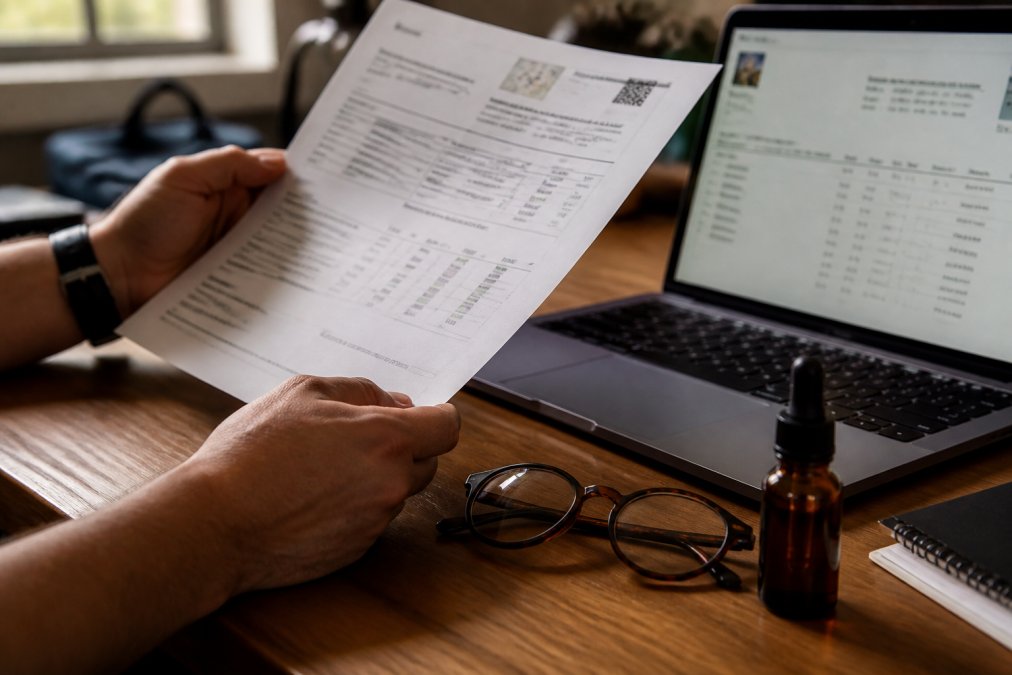
The certificate of analysis is a lab report documenting what a specific batch of CBD contains. It's the single most useful document an athlete can check, and most buyers never open one.
Batch Numbers, LOQs, and the Panels That Matter
Start with the batch number. It should match the lot code on your product exactly. If it's missing or doesn't align, the report tells you nothing about what you're holding.
Then look at the panels. A complete COA covers cannabinoid profile, heavy metals, pesticides, residual solvents, microbials, and sometimes mycotoxins. Each row lists a result and a limit of quantification (LOQ), the smallest amount the lab can reliably detect. "Below LOQ" is meaningfully different from a blank cell.
Compare every result against the published action limit. A number under the limit passes. A number over it fails, regardless of how the marketing copy reads.
Watch Out
A COA with no batch number, no LOQ values, or missing contaminant panels is not verification. It's decoration. If a brand won't publish batch-specific results, treat the "clean" claim as unproven.
Banned Substances in CBD Products: What Drug-Tested Athletes Need to Know
For drug-tested athletes, the central risk is tetrahydrocannabinol, not CBD itself. CBD isn't prohibited under major anti-doping codes, but THC is, and it can appear in products labeled "THC-free." The failure point is rarely the cannabinoid itself, it's extraction contamination, a full-spectrum oil with more THC than the label admits, or a batch that drifted above the label claim.
That's why U.S. Anti-Doping Agency guidance on supplement and CBD risk tells athletes to treat any supplement, including CBD, as a potential risk unless a batch is independently verified. The agency's position is blunt: no supplement is guaranteed clean, and the burden of proof sits with the athlete, not the brand.
The Three Failure Points That Actually Trip Athletes
Most positive tests traced to CBD products come from one of three places:
- Full-spectrum products with honest-but-too-high THC. A label that says "contains THC" at 0.3% is legal under federal hemp rules but can still accumulate in a daily user's system (usda.gov). For a tested athlete, "legal" and "safe for my sport" are different questions.
- Mislabeled broad-spectrum or isolate. A product marketed as THC-free that tests above the limit of quantification on an independent panel. This is where batch-specific COAs matter most.
- Cross-contamination at the facility. A manufacturer running full-spectrum and isolate lines on shared equipment can leave trace THC in a product that was never supposed to contain any.
How to Verify a Batch Before You Buy It
The practical rule: if you're subject to testing, use broad-spectrum or isolate products with a batch-specific COA showing 0% THC. "Third-party tested" on a website banner is not the same as a lab report tied to your lot.
A verification sequence that works:
- Find the lot number printed on the package (not the SKU, not the order number).
- Open the brand's COA library and match that lot number exactly.
- Confirm the cannabinoid panel shows THC reported as "ND" (not detected) or "below LOQ," not just a blank cell.
- Check that the lab is ISO 17025 accredited, the standard most anti-doping bodies recognize for analytical testing (nist.gov).
- Save the PDF. If a test ever comes back flagged, you want the paper trail.
Watch Out
A COA with no batch number, no LOQ values, or missing contaminant panels is not verification. It's decoration. If a brand won't publish batch-specific results, treat the "clean" claim as unproven, and treat the product as a risk to your eligibility.
::: Maintaining this level of scrutiny underscores the fundamental importance of batch verification for athletes who must ensure that every supplement remains free from prohibited substances.
The Heavy Metal and Pesticide Angle Most Guides Skip
THC gets the headlines, but heavy metals and pesticides are the quieter problem. Hemp is a bioaccumulator, it pulls cadmium, lead, and arsenic from soil more readily than most crops. A product can be THC-free and still carry a cadmium load that fails a full contaminant panel.
For athletes, this matters twice over. Chronic low-level heavy metal exposure drags on recovery, sleep quality, and endocrine function, the exact systems you're trying to support. And a brand that skips heavy metal testing usually skips pesticide testing too, the most common reason a batch fails an independent panel.
When you open a COA, look for these panels by name:
- Heavy metals: lead, cadmium, arsenic, mercury, each with a result and a limit of quantification.
- Pesticides: a multi-residue panel, not a single-compound screen. A real panel lists dozens of analytes.
- Residual solvents: butane, hexane, ethanol, relevant if the extraction method isn't CO2 or ethanol.
- Microbials: total yeast and mold, E. coli, salmonella.
- Mycotoxins: aflatoxins and ochratoxin A, especially for products stored in humid conditions.
If any of those panels is missing, the batch isn't verified, it's partially verified, which for a tested athlete is the same as unverified.
What to Do If You're Unsure
If a brand can't produce a batch-specific COA with full contaminant panels, don't use the product during a competitive season. Verified alternatives are plentiful, and a failed test, suspension, lost eligibility, lost sponsorship, dwarfs any convenience a cheaper product offers.
CBD for Inflammation and Joint Pain: What the Research Supports
CBD for inflammation and joint pain is an area of active research, not settled science. Preclinical work points toward interaction with receptors involved in inflammatory signaling, but human trials in athletic populations remain limited.
What the evidence does support is modest: many users report reduced joint discomfort and easier recovery. What it does not support is a claim that CBD treats injury or replaces medical care.
The mechanism most often cited is the endocannabinoid system, a network of receptors and signaling molecules regulating pain perception, sleep, and inflammatory response. CBD interacts with it indirectly rather than binding to receptors the way THC does.
For athletes, that translates to a supporting role. Use CBD as part of a recovery protocol that includes sleep, hydration, and progressive loading, not as a substitute for any of them.
Delivery Methods Compared: Sublingual, Topical, and Gummy Bioavailability
Bioavailability, the share of a dose that reaches your bloodstream, varies sharply by delivery method. That difference decides how fast you feel anything and how long it lasts.
| Method | Onset | Duration | Best For |
|---|---|---|---|
| Sublingual oil | 15-45 min | 4-6 hours | Pre-workout calm, general dosing |
| Topical | 15-30 min | 2-4 hours | Localized joint and muscle discomfort |
| Gummy (oral) | 45-90 min | 6-8 hours | All-day baseline, sleep support |
Sublingual absorption bypasses digestion, which is why onset is faster. Topicals act locally at the application site and deliver little to the bloodstream. Edibles pass through the liver, which slows onset but extends duration.
If you want relief at a specific joint, a topical stick applied directly to the area beats swallowing a gummy and waiting an hour. The effect is local, so it won't help a systemic issue, but for a stiff shoulder or sore knee it's the faster route.
Interactions With Common Sports Supplements and Recovery Protocols
CBD interacts with the same liver enzymes that process many common supplements and medications, so timing and stacking matter more than most athletes assume. The relevant family is cytochrome P450, specifically CYP3A4 and CYP2C19, and CBD inhibits both, the mechanism behind nearly every interaction worth knowing about.
What CYP Inhibition Actually Means for Your Stack
When CBD slows CYP3A4, compounds relying on that enzyme for clearance stay in your bloodstream longer and at higher effective levels than the label suggests. For most OTC sports supplements that's minor. For prescription medications, some blood thinners, anti-inflammatories, and anti-anxiety drugs, it can be clinically significant. If you take anything prescription, talk to your physician first.
Supplement-by-Supplement Breakdown
Here's how the most common athlete supplements stack against CBD:
- Creatine monohydrate. Low concern. Creatine is cleared renally, not primarily through CYP enzymes, so CBD doesn't meaningfully change its kinetics. The two can be taken together.
- Caffeine. Moderate concern for timing, not safety. CBD and caffeine both affect adenosine signaling and can compound each other's effects, some athletes find the combination jittery, others find CBD smooths the caffeine edge. Start with a lower caffeine dose on days you also take CBD.
- BCAAs and EAAs. Low concern. Amino acids are absorbed and metabolized through pathways independent of CYP3A4. No known interaction.
- Pre-workout blends. Variable concern. Proprietary blends hide doses, and many contain stimulants (yohimbine, synephrine) that CBD can potentiate. If your pre-workout lists a proprietary blend, treat it as an unknown and separate it from CBD by at least an hour.
- Protein powder. Low concern. Whey and plant proteins don't interact with CBD metabolism in any documented way.
- Herbal adaptogens (ashwagandha, rhodiola, ginseng). Moderate concern. Several of these are themselves CYP substrates, so stacking them with CBD can raise blood levels of both. Rotate rather than stack.
- NSAIDs (ibuprofen, naproxen). Moderate concern. Both CBD and NSAIDs are metabolized in part through CYP2C9, and some research suggests CBD can slow NSAID clearance. If you use NSAIDs regularly, talk to your physician about timing.
A Stacking Protocol That Reduces Risk
Recovery protocols that pair well with CBD:
- Take CBD after training, not before, if your goal is sleep and tissue recovery. Post-workout timing also avoids compounding with pre-workout stimulants.
- Separate CBD from other supplements by 30-60 minutes to reduce absorption competition and give each compound a cleaner metabolic window.
- Keep a simple log of dose, timing, and how you feel for two weeks before adjusting. The interaction effects that matter are the ones you actually notice.
- If you're on any prescription medication, clear the stack with your physician before adding CBD, not after.
Pro Tip
If you're already taking a pre-workout with a proprietary blend, the safest move isn't to drop the CBD, it's to drop the proprietary blend. Single-ingredient pre-workouts let you see exactly what you're stacking and adjust one variable at a time.
The Recovery-Protocol Context
CBD is a supporting player in a recovery protocol, not the protocol itself. The strongest evidence base for athletic recovery remains sleep, protein intake, progressive loading, and deload weeks. CBD supports the systems, sleep quality, perceived stress, localized discomfort, that let those fundamentals work. Stacking it with a poorly designed routine doesn't fix the routine; stacking it with a well-designed one is where athletes notice the difference.
Building a Clean CBD Routine: Dosing, Timing, and Product Picks
Start low and titrate slowly. A reasonable starting point for most adults is a small dose once daily, held under the tongue for 60-90 seconds, increased gradually over one to two weeks based on response. There is no universal dose, and anyone who quotes one is guessing.
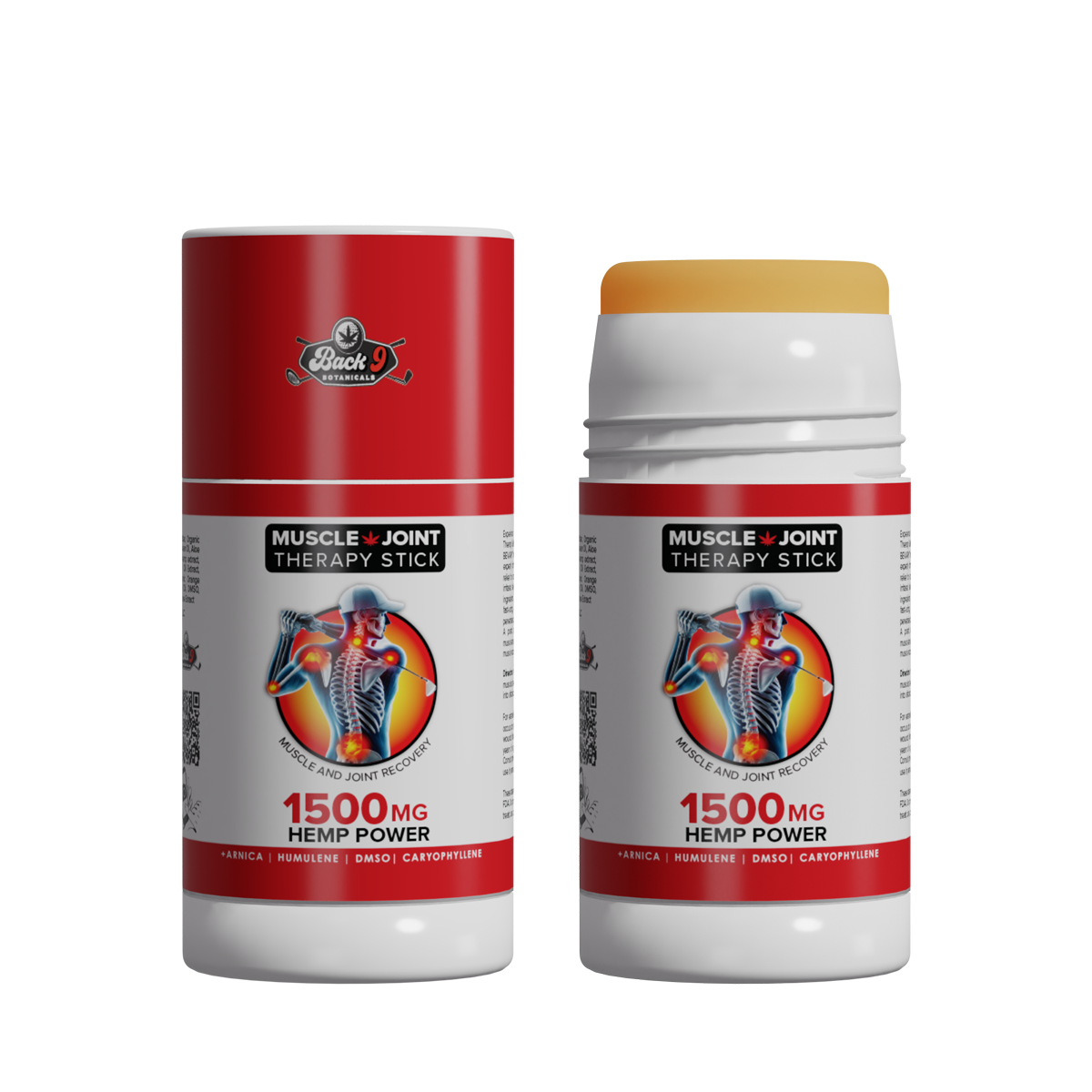
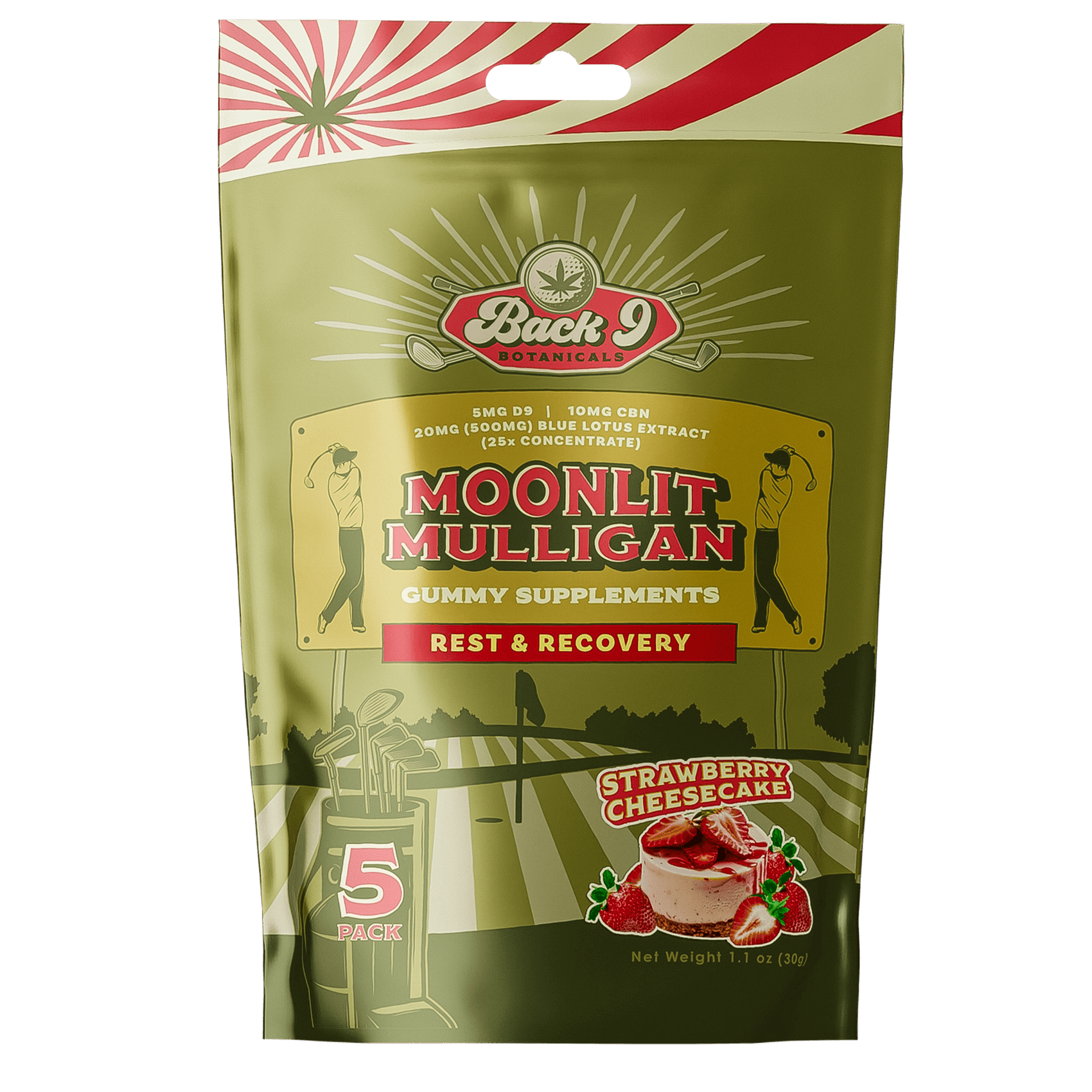
For athletes who want verified purity without guesswork, Back 9 Botanicals formulates around clean, functional ingredient profiles with published lab testing. The CBD Topical Therapy Stick uses broad-spectrum hemp oil with 0% THC for targeted muscle and joint relief, which makes it the practical choice for drug-tested athletes who want localized support without systemic THC exposure. For daily balance, the Players Blend Energy & Focus Gummies combine hemp-derived cannabinoids with caffeine and L-citrulline for pre-round or pre-training focus. Athletes building a full routine can pair both through the Back 9 Daily Wellness Stack, which covers energy, focus, and rest in one system.


Key Takeaway
The clean label question isn't "does this brand say clean?" It's "can I open a batch-specific lab report and read the numbers myself?" That single habit filters out most of the market.
Frequently Asked Questions
What does 'clean label' mean for CBD products?
Clean label means the product's claims can be verified: batch-specific third-party lab testing, a published certificate of analysis, no undisclosed fillers or synthetic additives, and full cannabinoid disclosure including THC content. For athletes, it also means screening for banned substances. A clean label is not a certification you buy; it is a paper trail you can check before your first dose of clean label CBD.
Is CBD legal for professional athletes under WADA guidelines?
The World Anti-Doping Agency removed cannabidiol from its prohibited list in 2018, so CBD itself is not banned in competition. THC and other psychoactive cannabinoids remain prohibited in-competition, with a urinary threshold of 150 ng/mL. That makes product selection the risk point: a full-spectrum oil with unlisted THC can push a drug-tested athlete over the limit even when the label says CBD.
How do I verify the purity of CBD products using third-party lab reports?
Match the batch or lot number on your package to the certificate of analysis on the brand's site. Check that the lab is independent (ISO 17025 accredited is a good sign), that the report is dated within the last year, and that it shows cannabinoid potency plus heavy metals, pesticides, residual solvents, and microbials. Look for reported limits of quantification rather than 'none detected' with no number.
How does THC content affect CBD products for athletes?
THC content determines both impairment risk and test risk. Isolate and broad-spectrum products keep THC at or near zero; full-spectrum products may carry up to 0.3% THC by dry weight under federal law, which can accumulate with daily use. Athletes in drug-tested programs should favor broad-spectrum or isolate formulas and confirm the exact THC milligram per serving on the COA.
The hardest part of buying CBD isn't finding a product, it's verifying one. Most labels won't give you the batch-level documentation to do it. Back 9 Botanicals publishes lab testing on its formulas, builds around broad-spectrum hemp oil with 0% THC where athletes need it, and designs each product for a specific part of the day rather than a vague wellness promise. Start with the Daily Wellness Stack and build a routine you can actually verify.

