
 Cart (0 items)





Discover 7 natural anti-inflammatory supplements for athletes. Learn dosage protocols, bioavailability, and recovery strategies. Start optimizing.
7 Best Natural Anti-Inflammatory Supplements for Athletes

Table of Contents
- What Is Inflammation and Why Athletes Need Anti-Inflammatory Support
- How Natural Anti-Inflammatory Supplements Work for Athletic Recovery
- Best Natural Anti-Inflammatory Herbs for Chronic Joint Pain
- CBD for Athletic Recovery: How Cannabinoids Reduce Inflammation
- Anti-Inflammatory Supplement Dosage for Athletes: What the Research Shows
- Bioavailability and Absorption: Getting Maximum Benefit from Your Supplements
- Third-Party Testing and Purity: Why It Matters for Athletes
- Synergistic Supplement Stacks for Optimal Recovery
- Frequently Asked Questions
Last Updated: September 30, 2026
What Is Inflammation and Why Athletes Need Anti-Inflammatory Support
Inflammation is your body's natural response to injury, stress, or intense physical activity. While acute inflammation aids healing, chronic inflammation delays recovery and limits performance.
Training generates oxidative stress and pro-inflammatory markers like TNF-alpha and IL-6. Without proper recovery support, inflammation lingers and reduces training capacity. This is where natural anti-inflammatory supplements come in.
Recovery is essential for serious athletes, whether you're managing repetitive movements, recovering from recreational sports, or training for endurance. Controlling inflammation directly impacts recovery speed. The goal is to modulate inflammation so recovery accelerates without compromising the adaptive response your body needs.
The best natural anti-inflammatory supplements work through multiple pathways, reducing cytokine production, enhancing bioavailability, and working synergistically when combined. Below, we'll show you how natural anti-inflammatory supplements work for athletic recovery and which ones deliver measurable results.
How Natural Anti-Inflammatory Supplements Work for Athletic Recovery
Natural anti-inflammatory supplements target the underlying inflammatory cascade, the signaling pathways that trigger cytokine release and oxidative stress, rather than simply blocking pain signals.
Effective natural compounds contain polyphenols that interact with cellular repair mechanisms. Curcumin modulates NF-kappa B, a key protein regulating inflammatory gene expression. Ginger supports joint mobility and connective tissue health. Boswellia serrata contains AKBA, which reduces pro-inflammatory signaling in cartilage and synovial tissue.
Dosage and consistency matter enormously. Curcumin has poor bioavailability on its own, only 3-5% absorption without enhancement. Black pepper (piperine) or healthy fats dramatically improve effectiveness. Curcumin typically requires 500-2000 mg daily for anti-inflammatory benefits, while ginger works at 500-1500 mg daily.
Combining supplements that address different inflammation aspects creates synergistic effects. A stack targeting TNF-alpha reduction (turmeric), cartilage support (boswellia), and oxidative stress (vitamin D) works stronger than any single ingredient alone.
Pro Tip
The biggest mistake athletes make is expecting results from a single dose. Natural anti-inflammatory supplements require consistent daily use for 2-4 weeks before noticeable improvements in delayed onset muscle soreness (DOMS) or joint stiffness appear. Commitment to a protocol matters more than the specific product.
Best Natural Anti-Inflammatory Herbs for Chronic Joint Pain
Turmeric and Curcumin
Turmeric is the most researched natural anti-inflammatory herb for athletes, with curcumin extensively studied for reducing systemic inflammation and supporting joint health.
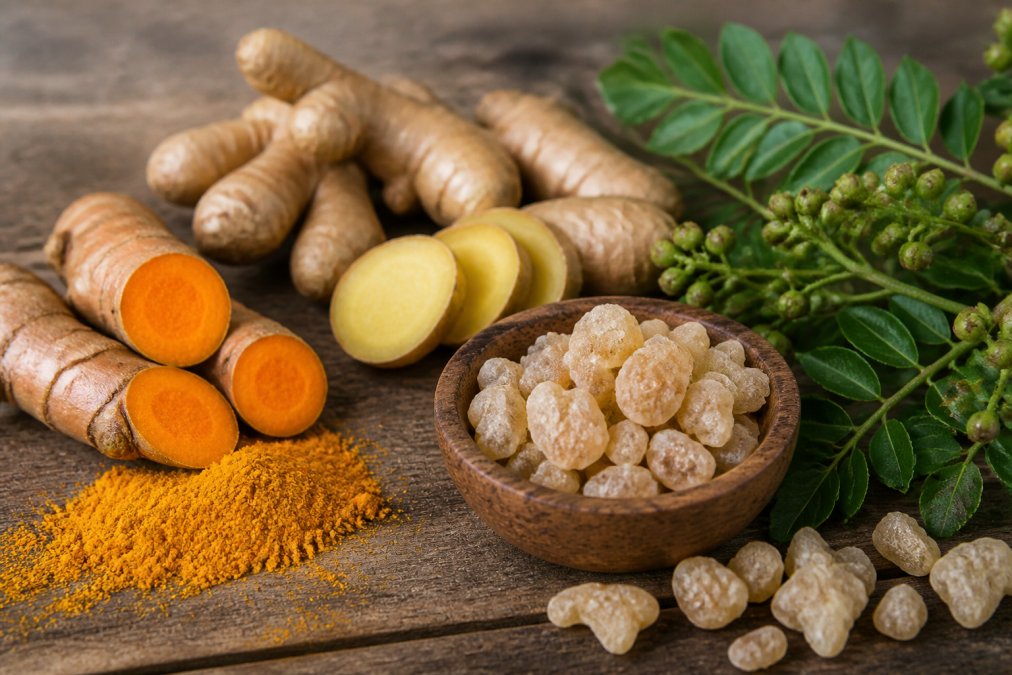
Curcumin inhibits inflammatory signaling cascades and reduces TNF-alpha and IL-6 production. For athletes with chronic joint pain, curcumin supplementation has shown measurable benefits in reducing pain and improving mobility.
Curcumin is lipophilic and absorbs poorly without enhancement. Pairing turmeric with black pepper (piperine) increases bioavailability by up to 2000%. Adding it to meals with healthy fats further enhances absorption.
Therapeutic dosage for joint pain ranges from 500-2000 mg of curcumin daily in divided doses. Consistency matters more than high single doses. Expect 3-4 weeks before noticing improvements in joint stiffness or soreness.
Key Takeaway
Turmeric is most effective when combined with black pepper and taken with meals containing fat. Without these absorption enhancers, you're wasting most of the dose.
Ginger and Boswellia Serrata
Ginger offers a complementary anti-inflammatory pathway. Gingerols and shogaols reduce pro-inflammatory markers while supporting circulation and connective tissue health, making ginger effective for acute post-workout soreness.
Boswellia serrata targets inflammation in cartilage and synovial tissue. AKBA inhibits inflammatory enzymes that break down cartilage, making boswellia effective for chronic joint pain and cartilage wear.
Ginger and boswellia work synergistically: ginger reduces systemic inflammation while boswellia protects cartilage structure. Typical dosing is 1000-2000 mg ginger daily and 300-500 mg boswellia extract (standardized to 30-65% boswellic acids).
CBD for Athletic Recovery: How Cannabinoids Reduce Inflammation
CBD (cannabidiol) represents a different anti-inflammatory class. Unlike turmeric or ginger, CBD interacts with your endocannabinoid system, a regulatory network that modulates immune response, pain perception, and inflammation. Broadening your approach to include other natural anti-inflammatories for pain can help address systemic discomfort that extends beyond the scope of endocannabinoid modulation.
CBD binds to CB2 receptors on immune cells, reducing cytokine production and inflammatory signaling while acting as an antioxidant. This reduces both acute post-workout inflammation and chronic systemic inflammation from overtraining.
CBD's broad mechanism modulates your entire immune response, making it useful for athletes who overtrain or compete frequently, where systemic inflammation accumulates faster than traditional recovery allows.
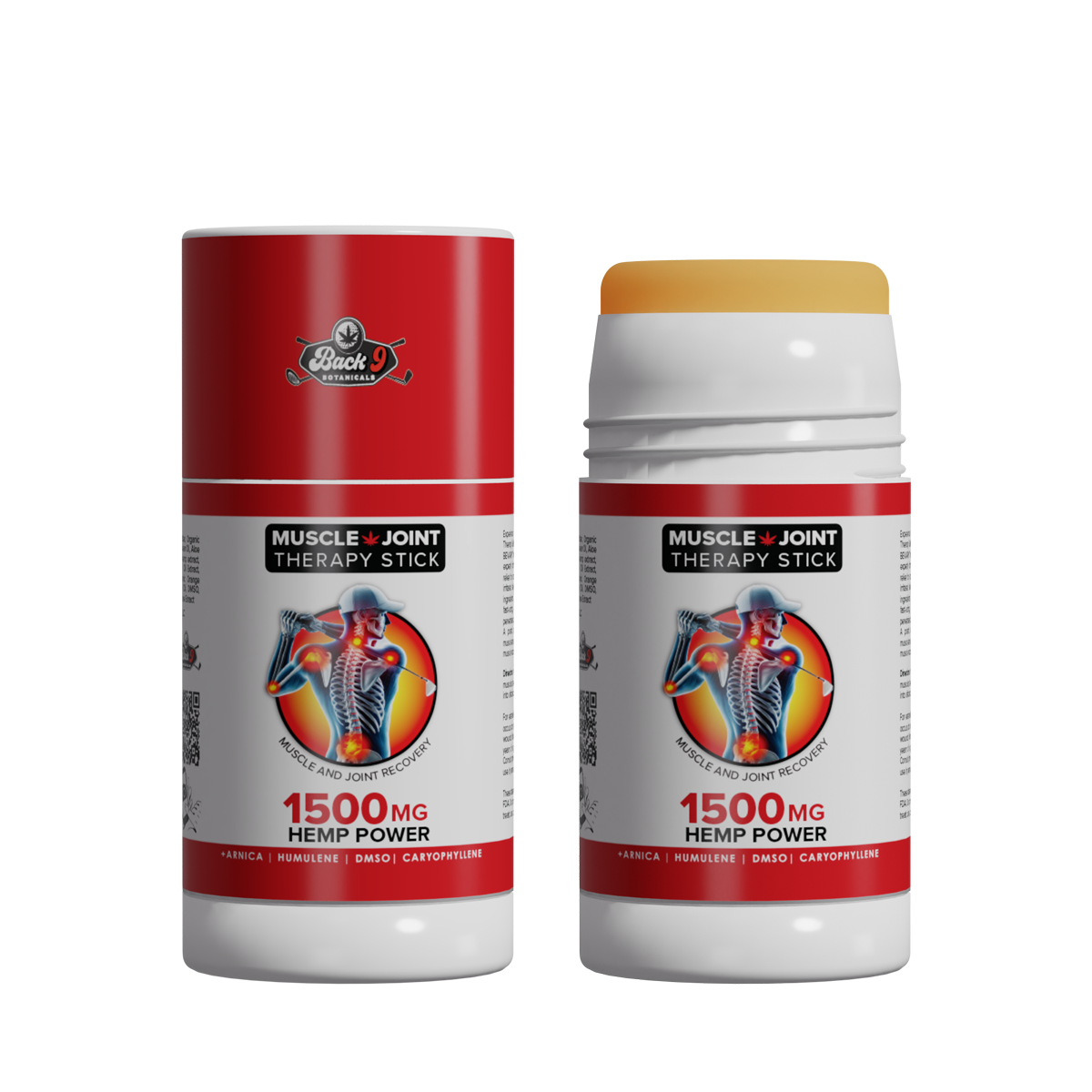
Back 9 Botanicals' CBD Topical Therapy Stick delivers 1500 mg of broad-spectrum hemp oil directly to sore muscles and joints. The topical application allows CBD to work locally on inflamed tissue while the supporting ingredients, arnica, cayenne extract, and DMSO, enhance penetration and add their own anti-inflammatory effects. For athletes managing localized joint pain or muscle soreness, topical CBD offers faster, more targeted relief than oral supplements.

Best For
Athletes with localized joint pain (knees, shoulders, elbows) or muscle soreness from specific training sessions. Topical application works faster than oral supplements for acute soreness.
Anti-Inflammatory Supplement Dosage for Athletes: What the Research Shows
Many athletes underdose supplements. Therapeutic dosing requires understanding what dose actually reduces inflammation markers in your body.
For curcumin, 500-2000 mg daily produces noticeable anti-inflammatory effects. Below 500 mg shows minimal benefit; above 2000 mg, additional benefits plateau.
Ginger works effectively at 1000-2000 mg daily for consistent inflammation reduction.
Boswellia requires 300-500 mg daily of a standardized extract (30-65% boswellic acids). Standardization matters; non-standardized powder is largely ineffective.
Most athletes see CBD benefits at 10-50 mg daily for systemic inflammation.
| Supplement | Effective Daily Dose | Frequency | Timeline to Results |
|---|---|---|---|
| Curcumin | 500-2000 mg | Divided doses with meals | 3-4 weeks |
| Ginger | 1000-2000 mg | With meals or pre-workout | 1-2 weeks |
| Boswellia | 300-500 mg | 2-3 times daily | 2-3 weeks |
| CBD (oral) | 10-50 mg | Daily | 1-2 weeks |
| CBD (topical) | Apply as needed | 1-3 times daily | Immediate localized relief |
Bioavailability and Absorption: Getting Maximum Benefit from Your Supplements
Bioavailability, the percentage of a supplement your body actually absorbs and uses, determines whether you're getting real anti-inflammatory benefits or just expensive urine.
Watch Out
Taking supplements on an empty stomach or without fat significantly reduces absorption of curcumin, ginger, and boswellia. You could be losing 50-80% of the dose through poor absorption practices.
Third-Party Testing and Purity: Why It Matters for Athletes
Not all supplement brands test their products for purity and potency. Some contain less active ingredient than the label claims. Others include contaminants like heavy metals, mold, or pesticides that undermine the anti-inflammatory benefits you're seeking.
Synergistic Supplement Stacks for Optimal Recovery
The most effective anti-inflammatory protocols combine supplements that work through different mechanisms. A synergistic stack amplifies benefits beyond what any single ingredient achieves alone.
Base Stack for Joint and Systemic Inflammation:
- Curcumin (turmeric with piperine): 1000-1500 mg daily with meals
- Ginger: 1000-1500 mg daily with meals
- Boswellia: 300-500 mg daily, 2-3 divided doses
- Vitamin D: 2000-4000 IU daily (supports immune modulation and bone health)
Enhanced Stack for High-Volume Training: Add to the base stack:
- CBD: 20-30 mg daily (oral) for systemic inflammation
- Back 9 Botanicals CBD Topical Therapy Stick: apply to sore joints or muscles 1-3 times daily
Stack for Sleep and Recovery: For athletes struggling with sleep quality due to training-induced inflammation and muscle soreness:
- Base stack (curcumin, ginger, boswellia, vitamin D)
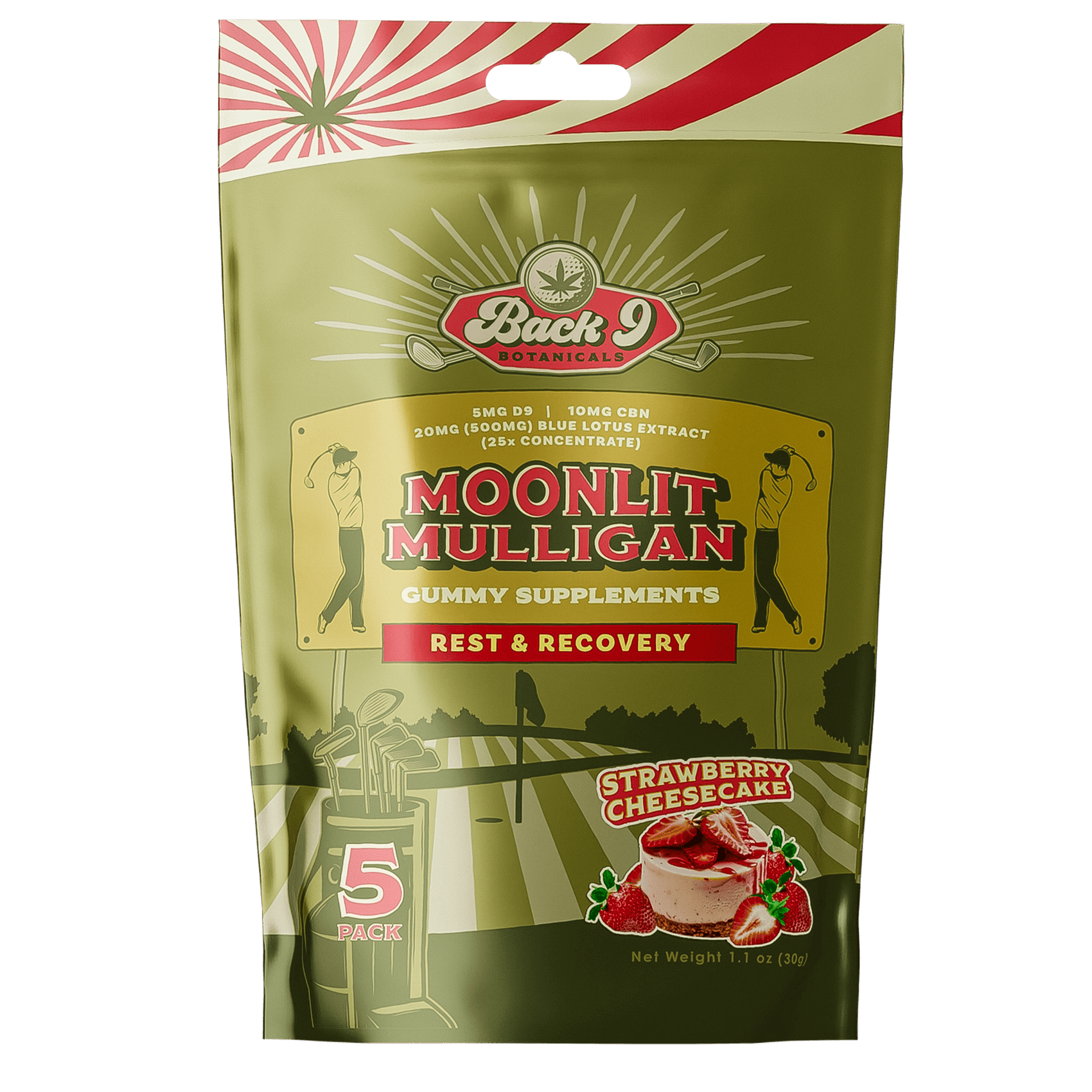
- Back 9 Botanicals Moonlit Mulligan gummies: 5 mg hemp-derived Delta 9 THC, 10 mg CBN, 20 mg Blue Lotus Extract per gummy
- Take 1 gummy 30-60 minutes before bed
Stack for Pre-Workout Focus and Mid-Round Performance:
- Back 9 Botanicals Players Blend: 55 mg caffeine, 37 mg L-citrulline, 18 mg DL-malate, 55 mg beta-alanine, 2 mg hemp-derived Delta 9 THC per gummy
- Take 1 gummy 30-45 minutes before activity
Key Takeaway
A well-designed supplement stack addresses multiple aspects of recovery simultaneously. Combining curcumin, ginger, boswellia, and vitamin D targets inflammation through four different mechanisms, producing better results than any single supplement alone.
Frequently Asked Questions
What is the strongest natural anti-inflammatory supplement for muscle recovery?
Turmeric (curcumin) and omega-3 fatty acids rank among the most potent. Curcumin works by inhibiting TNF-alpha and IL-6 cytokines, key drivers of systemic inflammation. For athletes, combining curcumin with black pepper (piperine) increases bioavailability by up to 2000%, making absorption significantly more efficient. Omega-3s reduce pro-inflammatory signaling cascades at the cellular level. Most athletes see measurable recovery improvements within 2-4 weeks of consistent use at therapeutic dosages.
How long does it take for natural anti-inflammatory supplements to reduce inflammation?
Timeline varies by supplement and individual response. Topical options like CBD salves show localized relief within minutes to hours. Oral supplements typically require 7-14 days for noticeable systemic effects, with peak benefits appearing after 3-6 weeks of daily use. Factors affecting speed include bioavailability, dosage titration, individual metabolism, and whether you're using single ingredients or synergistic stacks. Delayed onset muscle soreness (DOMS) specifically responds well to curcumin and bromelain started within 24 hours of intense exercise.
Can athletes use CBD for post-workout recovery without contraindications?
CBD is generally well-tolerated for athletic recovery when sourced from third-party tested products. It doesn't trigger positive drug tests for banned substances in most sports organizations (verify your specific federation). CBD reduces oxidative stress and supports immune modulation without the psychoactive effects of THC. Topical CBD products like the CBD Topical Therapy Stick ($25.99) deliver localized anti-inflammatory benefits directly to sore joints and connective tissue. Start with lower doses to assess individual tolerance, as some athletes experience mild interactions with certain medications.
What anti-inflammatory supplement dosage should athletes actually use?
Therapeutic dosages vary by compound. Curcumin requires 500-1000mg daily (with black pepper enhancer) for systemic inflammation. Omega-3s need 2-3g daily EPA/DHA combined. Bromelain works best at 500-1000mg between meals. Boswellia requires 300-500mg standardized extract. For CBD, topical applications use 1100-1500mg per application, while oral cannabinoids range from 2-10mg depending on individual tolerance and desired effect. Athletes should start low and titrate upward over 2-3 weeks, monitoring for optimal response without exceeding maximum daily recommendations.
Are natural anti-inflammatory supplements safe for daily use by active adults?
Most natural anti-inflammatory supplements are safe for daily long-term use when sourced from reputable manufacturers with third-party testing. Curcumin, ginger, and omega-3s have decades of safety data. However, some contraindications exist: high-dose curcumin may interact with blood thinners; ginger can increase bleeding risk in certain conditions; bromelain may cause allergic reactions in sensitive individuals. Hemp-derived products are federally legal per the 2018 Farm Bill but subject to state regulations. Consult your healthcare provider before combining multiple supplements, especially if taking prescription medications.

