
 Cart (0 items)





Learn how to read CBD labels for athletes. Understand potency, COAs, cannabinoid profiles, and drug test risks before you buy.
How to Read CBD Labels for Athletes: A Step-by-Step Guide

Table of Contents
- Why CBD Labels Matter for Athletes
- Decoding Common Terms on CBD Labels
- How to Read a CBD Certificate of Analysis
- CBD Serving Size and Potency: What the Numbers Mean
- Full-Spectrum vs Broad-Spectrum CBD for Athletes
- CBD Drug Test Athletes: What the Label Won't Tell You
- Reading the Ingredient List: What Else Is in Your CBD
- Conclusion
- Frequently Asked Questions
Last Updated: October 19, 2026
Why CBD Labels Matter for Athletes
Learning how to read CBD labels for athletes starts with one hard truth: the label is the only protection you have. At Back 9 Botanicals, we tell every customer the same thing before they buy anything: if you can't read the label, you can't trust the bottle. CBD labels are the printed panel on a hemp product that states cannabinoid content, serving size, ingredients, and testing details. That panel tells you what you're actually putting in your body before a round, a training block, or a recovery day.
Most athletes skip straight to the front of the bottle. Big font, bold claims, a picture of a mountain. None of that is regulated in a meaningful way. The back panel is where the real information lives.
Below, we'll walk you through exactly what to check, in order, so you can compare two products side by side and know which one is worth your money.
Watch Out
The most common mistake is buying based on the front label. Words like "premium" and "pure" are marketing terms with no legal definition for hemp products. Only the back panel and the lab report give you facts.
Decoding Common Terms on CBD Labels
Three terms cause most of the confusion, and they are not interchangeable. CBD is a single cannabinoid. Hemp extract is the whole oil pulled from the plant, which usually contains CBD plus other cannabinoids. Hemp seed oil is pressed from seeds and contains no meaningful CBD at all.
That last one matters. A bottle can say "hemp oil" on the front and contain nothing but seed oil. Check the back panel for the actual milligram count of CBD.

CBD, Hemp Extract, and Hemp Seed Oil
- CBD: one isolated compound, usually listed in milligrams
- Hemp extract: the full oil, may include CBD, CBG, CBDV, and trace THC
- Hemp seed oil: a carrier oil with no CBD, often used to make a label look impressive
Broad-Spectrum, Full-Spectrum, and Isolate
- Full-spectrum: contains CBD plus other cannabinoids, including trace THC
- Broad-spectrum: contains multiple cannabinoids with THC removed
- Isolate: pure CBD only, no other cannabinoids
For athletes, the distinction matters most when drug testing is involved. We'll get to that.
How to Read a CBD Certificate of Analysis
A certificate of analysis is a lab report from a third-party testing facility that verifies what is actually in the product. It is the single most useful document a CBD buyer can request.
Here's how to read one:
- Check the batch number. It must match the number printed on your bottle. A report for a different batch tells you nothing.
- Find the lab's name and accreditation. A legitimate report names the lab.
- Look at the cannabinoid panel. It should list CBD, THC, and other cannabinoids in milligrams per gram.
- Read the contaminants section. Heavy metals, pesticides, mold, and residual solvents should all read as passing.
- Confirm the date. An old report may not reflect the product in your hand.
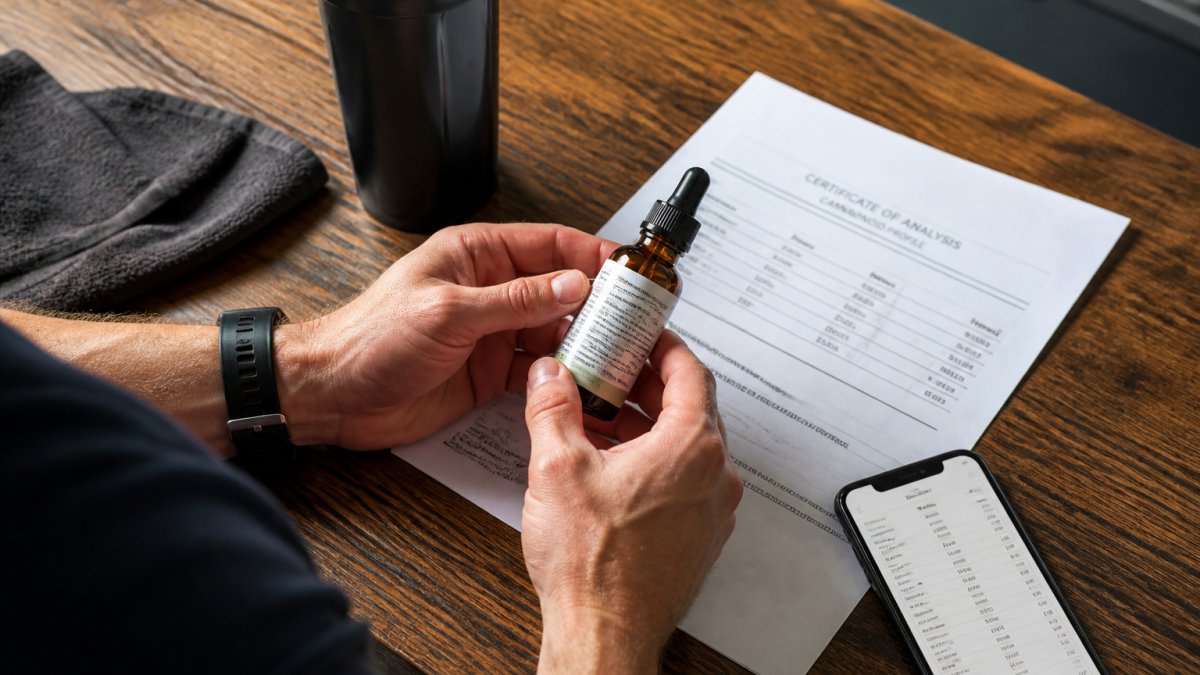
Many reputable brands publish these reports on their site. Ours are available on our lab tests page, and we'd rather you check them than take our word for it.
CBD Serving Size and Potency: What the Numbers Mean
Potency is the total CBD in the whole container. Serving size is how much CBD you get per use. Confusing the two is the fastest way to take far more or far less than you intended.
A bottle labeled "1500 mg" tells you nothing until you know the serving size. If the label says 30 servings, each serving carries roughly 50 mg. If it says 60 servings, each carries about 25 mg.
Start low. A common approach is to begin with a small serving and adjust after a few days based on how you feel. There is no universal dose, and body weight, tolerance, and goal all shift the number.
Pro Tip
Photograph the back panel of any product you buy and keep it on your phone. When you switch brands, you can compare milligram per serving directly instead of guessing from the front of the bottle.
Full-Spectrum vs Broad-Spectrum CBD for Athletes
Broad-spectrum is the safer default for athletes who face any form of testing. Full-spectrum carries trace THC, and repeated use can build up in the body over time.
That doesn't make full-spectrum a bad product. Many people prefer it because the range of cannabinoids may work together. But if you're subject to a drug test, whether at the amateur or professional level, the trace THC is a real risk you should weigh deliberately.
Here's the practical split:
| Format | Contains THC | Best For | Watch Out For |
|---|---|---|---|
| Full-spectrum | Yes, trace amounts | Users with no testing exposure | Cumulative buildup |
| Broad-spectrum | No THC | Tested athletes, daily use | Slightly higher cost |
| Isolate | No THC, no other cannabinoids | Strict testing environments | Narrower cannabinoid range |
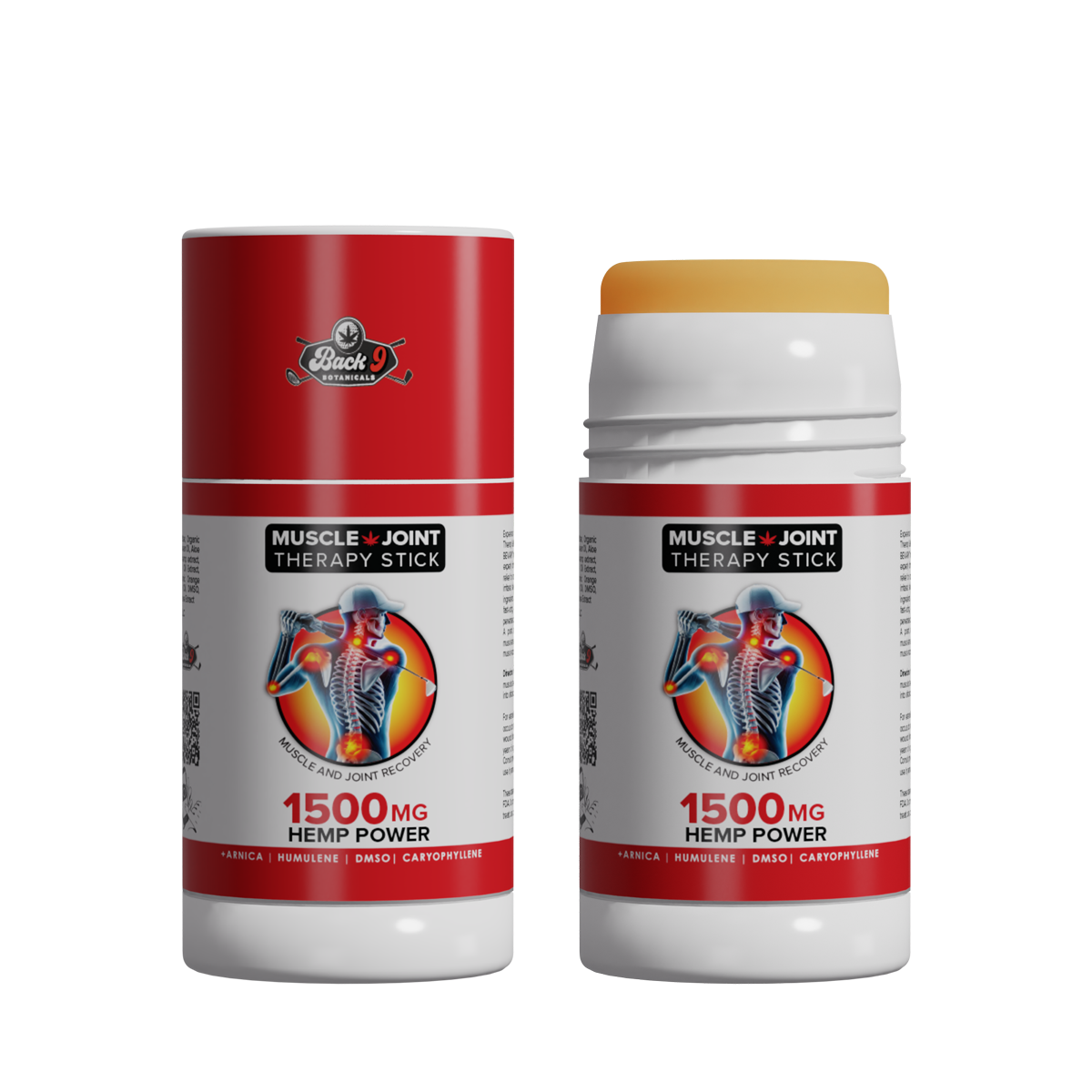
Our topical therapy stick uses broad-spectrum hemp oil with 0% THC, which is the format we'd point a tested athlete toward first.
CBD Drug Test Athletes: What the Label Won't Tell You
No CBD label can promise you'll pass a drug test. That's the honest answer, and any brand that says otherwise is overselling.
Standard drug screens look for THC metabolites, not CBD. A broad-spectrum or isolate product removes most of that risk, but no label guarantees a clean result because metabolism, dose, and test sensitivity vary by person.
A few things the label won't tell you:
- How your body processes trace cannabinoids
- Whether your specific test screens at a low threshold
- Whether the product's batch tested exactly as the label claims
That's why batch-level lab reports matter. They show what was actually in the product, not what the marketing copy says.
Key Takeaway
If you're subject to testing, choose broad-spectrum or isolate, verify the batch report, and treat any product claiming a guaranteed pass as a red flag.
Reading the Ingredient List: What Else Is in Your CBD
The ingredient list tells you what carries the CBD, and for athletes that matters as much as the cannabinoid count. A product can be clean on CBD and loaded with sugar, artificial dyes, or fillers.
Scan for these:
- Carrier oils: olive, coconut, or MCT are common and generally well tolerated
- Added sugars and syrups: common in gummies, worth checking if you track intake
- Artificial colors and flavors: a sign of a more processed formula
- Botanical add-ins: arnica, clove, and cayenne appear in topicals for warming support
- Allergens: check for tree nut or coconut derivatives if you have sensitivities
A short ingredient list you can pronounce is usually a good sign. A long list of unpronounceable additives is worth a second look.
Conclusion
Reading a CBD label well comes down to four habits: check the cannabinoid type, confirm the milligram per serving, pull the batch lab report, and read the full ingredient list. Do those four things and you'll filter out most of what's on the shelf.
At Back 9 Botanicals, we built our formulas for athletes who want to know exactly what they're taking. Our broad-spectrum topical therapy stick delivers 1500 mg of hemp oil with 0% THC in a no-mess stick, and every batch is backed by published lab testing.
Get started with Back 9 Botanicals and read your next label with confidence.
Frequently Asked Questions
What should athletes look for on a CBD label?
Check four things: the CBD potency per serving in milligrams, the cannabinoid profile (broad-spectrum vs full-spectrum), a batch-specific certificate of analysis from an independent lab, and the full ingredient list. Avoid products that only list 'hemp extract' without stating CBD content, and skip anything without a COA you can access. For athletes subject to drug testing, confirm the product is broad-spectrum with 0% THC, like Back 9 Botanicals' Topical Therapy Stick, which lists over 1100 mg CBD and 0% THC.
Can CBD products contain THC even if the label says THC-free?
Yes. 'THC-free' is not a regulated term, and full-spectrum products can contain up to 0.3% THC by dry weight under federal law. For a 30 mL bottle with 1500 mg CBD, that 0.3% threshold can still translate to measurable THC per serving. Always verify with a batch-specific certificate of analysis that shows 'ND' (not detected) for THC, not just a marketing claim on the front label. If you are drug tested, treat 'THC-free' as unverified until the COA confirms it.
How can athletes check a CBD product's third-party test results?
Look for a QR code on the package or a batch number you can enter on the brand's website. The certificate of analysis should come from an independent lab (not the manufacturer), list the batch number matching your product, and show results for cannabinoid potency, heavy metals, pesticides, residual solvents, and microbials. Back 9 Botanicals publishes lab tests you can view directly. If a brand cannot produce a batch-specific COA on request, that is a red flag.
Can CBD cause an athlete to fail a drug test?
CBD itself is not typically screened for, but THC metabolites are. Full-spectrum products with trace THC can accumulate and trigger a positive test, especially with daily use. Broad-spectrum products with 0% THC, verified by a COA, carry lower risk but no product is guaranteed test-safe. If you compete under WADA or a league policy, check the rules and consult your governing body before using any cannabinoid product. When in doubt, choose topicals over ingestibles and confirm 0% THC on the batch COA.

