 Cart (0 items)





Does hemp CBD affect amateur golf status? Learn the rules on banned substances, drug testing, and how to protect your eligibility in 2026.
Does Hemp CBD Affect Amateur Golf Status? 2026 Guide

Table of Contents
- The Short Answer: Your Amateur Golf Status and Hemp CBD
- Why the USGA and WADA Rules Matter for Amateur Golf Status
- The Real Risk: THC Contamination and Does CBD Show on Drug Tests
- Navigating Banned Substances in Amateur Golf: A Practical Checklist
- Performance and Recovery: The Legitimate Case for CBD
- Common Misconceptions About CBD and Impairment
- Conclusion: Staying Compliant and On the Course
- Frequently Asked Questions
Last Updated: September 7, 2026
The Short Answer: Your Amateur Golf Status and Hemp CBD
The direct answer is no: using hemp CBD products does not automatically revoke your amateur golf status. The USGA and WADA do not prohibit cannabidiol itself, and hemp-derived CBD with compliant THC content is not on the prohibited list for amateur competition. What threatens your eligibility is THC contamination, which is why understanding your product's lab results matters more than the CBD itself.
The confusion is understandable: the rules changed, the products multiplied, and most guidance online is outdated. This guide breaks down what the governing bodies actually say, where the real risks hide, and how to verify your wellness routine keeps your amateur golf status intact.
Here is the distinction that resolves most of the anxiety: hemp CBD and marijuana are different under federal law. Hemp-derived products contain 0.3% or less THC by dry weight, placing them in a different legal category than cannabis with higher THC content.
Why the USGA and WADA Rules Matter for Amateur Golf Status
Your amateur golf status is governed by the USGA's Rules of Amateur Status, which focus on prize money, instruction, and commercial endorsement. CBD use does not appear in those rules because amateur status is about preserving the spirit of the game, not policing substances. Drug testing enters through a different door: the World Anti-Doping Agency code, which applies to elite and international competition.
The USGA's official rules and guidelines make clear that amateur status violations center on financial gain, not supplement use. If you are competing in events that follow the WADA Prohibited List, however, you must check the list yourself each year because it changes annually.
Understanding the Prohibited List and Cannabinoids
Cannabidiol was removed from the WADA Prohibited List in 2018, signaling official recognition that CBD is not performance-enhancing like stimulants or anabolic agents. THC, however, remains prohibited in competition because it is psychoactive and could theoretically mask fatigue or provide an unfair advantage.
This creates a clear hierarchy for golfers:
- CBD isolate: no THC, no prohibition risk
- Broad-spectrum CBD: no detectable THC, generally safe
- Full-spectrum CBD: contains trace THC, requires verification
The practical takeaway: your amateur golf status is safe with compliant hemp CBD, but the burden falls on you to confirm what is actually in the bottle.
The Real Risk: THC Contamination and Does CBD Show on Drug Tests
The question "does CBD show on drug tests" has a nuanced answer. Standard drug screens do not test for CBD at all. They look for THC metabolites, specifically THC-COOH, the byproduct your body produces when it processes THC. A pure CBD product will not trigger a positive result. A contaminated one might.
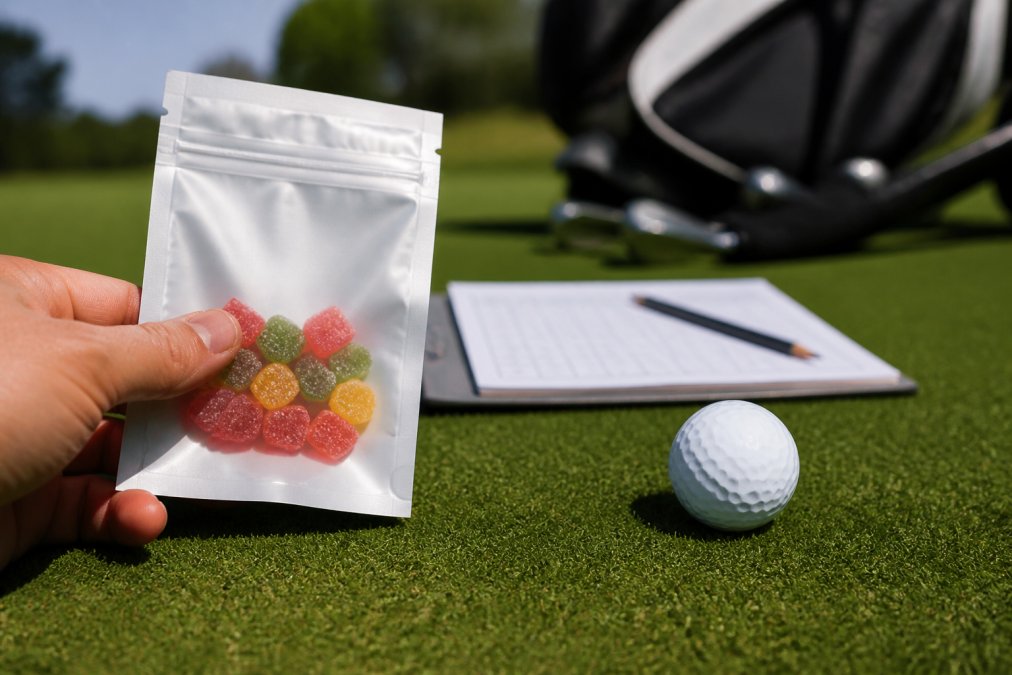
The contamination problem is real and documented. The primary risk isn't intentional spiking; it's poor manufacturing practices. Here's how a 'false positive' can happen:
-
Cross-contamination during extraction: If extraction equipment is used without a thorough cleaning and purge between runs, THC from a high-THC cannabis batch can contaminate a subsequent hemp batch. This can be a cause of unexpected THC in products labeled as CBD.
-
Ineffective winterization and filtration: If rushed or performed with low-quality filtration media, THC can remain bound to impurities and slip through into the final product.
-
Decarboxylation errors: If the temperature is too high or the duration too long during processing, it can convert any residual THCA into THC, inadvertently increasing the THC content beyond the legal 0.3% limit.
-
The accumulation effect: Even a product that tests at 0.2% THC, which is legal, can cause a positive drug test. With daily use of a full-spectrum product, THC is lipophilic, meaning it's stored in fat cells. Over time, it can accumulate and be released slowly, pushing metabolite levels over the detection threshold. This is why a legally compliant product can still lead to a failed test for a frequent user.
For amateur golfers, the stakes are straightforward: a positive test for THC metabolites, regardless of intent, can trigger sanctions in events that follow WADA protocols. The regulatory compliance burden sits with you, not the manufacturer. That is why the FDA guidance on CBD product quality emphasizes third-party testing as the only reliable way to verify what a product contains.
:::warning The 'It's Legal' Trap Just because a product is derived from hemp and contains less than 0.3% THC by dry weight does not mean it is safe for a drug test. The 0.3% limit is a legal threshold for the product itself, not a biological safety threshold for your urine. The only way to be certain is to choose products with non-detectable THC levels (below the limit of quantification, or LOQ, of the lab test).
Full-Spectrum vs. Isolate: What's the Difference for Testing?
The choice between full-spectrum and isolate products directly affects your drug testing risk profile.
| Product Type | THC Content | Testing Risk | Best For |
|---|---|---|---|
| CBD Isolate | 0% THC | Lowest | Risk-averse competitors |
| Broad-Spectrum | Non-detectable (below LOQ) | Low | Daily wellness users |
| Full-Spectrum | Up to 0.3% | Moderate to High with daily use | Those wanting the entourage effect |
Full-spectrum products retain the full range of hemp compounds, including trace THC within the legal 0.3% limit. Many users find this delivers better results because the cannabinoids work together, a phenomenon called the entourage effect. But those trace amounts can accumulate with daily use.
Isolate products remove everything except pure CBD through additional chromatography or crystallization processes. You lose the entourage effect but gain certainty. For a competitive amateur golfer facing drug screening, isolate or broad-spectrum products with verified non-detectable THC eliminate the anxiety entirely.
Navigating Banned Substances in Amateur Golf: A Practical Checklist
Staying compliant requires a system, not hope. The rules are not uniform across every tournament you'll play. Here is a practical checklist to run before you buy any hemp product.
-
Identify the governing body for your specific event. This is the most important step. A local club championship at a municipal course is governed by the club's own rules, which rarely include drug testing. A USGA amateur championship, however, is played under the USGA Rules of Amateur Status, but drug testing is not part of those rules. The risk appears when you compete in events that adopt the WADA Prohibited List, such as international competitions, the Olympics, or events sanctioned by national governing bodies that follow WADA. Know which set of rules applies to the specific event you are entering.
-
Request the certificate of analysis (COA) from the manufacturer.
-
Verify the COA is current, within the last 6 months.
-
Check the COA for THC content, aiming for non-detectable. Look for the LOQ (Limit of Quantification) on the report. A result that says "ND" (non-detected) or "< LOQ" is what you want. A result that shows a specific number, even 0.2%, means there is measurable THC.
-
Confirm the COA matches the batch number on your bottle.
-
Review the COA for heavy metals and pesticide testing.
-
Store your COA with your tournament records. If you are ever questioned, you have documentation showing due diligence.
This process takes ten minutes and eliminates the guesswork. A manufacturer who cannot produce a current COA for the exact batch you are buying is not worth the risk.
State-Level and Event-Level Rule Variations
While the USGA's Rules of Amateur Status do not address substance use, your risk profile changes based on where and at what level you compete:
- Local and Club Events: These are governed by the host club's local rules. Drug testing is virtually nonexistent. Your amateur status here is about not accepting prize money over the limit or violating conduct policies.
- State Golf Association Events: Many state golf associations (e.g., the Southern California Golf Association, the Texas Golf Association) run their own amateur championships. These are played under USGA rules, but they do not typically conduct drug testing. Your amateur status is safe from a CBD-related issue unless you are also subject to a separate code of conduct.
- USGA National Championships: The USGA does not conduct drug testing for its amateur events. The Rules of Amateur Status focus on financial gain, not substances. A CBD product will not affect your standing here.
- Events Following the WADA Code: This is the critical risk zone. If you are competing in a USGA event that also serves as a qualifier for an international team, or if you are a collegiate athlete (NCAA), or if you are competing in a professional event that has adopted WADA standards, you are subject to the WADA Prohibited List. THC is prohibited in-competition by WADA. A positive test here has direct consequences for your eligibility.
The practical takeaway: for most amateur golfers in local and state events, the risk is theoretical. For the elite amateur competing internationally or the collegiate golfer, the risk is real and requires strictest product selection.
How to Verify Third-Party Lab Tests
A certificate of analysis is only as trustworthy as the lab that produced it. Look for testing from independent, ISO-accredited laboratories, and the lab's name should be visible on the COA.
Cross-check the batch number on the COA against the batch number printed on your product label. Some manufacturers test one batch and apply those results to multiple production runs, which defeats the purpose.
Also note the test date. Hemp products degrade over time, and a COA from 18 months ago does not reflect the product you are consuming today. Fresh testing, within the last 6 months, indicates a manufacturer who takes quality seriously.
:::tip A Note for the Weekend Warrior The compliance burden is highest for elite competitors. If you are a weekend warrior playing for fun and local bragging rights, the primary concern is not a drug test, it's choosing a clean product that supports your recovery and focus without unwanted side effects. The same verification steps apply, but the stakes are lower.
Performance and Recovery: The Legitimate Case for CBD
Once the compliance question is settled, the wellness case for CBD becomes relevant. CBD interacts with the endocannabinoid system, which regulates inflammation, pain perception, and stress response. For golfers, that translates to faster muscle recovery after rounds and steadier nerves on the first tee.
The anti-inflammatory properties of CBD are a key aspect of the compound. Golfers put repeated stress on their lower back, shoulders, and wrists through the rotational force of the swing. CBD applied topically or taken orally after a round may help manage joint pain and support recovery.
The mental side matters just as much. CBD may help manage competitive anxiety, allowing individuals to focus on the shot rather than the consequences of missing it. This aligns with the broader use of CBD for stress management and sleep support.
Common Misconceptions About CBD and Impairment
The most persistent misconception is that CBD produces a high. It does not. Cannabidiol is non-psychoactive, meaning it does not cause the euphoria or altered perception associated with THC. You can take CBD before a round and maintain full cognitive function and coordination.
This distinction matters for more than personal comfort. A golfer using CBD is not impaired, does not have an unfair advantage, and is not violating the spirit of amateur competition. The confusion arises because CBD and THC both come from cannabis plants.
Another misconception is that all hemp products are identical. The difference between a carefully formulated product with third-party testing and an unregulated product with unknown ingredients is enormous. The former supports your wellness routine safely. The latter risks your amateur golf status through contamination you cannot detect without lab results.
Conclusion: Staying Compliant and On the Course
The rules around hemp CBD and amateur golf status are clear once you separate regulations from myths. CBD itself is not prohibited, your amateur status is not at risk from compliant products, and the only real danger is THC contamination from products you cannot verify. The solution is diligence: check lab results, confirm batch numbers, and choose products from manufacturers who test openly.
Our formulas are crafted for athletes who want natural support for focus, recovery, and daily balance without compromising eligibility. When you choose a product with transparent testing, you protect your amateur golf status while supporting your game.

Get started with Back 9 Botanicals and experience hemp CBD that respects both your wellness and your standing in the game.
Frequently Asked Questions
Can using hemp-derived CBD products lead to a violation of amateur status?
Using hemp-derived CBD itself will not violate your amateur golf status. The USGA and WADA do not prohibit cannabidiol (CBD). The danger lies in THC contamination. If a product contains more than 0.3% THC, it's not legally hemp, and consuming it could lead to a positive drug test. A positive test for THC, a banned substance, is what creates a real risk of losing your amateur status.
Does CBD show on drug tests for amateur golfers?
Standard drug tests do not screen for CBD, so the compound itself will not show up. However, many CBD products, especially full-spectrum ones, contain trace amounts of THC. Drug tests screen for THC metabolites. If you consume enough of these products, THC can accumulate and trigger a positive result. To minimize this risk, choose CBD isolates or products with verified third-party lab tests showing non-detectable THC.
What is the difference between full-spectrum and isolate for amateur golfers?
Full-spectrum CBD contains all the hemp plant's compounds, including trace amounts of THC (up to 0.3%). An isolate is pure CBD with no other cannabinoids. For amateur golfers worried about drug testing, an isolate is the safer choice because it eliminates the risk of THC exposure. If you prefer full-spectrum for its potential therapeutic benefits, you must verify the Certificate of Analysis (COA) to ensure THC levels are non-detectable.
Is CBD considered a performance-enhancing drug in amateur golf?
No, CBD is not on the WADA Prohibited List and is not considered a performance-enhancing drug by the USGA. It is permitted for use. The rules focus on substances that provide an unfair advantage or pose health risks. CBD is used primarily for recovery, inflammation management, and sleep support, which are wellness benefits, not direct performance enhancers during competition.

