 Cart (0 items)





Does cbd help golf performance: Discover how CBD golf performance support works, from focus and recovery to PGA Tour rules. Learn what to try before.
Does CBD Help Golf Performance? A 2026 Golfer's Guide

Table of Contents
- How CBD Interacts With the Endocannabinoid System
- How to Improve Golf Focus With CBD
- CBD for Muscle Recovery for Athletes After 18 Holes
- Is CBD Banned by the PGA Tour? Rules, Testing, and Amateur Status
- CBD vs. THC: The High Factor and Medication Interactions
- Dosage, Timing, and What the Research Actually Shows
- Frequently Asked Questions
Last Updated: September 14, 2026
How CBD Interacts With the Endocannabinoid System
Does CBD help golf performance? The honest answer is that it can support the pieces of your game that nerves and soreness tend to wreck, but only if you understand what it actually does. CBD is a hemp-derived cannabinoid that interacts with the body's endocannabinoid system, a signaling network that helps regulate stress response, sleep, and recovery. It does not make you high, and it does not swing the club for you.
What it can do is steady the systems underneath your swing. Research from the National Center for Complementary and Integrative Health notes that cannabinoid research is still developing, with most evidence pointing toward effects on anxiety, sleep, and pain rather than direct athletic output. For a golfer, those three areas are most of the battle.
At Back 9 Botanicals, we build formulas around that reality rather than around hype. The goal is not a magic round. It is a calmer nervous system, less joint stiffness, and better rest before an early tee time.
How to Improve Golf Focus With CBD
Improving golf focus with CBD comes down to timing and dose. A small amount taken 30 to 60 minutes before you tee off tends to work better than a large amount taken in the car.
Quieting First-Tee Jitters and Swing Thoughts
Performance anxiety on the first tee is a physiological event, not a character flaw. Racing heart, tight grip, and a swing thought that multiplies into five are classic signs.
A common mistake is reaching for a big dose right before the round. In practice, that is backwards. Start low, test on a practice round, and treat CBD as one input alongside a real pre-shot routine. The Anxiety and Depression Association of America has long documented how anticipatory anxiety responds to preparation and breathing work, and CBD fits alongside those habits rather than replacing them.
Pro Tip
Test any new dose on a casual nine, never on a tournament morning. Your first experience with a product should not be the round you care about most.
CBD for Muscle Recovery for Athletes After 18 Holes
CBD for muscle recovery for athletes works best as a post-round habit, not a rescue attempt. Walking 18 holes loads the lower back, hips, and shoulders, and the soreness that shows up that evening is inflammation doing its normal job.
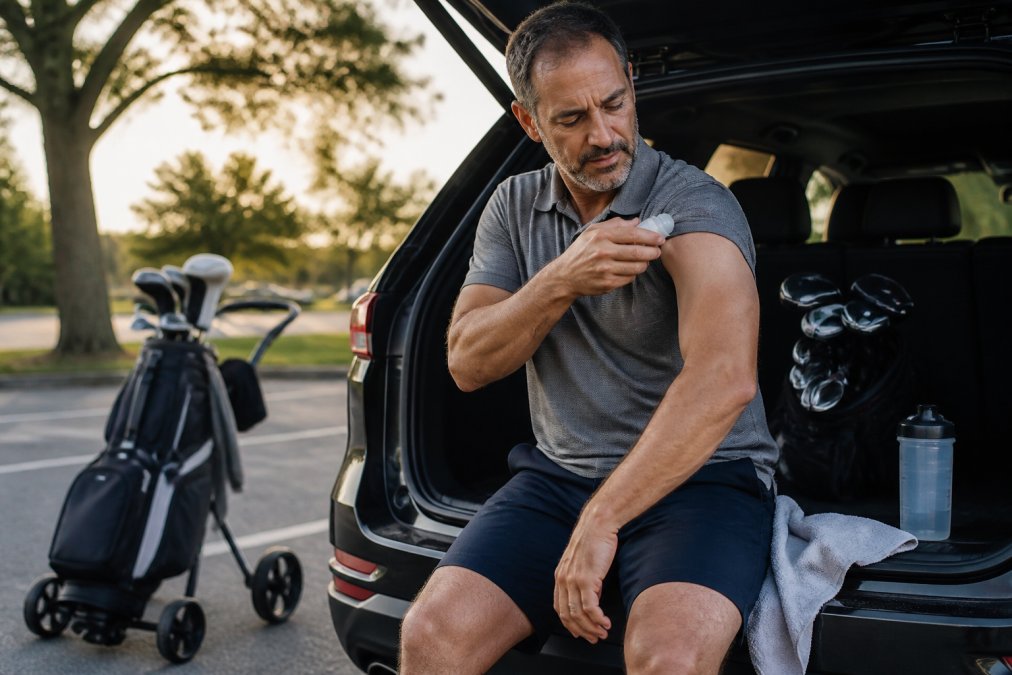
Topicals are the practical entry point here. You can apply them directly to a stiff lower back or a cranky shoulder without worrying about how much is circulating in your system.
Tinctures, Topicals, and Gummies: Delivery Methods Compared
Each delivery method suits a different part of the golf day. Choosing by use case beats choosing by potency.
| Method | Onset | Best For | Duration |
|---|---|---|---|
| Tincture (sublingual) | 15-45 min | Pre-round calm and focus | 4-6 hours |
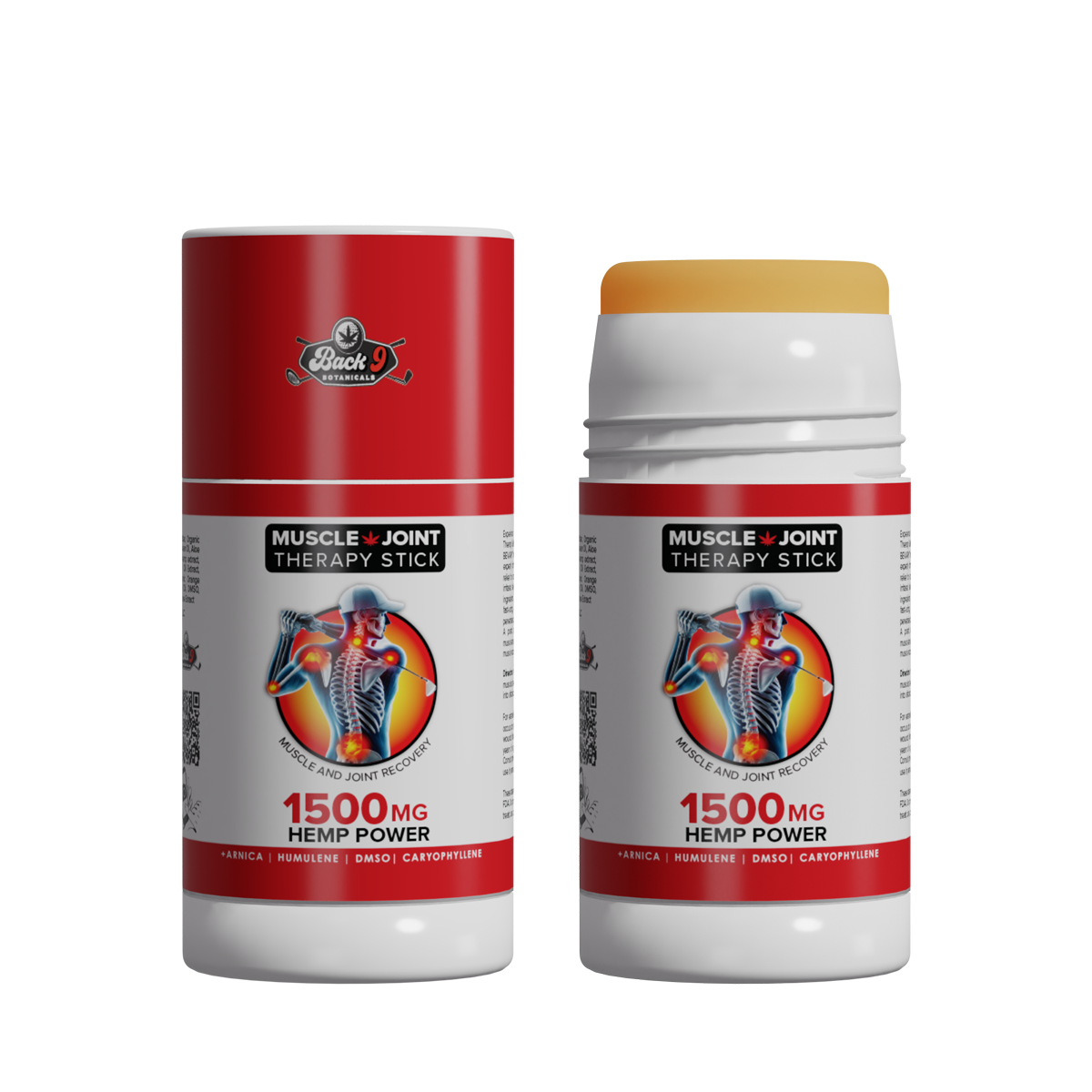
| Topical stick or salve | 10-30 min | Targeted joint and muscle relief | 2-4 hours |
| Gummies | 45-90 min | All-day balance and sleep support | 6-8 hours |
Bioavailability is an important consideration. Sublingual absorption bypasses digestion, which is why a tincture can feel different from the same milligram count in a gummy. If you are coming from standard CBD oil, a topical is generally not intended for anxiety relief, and a gummy is generally not intended for specific sore shoulder relief.
Key Takeaway
Match the method to the problem: topicals for tissue, tinctures for nerves, gummies for the day as a whole.
Is CBD Banned by the PGA Tour? Rules, Testing, and Amateur Status
Is CBD banned by the PGA Tour? CBD itself is not a prohibited substance, but the answer golfers actually need is more specific than that, because the risk is not CBD, it is what else is in the bottle.
Here is the mechanism. The U.S. Anti-Doping Agency follows the World Anti-Doping Agency prohibited list, and THC is a banned substance in-competition. CBD is not. The problem is that full-spectrum hemp products can contain trace amounts of THC, and THC is fat-soluble. That means it accumulates in body tissue with repeated daily use rather than clearing cleanly between doses. A golfer who takes a full-spectrum tincture every night for a month can build up a urinary THC concentration that a one-time user never would, even from the same labeled milligram count.
USADA also maintains a searchable Global DRO database where you can look up specific products and ingredients. The agency has repeatedly cautioned that "THC-free" marketing claims are not independently verified, which is why the certificate of analysis matters more than the label.
Drug Testing Protocols: Amateur vs. Professional Tours
Testing exposure is not uniform, and this is the part most guides gloss over.
- Professional tours: Structured anti-doping programs with defined banned lists, sample collection, and therapeutic use exemption (TUE) processes. If you are subject to testing at this level, assume any THC exposure is a risk.
- Sanctioned amateur events: Many national and regional governing bodies have adopted anti-doping codes that mirror the WADA list, even when testing is infrequent. The rule can apply whether or not a sample is collected.
- Club and casual play: Typically no testing program at all, which is why most recreational golfers never think about it.
The practical takeaway: the level of play determines your exposure, but the banned-substance list is often the same. If you hold amateur status and plan to enter a sanctioned competition, check the specific anti-doping policy of the body running the event before you assume anything. Rules vary, and a disqualification for a positive test is generally not appealable on the grounds that you did not know.
Watch Out
A product labeled "THC-free" is not the same as a product with a lab report showing non-detectable THC. If you are subject to any testing, ask for the certificate of analysis before you buy, and look for isolate or broad-spectrum formulas rather than full-spectrum.
For golfers who want to remove the THC variable entirely, broad-spectrum and isolate options are the safer route. They keep the cannabinoids you want and strip out the one that can end your eligibility.
CBD vs. THC: The High Factor and Medication Interactions
CBD and THC are not interchangeable, and the difference matters more for golfers than for most users. THC produces the psychoactive effect, the last thing you want standing over a three-foot putt. CBD does not. That part is straightforward. The part most guides skip is what happens when CBD meets the medications golfers already take.
Why the Interaction Risk Is Real
Cannabinoids are metabolized through the liver's cytochrome P450 enzyme system, the same pathway used by a long list of common prescription and over-the-counter drugs. When two substances compete for the same enzymes, one of them can build up in the bloodstream faster than expected, or clear more slowly. That is the mechanism behind most CBD-drug interactions, and it is why the risk is not hypothetical.
The Medications Golfers Actually Use
The relevant drug classes for this audience are not exotic:
- NSAIDs, ibuprofen, naproxen, and similar anti-inflammatories that golfers reach for after a round. These are metabolized through overlapping pathways, and heavy combined use is worth a conversation with a physician.
- Blood thinners, including warfarin and some direct oral anticoagulants. This is the interaction class that gets the most clinical attention, because the margin for error is narrow.
- Certain antidepressants, particularly SSRIs and related medications, which share metabolic pathways with cannabinoids.
- Sleep aids and anti-anxiety medications, relevant because golfers often use CBD for exactly the same reasons, and stacking sedating compounds can amplify the effect.
If you take any prescription medication, talk to your physician or pharmacist before adding a hemp product to your routine. Bring the actual product label, not just the milligram count, because the interaction risk depends on the full formulation. This is not a formality. A common pattern is a golfer who starts a daily CBD tincture for sleep, keeps taking their usual NSAID for back pain, and notices effects that neither product produced on its own.
Key Takeaway
CBD does not replace your pain reliever or your sleep aid, and it does not always play nicely alongside them. If you take prescription medication, the conversation with your doctor comes before the first dose, not after.
For players who want zero THC exposure, broad-spectrum and isolate options remove that variable entirely, but they do not remove the enzyme-pathway interaction question, which is about CBD itself, not THC.
Dosage, Timing, and What the Research Actually Shows
Start low, go slow, and keep a log. That is a recommended protocol.
A reasonable starting point for most adults is a small dose in the evening to assess tolerance, then adjust upward over several days. Effects build with consistent use rather than appearing after one serving. What most guides miss is that body weight, metabolism, and product quality all shift the effective dose, so a number that works for your playing partner may do nothing for you.
The research picture is still incomplete. According to the U.S. Food and Drug Administration, the agency has approved only one CBD-based prescription drug and has cautioned that unapproved CBD products carry unknown risks and unverified dosing. That is not a reason to avoid hemp entirely. It is a reason to buy from brands that publish third-party lab results and label their cannabinoid content precisely.
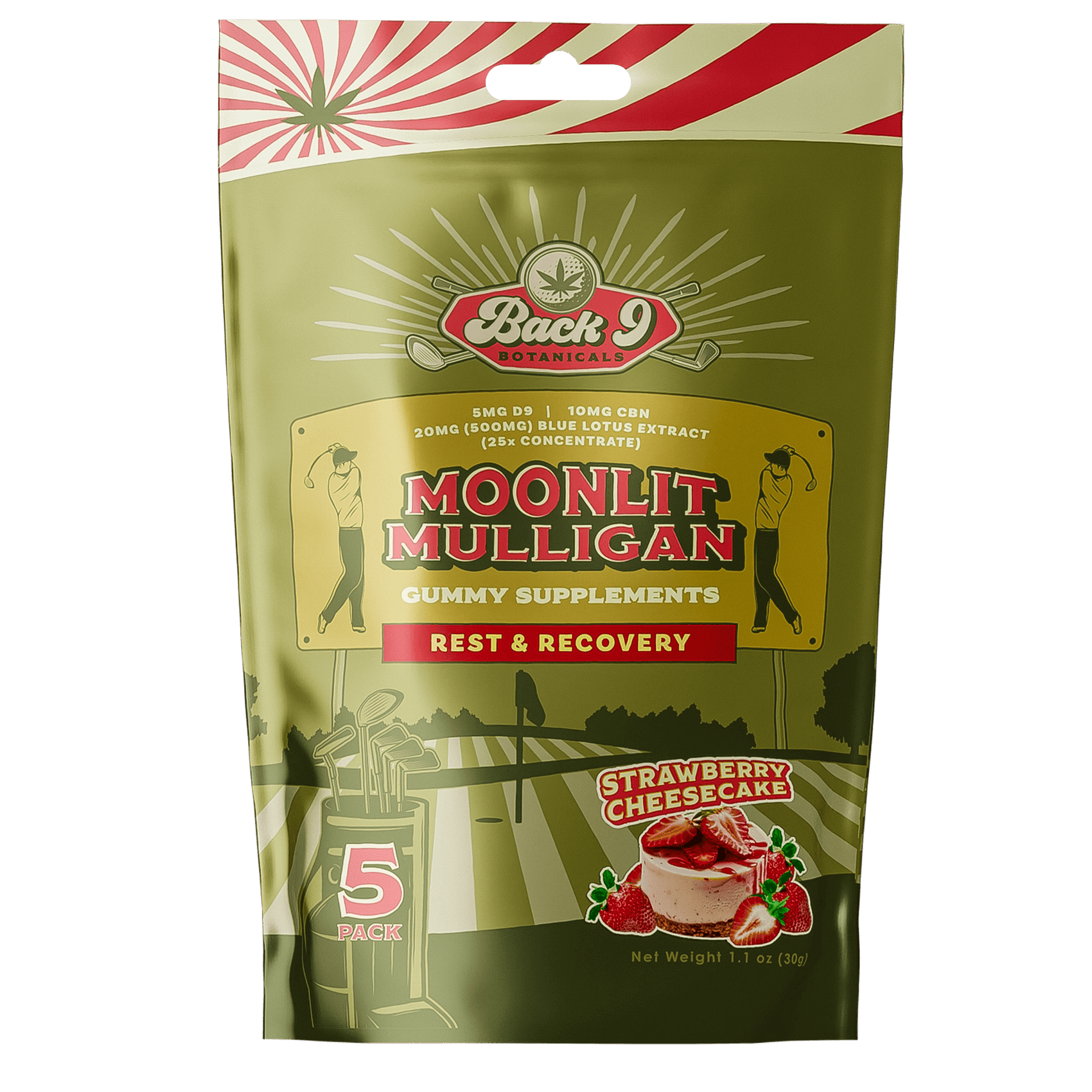
For golfers who want a structured starting point, Back 9 Botanicals offers the PERFORMANCE CANNA+ GUMMIES and the CBD TOPICAL THERAPY STICK for targeted post-round relief. Both are built for the way golfers actually use these products: focus before the round, recovery after it.


The hard part of golf has never been the swing. It is managing the nerves, the soreness, and the sleep that quietly decide how you play. Back 9 Botanicals builds clean, functional formulas for exactly that, combining hemp-derived cannabinoids with natural botanicals for focus, recovery, and daily balance. Start with the Performance Canna+ Gummies for pre-round clarity or the CBD Topical Therapy Stick for post-round muscle and joint relief. Get started with Back 9 Botanicals and give your game the recovery routine it has been missing.
Frequently Asked Questions
Does CBD help with golf nerves and anxiety?
Many golfers report feeling calmer on the first tee after taking CBD, and that lines up with how the endocannabinoid system interacts with cortisol levels. CBD does not sedate you the way alcohol does, so you keep mental clarity while first-tee jitters ease. The catch is that effects build over consistent use rather than one dose. A micro-dosed gummy about 60 to 90 minutes before your round is a common starting point, and you can adjust from there.
How long before a round should a golfer take CBD?
Timing depends on the delivery method. Sublingual tinctures typically take effect in 15 to 45 minutes, gummies in 45 to 90 minutes, and topical creams work locally within 10 to 20 minutes of application. For focus support, most golfers take an edible or tincture roughly an hour before the first tee. For post-round muscle soreness and joint stiffness, apply a topical after you finish and take a recovery-focused dose in the evening.
Is CBD legal for professional golfers to use?
CBD is federally legal in the United States under the 2018 Farm Bill when it contains no more than 0.3% THC by dry weight, but that does not settle tour rules. The PGA Tour and other professional tours prohibit THC, and full-spectrum hemp products can carry trace amounts that build up with daily use. Amateur events governed by the USGA generally follow WADA-style banned substance lists. If you compete under any testing program, choose THC-free isolate products and check the current policy before you play.
Can CBD help with the yips in golf?
The yips are tied to performance anxiety and involuntary muscle twitching, so anything that eases tension can reduce their grip. CBD's calming effect on cortisol levels may help some golfers steady their hands on clutch putts, and pairing it with a consistent pre-shot routine works better than either alone. No study has tested CBD on the yips specifically, so treat it as one tool in a broader mental game plan rather than a cure.

