
 Cart (0 items)





Learn how to find high quality CBD oil with 7 checks: lab reports, THC content, extraction, and cost per milligram. Verify any brand before you buy.
How to Find High Quality CBD Oil: 7 Checks That Matter

Last Updated: October 23, 2026
Quick Summary
To find high quality cbd oil, match the batch number on your bottle to a current, independent lab report and read the potency panel in milligrams. Confirm the report covers pesticides, heavy metals, solvents, microbials and mycotoxins, then compare cost per milligram rather than price per bottle.
- A trustworthy label lists total CBD, CBD per serving, THC content, carrier oil and a batch number.
- A lab report without a batch number matching your bottle proves nothing about your product.
- Convert potency to milligrams before comparing a lab result to your label's promise.
- Full-spectrum oil contains trace THC, while broad-spectrum and isolate remove it.
- Divide bottle price by total milligrams of CBD to reveal true value.
Table of Contents
- Start With the Label: What High Quality CBD Oil Must Disclose
- How to Read a CBD Certificate of Analysis Step by Step
- CBD Oil Third-Party Lab Testing: What Counts as Independent
- Full-Spectrum vs. Broad-Spectrum CBD Oil: Which Fits Your Routine
- CBD Oil THC Content and Drug Tests: What Athletes Should Know
- Compare Concentration and Cost per Milligram Before You Buy
- Red Flags: Marketing Claims That Signal Low Quality CBD Oil
- Conclusion
- Frequently Asked Questions
Start With the Label: What High Quality CBD Oil Must Disclose
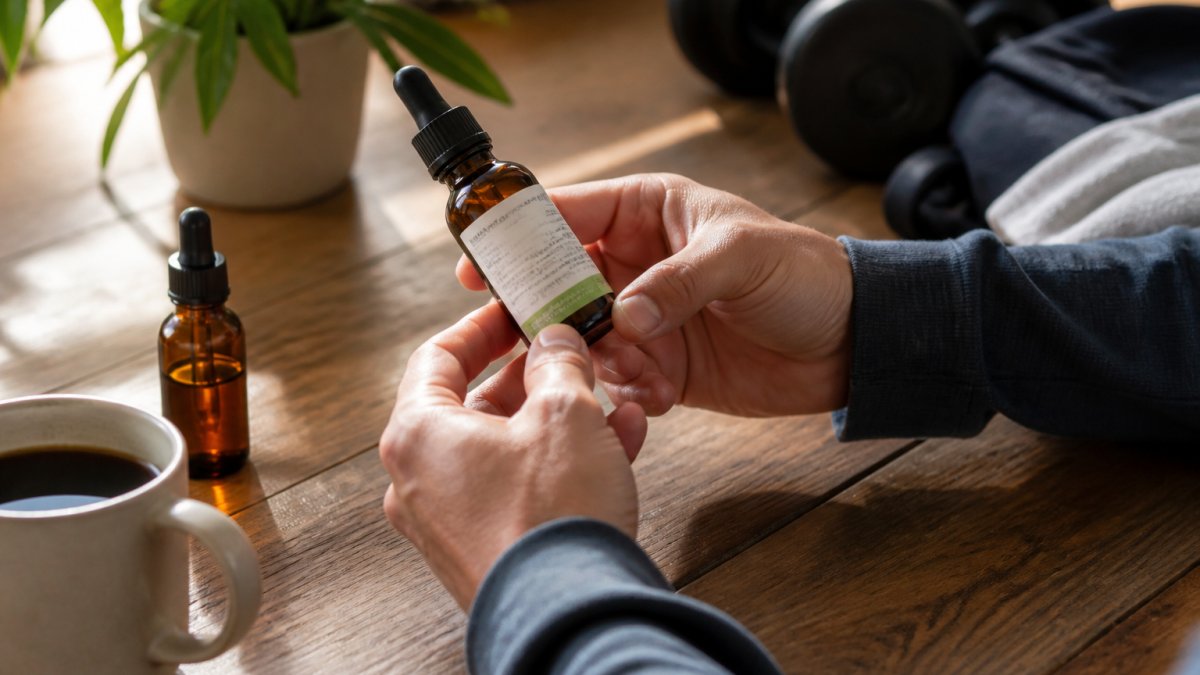
Learning how to find high quality cbd oil starts with one habit: read the back of the bottle before you read the front. At Back 9 Botanicals, we treat the label as the first filter, because a product that hides its numbers has nothing to verify. High quality cbd oil is a hemp extract whose label states its cannabinoid content, serving size, carrier oil, and testing status clearly enough that you can check every claim.
The Five Numbers and Names Every Label Needs
A label worth trusting answers five questions without marketing language:
- Total CBD per bottle, in milligrams
- CBD per serving, tied to a stated serving size
- THC content, listed as a value rather than "THC-free"
If any of those is missing, treat the product as unverified. The FDA guidance on cannabis-derived products makes clear that federal rules for these products are still taking shape, which is exactly why label transparency has to come from the maker.
How to Read a CBD Certificate of Analysis Step by Step
A certificate of analysis is a lab report from an independent facility that lists what a specific batch of product actually contains. Reading one takes about five minutes and answers questions no label can. For a fuller walkthrough of decoding label claims, see our guide on how to read CBD labels for athletes.
Step 1: Match the Batch Number to the Report
Start by finding the batch or lot number printed on your bottle. Then locate that same number on the certificate. A report without a matching batch number proves nothing about your bottle, even if the brand publishes it proudly. This is the step most buyers skip, and it is the one that catches relabeled or recycled reports.
Step 2: Check the Test Date Against the Batch Date
A lab report is a snapshot of one batch on one day. Look for the sample receipt date and the report date on the certificate, then compare them to the date the bottle was made or the lot was released. A report dated months before the batch was produced, or a report that is several years old on a product still being sold as fresh, is a mismatch worth questioning.
Step 3: Read the Potency Panel in Milligrams, Not Percentages
The potency section should list cannabinoids individually: CBD, THC, and the minors such as CBG or CBN. Reports often express results as milligrams per gram (mg/g) or as a percentage. To compare a lab result to your label, convert to the same unit. A result of 50 mg/g is the same as 5% CBD by weight. Multiply the reported concentration by the bottle's total volume or weight to estimate total CBD, then divide by the number of servings to get CBD per serving.
Step 4: Confirm the Contaminant Panels Are Complete
A serious report screens for more than potency. Look for these panels on the certificate:
- Pesticides, a screen for common agricultural residues
- Heavy metals, lead, arsenic, cadmium, and mercury
- Residual solvents, chemicals left over from extraction
A report that covers potency but skips contaminants is a partial report. Each panel should show a result and a pass or fail against a stated limit, not just a checkmark.
Step 5: Verify the Lab Is Real and Independent
Find the lab's name on the report and confirm it is separate from the brand. Then check whether the lab publishes its accreditation status publicly. An independent lab should be able to show that it is accredited to run the tests it reports. A report from a lab you cannot verify is worth about as much as the paper it is printed on.
Watch Out
A common mistake is trusting a lab report screenshot on a product page. Screenshots can be edited or borrowed from another product. Always match the batch number on your own bottle to the report itself, and check the test date before you trust the numbers.
CBD Oil Third-Party Lab Testing: What Counts as Independent
Third-party testing means the lab has no financial stake in the result. If you want a deeper process for verifying purity and screening for contaminants, our step-by-step guide to verifying CBD supplement purity covers it.
Contaminant panels matter as much as potency. A serious report screens for pesticides, heavy metals, residual solvents, and microbials. Any one of those can be present in a poorly made extract, and none of them show up on a label.
Pro Tip
Search the lab's name and the word "accredited" before you buy. An independent lab should be able to show its accreditation status publicly, and a report from an unverifiable lab is worth about as much as the paper it is printed on.
Full-Spectrum vs. Broad-Spectrum CBD Oil: Which Fits Your Routine
Full-spectrum CBD oil contains the full range of cannabinoids found in hemp, including trace THC. Broad-spectrum keeps the other cannabinoids but removes THC. CBD isolate is purified cannabidiol alone, with no other plant compounds.
Choose full-spectrum if you want the whole plant profile and are comfortable with trace THC. For athletes weighing the full-spectrum route, our article on full-spectrum CBD for athletes lays out the benefits and the evidence behind them.
CBD Oil THC Content and Drug Tests: What Athletes Should Know
CBD itself is not what drug tests screen for; THC is. A test looks for THC metabolites, and a full-spectrum product with trace THC can, over repeated use, create a risk of a positive result (pubmed.ncbi.nlm.nih.gov). Broad-spectrum and isolate products remove that variable.
The World Anti-Doping Agency prohibited list bans THC in competition, which is why athletes need to read the cannabinoid panel rather than assume "CBD" means "safe for testing." If you are weighing the risk in detail, read our breakdown of whether CBD shows on drug tests.
Compare Concentration and Cost per Milligram Before You Buy
Price per bottle tells you almost nothing. Price per milligram of CBD tells you what you are actually paying for. The trick is to normalize every product to the same two numbers: CBD per serving and cost per milligram. Once you do that, a 30 mL bottle and a 60 mL bottle at different strengths become directly comparable.
Normalize First: CBD per Serving
Start with the total CBD in the bottle, in milligrams. Divide that by the number of servings the label states. If the label gives a dropper size in milliliters, confirm that the serving count matches the bottle volume. A 30 mL bottle with a 1 mL serving has 30 servings; a 60 mL bottle with a 0.5 mL serving also has 120 servings, not 60.
Then Compare Cost per Milligram
Divide the bottle price by the total milligrams of CBD. That single number lets you line up products of any size or strength. A larger bottle at a higher price can still be the better value if it carries far more CBD per serving, and a small bottle at a low price can be the worse deal once you divide it out.
A Worked Comparison
Suppose one product is a 30 mL bottle with 1,500 mg total CBD at a stated serving of 1 mL, and another is a 60 mL bottle with 3,000 mg total CBD at a stated serving of 1 mL. The first gives 50 mg per serving across 30 servings; the second gives 50 mg per serving across 60 servings. Per serving they are identical, so the only question is which bottle costs less per milligram.
| What to Compare | How to Calculate It | Why It Matters |
|---|---|---|
| CBD per serving | Total mg ÷ number of servings | Sets your starting dose |
| Cost per milligram | Bottle price ÷ total mg | Reveals true value |
| Serving size | Milliliters per dropper | Keeps dosing consistent |
| Carrier oil | Named on the label | Affects absorption |
| Batch testing | Matches bottle to report | Confirms potency claims |
Watch for the Label Traps
Two traps distort this math. First, some labels list total cannabinoids rather than CBD alone, which inflates the milligram count. Compare CBD to CBD. Second, some labels state potency in percentages only.
When you are ready to buy, you can browse the CBD product collection and compare concentrations side by side. Pricing depends on product and size, so check the current listing rather than relying on an old figure.
Pro Tip
Keep a running note of cost per milligram for every product you consider. After a handful of comparisons, the outliers stand out immediately, and you stop paying for packaging or a bigger bottle that carries no more CBD per serving.
Red Flags: Marketing Claims That Signal Low Quality CBD Oil
Vague claims are the clearest warning sign. "Premium," "pharmaceutical-grade," and "lab-tested" mean nothing without a batch number and a report behind them. So do miracle promises about curing conditions, which no honest maker should make. A brand that will not show you a certificate of analysis, or shows one with no batch number, is telling you something. Believe it.
Key Takeaway
The single most reliable quality signal is a batch number that matches a current, independent lab report with a full potency and contaminant panel. Everything else is marketing.
Conclusion
Finding high quality cbd oil comes down to verification, not branding: match the batch number, read the potency panel, confirm the lab is independent, and compare cost per milligram. That process takes a few minutes and filters out most of what is on the shelf.
At Back 9 Botanicals, we build our formulas for golfers and athletes around clean, functional ingredient profiles, and we publish our lab tests so you can check the batch yourself. Our products combine natural botanicals with hemp-derived cannabinoids to support focus, recovery, and daily balance. Get started with Back 9 Botanicals and shop formulas you can verify before you buy.
Frequently Asked Questions
How do I know if a CBD product is legit before I buy it?
Check three things before you pay. First, the label should state milligrams of CBD per bottle and per serving, the cannabinoid type (full-spectrum, broad-spectrum, or isolate), and a batch number. Second, the brand should publish a certificate of analysis from an independent laboratory that matches that batch number. Third, the potency result on the report should land close to the label claim. If a seller cannot show a current lab report tied to the product you are holding, treat the claim as unverified. High quality CBD oil brands make this easy to find, not hard.
Can CBD oil cause a positive drug test?
It can, depending on the product. Full-spectrum CBD oil contains THC, and repeated use can accumulate enough to register on a sensitive screening test. Broad-spectrum and isolate products carry less risk but are not guaranteed zero. If you are subject to testing for work, sport, or licensing, ask the brand for a batch-specific lab report showing THC content, and discuss the risk with whoever administers your testing program. No label claim replaces that conversation, and no product can promise a clean result for every person and every test.
What is the difference between full-spectrum, broad-spectrum, and CBD isolate?
Full-spectrum CBD oil keeps the full range of cannabinoids and terpenes from the hemp plant, including trace THC. Broad-spectrum removes or reduces THC while keeping other cannabinoids. CBD isolate is purified cannabidiol alone, with no other plant compounds. The choice comes down to your tolerance for THC and what you want from the product. Anyone facing drug testing should lean toward broad-spectrum or isolate and verify the THC figure on the batch report rather than trusting the category name.
Is it cheaper to buy CBD oil online or in a store?
Online sellers usually offer more sizes and clearer lab documentation, while health stores and pharmacies let you inspect packaging in person. The better comparison is cost per milligram, not bottle price. Divide the total CBD milligrams by the bottle price to get a consistent figure across products. A 30 mL bottle with 1,500 mg at one price and a 30 mL bottle with 500 mg at a lower price are not comparable until you run that math. Always confirm the retailer publishes batch-level third-party testing before ordering.


